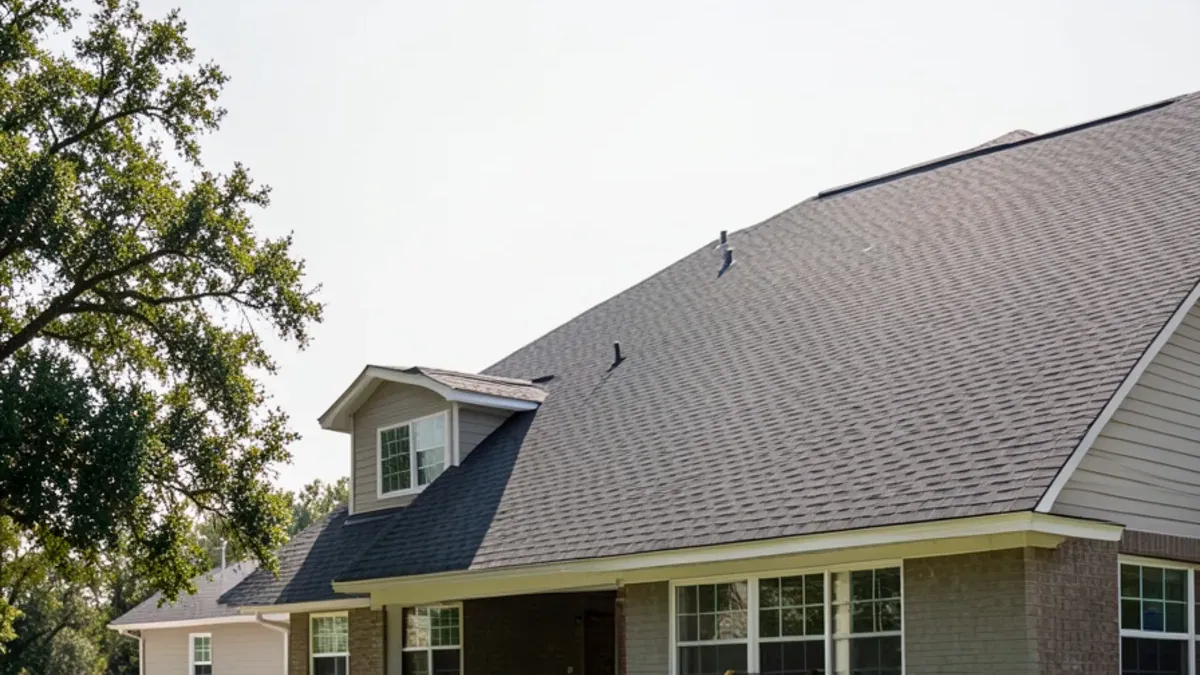
Hot Attic, Texas Summer: What Poor Ventilation Does
Irving summers put a roof under constant heat, which is why ventilation is part of every roof replacement we quote. July highs sit around 95°F, the city's record is 112°F (set in 1980), and an attic under dark shingles gets far hotter than the air outside. Ventilation is how that heat and moisture leave. When intake or exhaust is missing, blocked or mismatched, the damage builds slowly:
- Shingles age faster, curling, cracking and shedding granules ahead of schedule
- Decking suffers when trapped humidity turns to droplets under the wood on mild nights
- Nails rust and back out, lifting shingle tabs
- Attic ductwork works harder in an attic that never sheds its heat
- Material warranty coverage can be questioned if the attic does not meet the shingle maker's ventilation requirements
A new roof laid over the same bad airflow simply inherits the same problems.
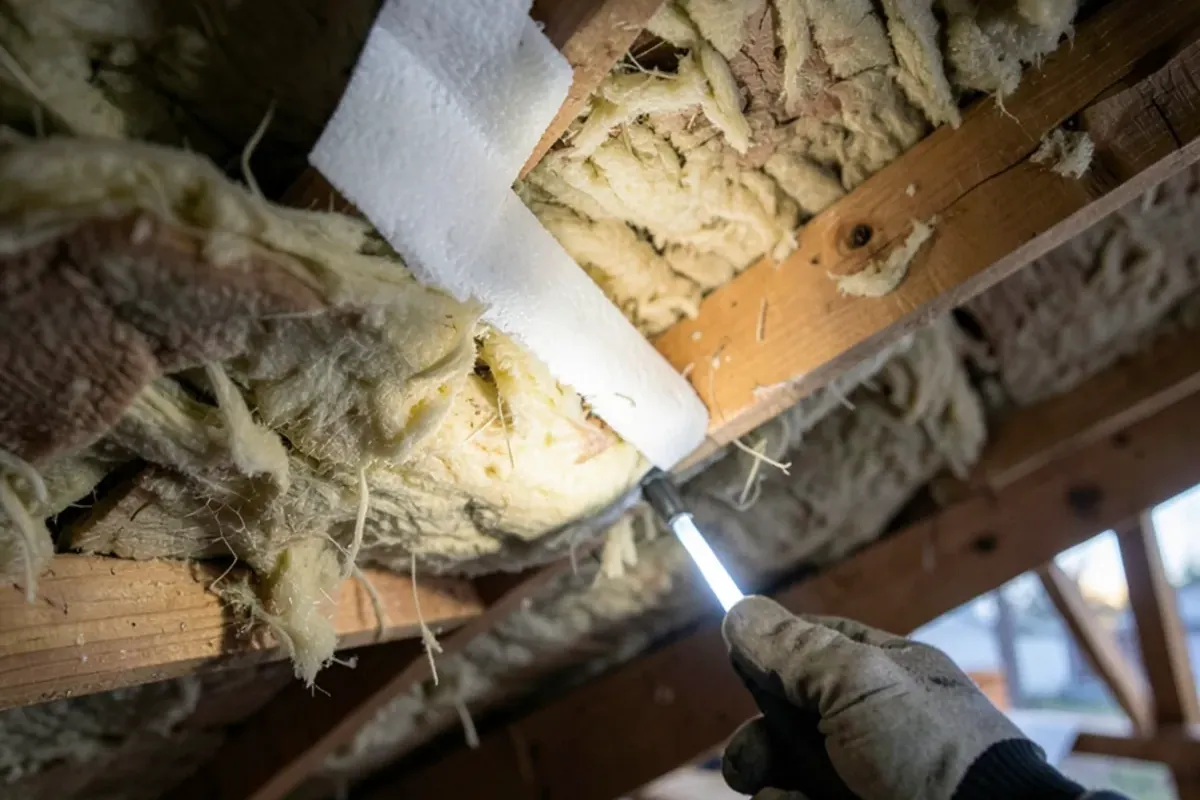
Inside the house, the clues are easier to spot than most people think: upstairs rooms that stay warm long after sunset, a musty smell or damp, clumped insulation in the attic, darkened decking around the eaves, and rust streaks below vent openings. Any two of those together are worth an attic check.
How Much Ventilation Does a North Texas Attic Need?
The rule of thumb comes from the International Residential Code: about 1 square foot of net free vent area for every 150 square feet of attic floor, reduced to 1 per 300 when the openings are balanced between exhaust high on the roof and intake low at the eaves. Balanced is the key word. We aim for intake at least equal to exhaust, because a ridge vent with no soffit air behind it has nothing to pull.
Irving's adopted code edition and any local amendments set the exact requirement for your permit, so we confirm with the City of Irving when the work is part of a permitted re-roof.
Roof Ventilation in Irving, TX: What We Install and Correct
Ventilation work is never just "add a vent." Every job starts from the airflow math, and the result is a written list of what goes in, what comes out and what gets sealed, so you can see the whole system rather than a single part. Depending on your roof and attic, the work can include:
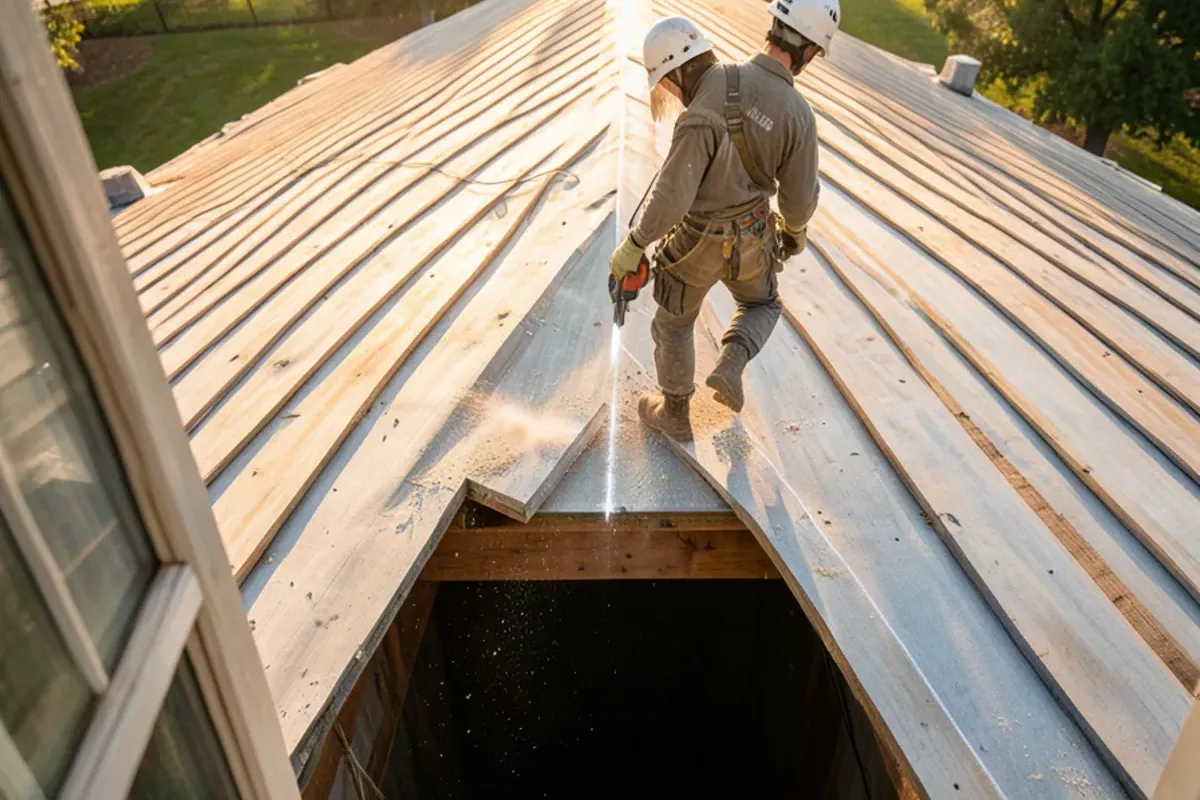
- Ridge vent installation, cutting a slot along the deck peak and covering it with a shingle-over vent
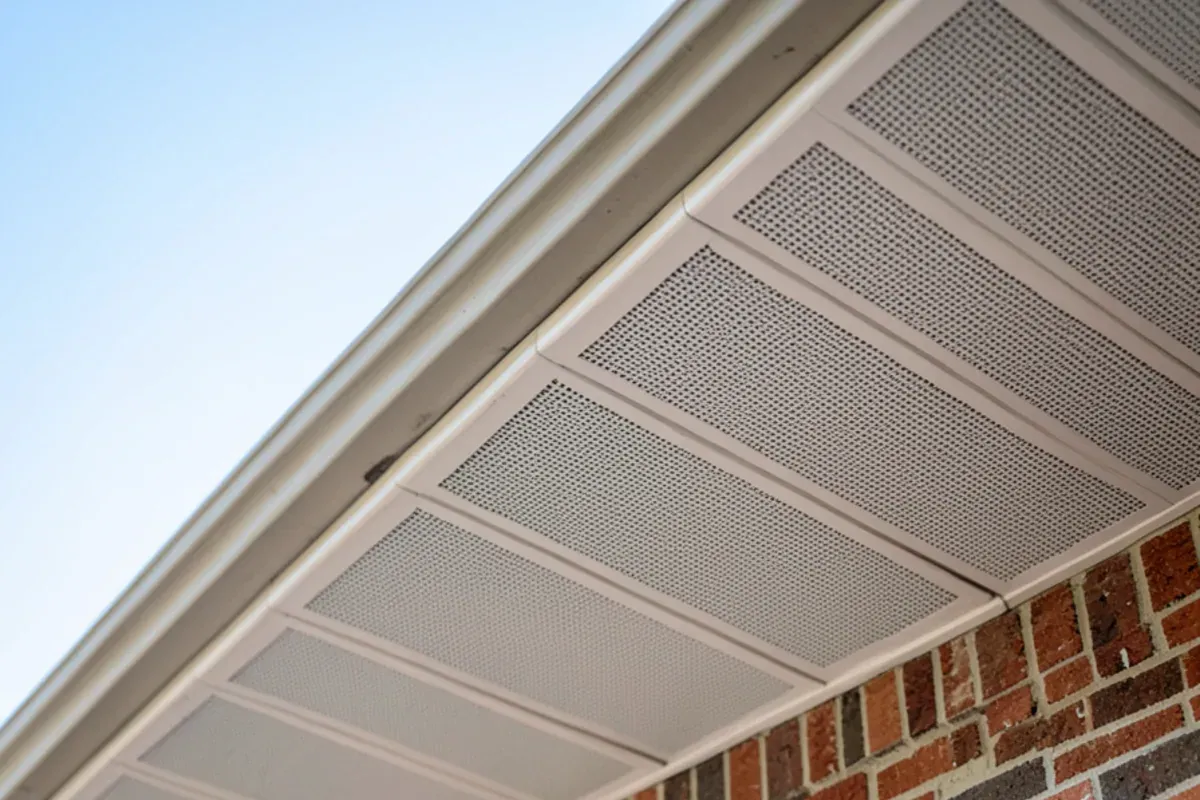
- Soffit vents and baffles, adding perforated panels or individual intake vents where eaves are solid, with baffles so insulation cannot block the air path
- Static roof vents where a ridge is too short for a continuous vent
- Roof turbine vents repaired, replaced or removed when they conflict with other exhaust
- Attic fan replacement or removal for failed power fans, with wiring left to an electrician where needed
- Sealing old openings from vents we retire, with new decking and shingles over the hole
Bath and kitchen exhaust ducts that dump into the attic instead of outdoors are a common moisture source; we point them out so they can be rerouted.
Questions about roof & attic ventilation? Talk to us.
Call for a free inspection and a written estimate. Hablamos español.
- 5.0 on Google (33 reviews)
- Free inspections & estimates
- Se habla español
- Workmanship guaranteed in writing with every contract
How We Balance Intake and Exhaust
- Measure the attic floor area and identify separate attic spaces, such as over a garage or addition.
- Count and size every vent, using manufacturer net free area figures where we can identify the product.
- Inspect the eaves and sheathing from inside to see whether insulation, paint or debris blocks the soffits, and look for symptoms such as frost-like staining, rusted nails, dark sheathing or warped decking.
- Design the fix with intake equal to or greater than exhaust and one exhaust type per attic space.
- Install during the re-roof when the ridge is open, or as a stand-alone job for intake-only fixes.
- Finish details: vent caps and fans painted to match the shingles, and old openings sealed.
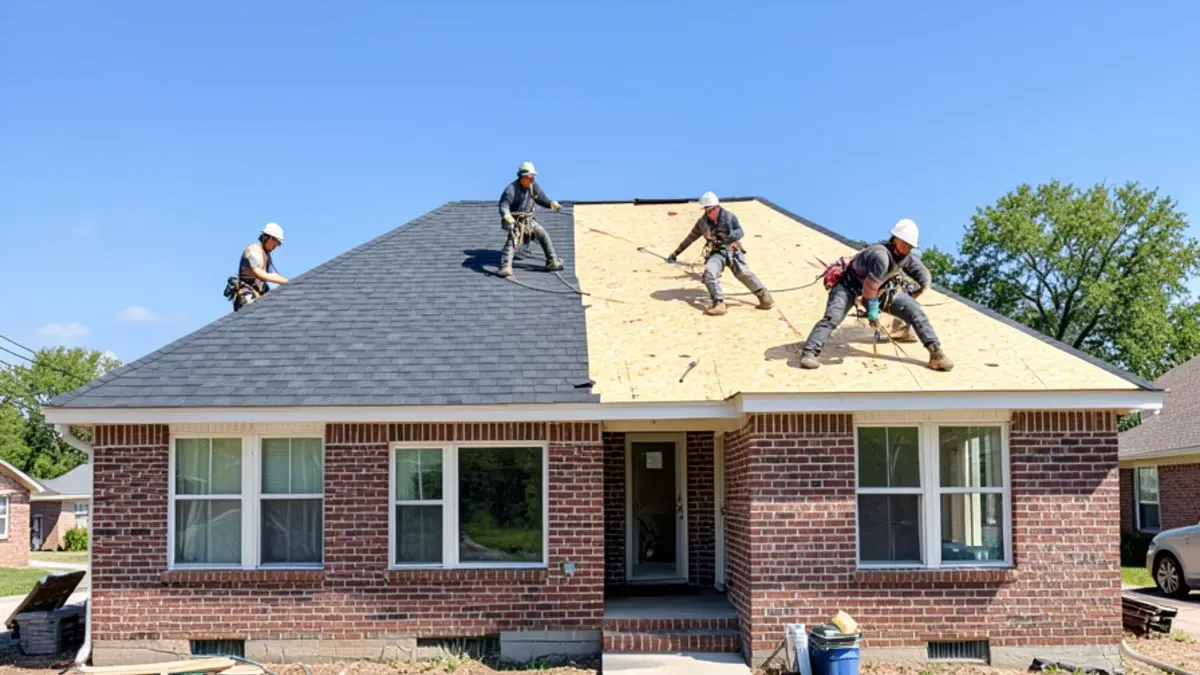
When ventilation is part of a full job, it happens alongside the roof tear-off, and on many single-family homes the whole re-roof fits in a single day; see one-day roof replacement for when that works.
Turbines, Power Fans or Ridge Vents: Which Fits a DFW Attic?
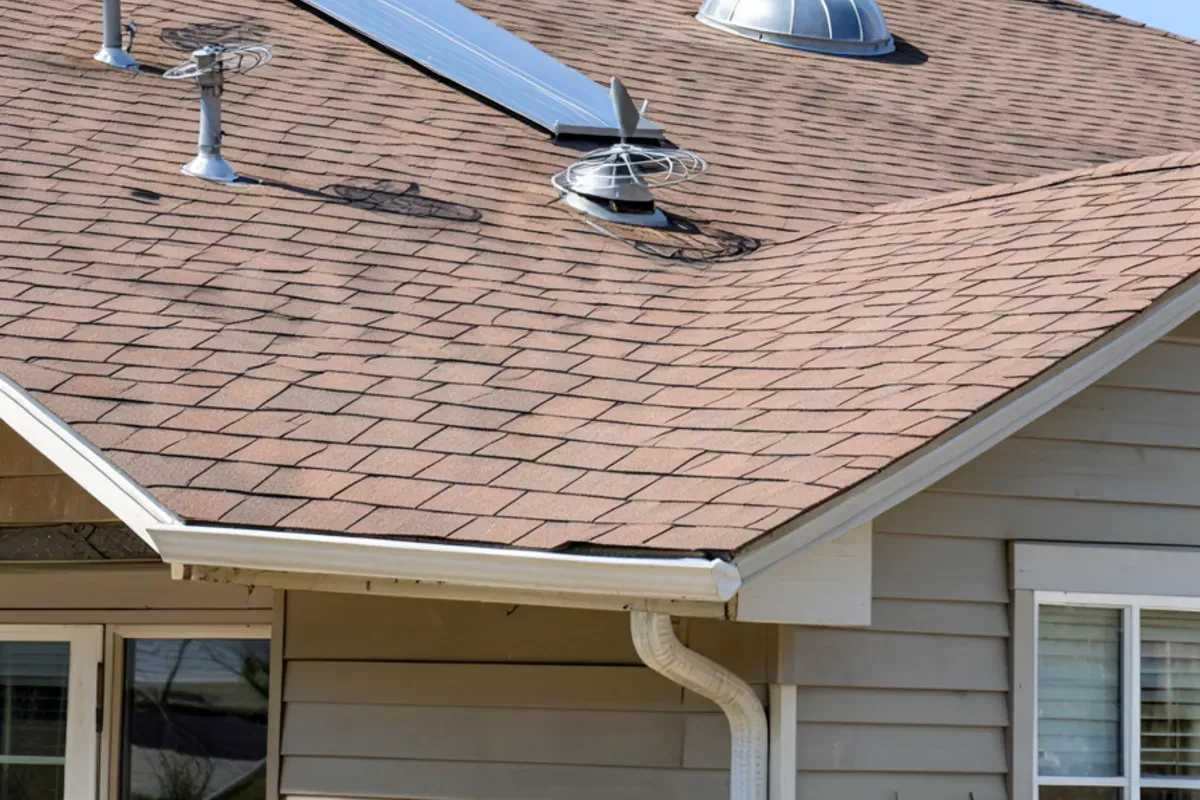
There is no single right answer, but there are clear wrong ones. The most common problem we find on Irving roofs is mixed exhaust: a ridge vent added during one re-roof, turbines left from an older one, and maybe a power fan on top. Each exhaust device pulls from the nearest opening, so they end up pulling air from each other instead of drawing it in through the soffits.
| Exhaust type | Strengths | Watch-outs |
|---|---|---|
| Continuous ridge vent | Even exhaust along the full peak, no moving parts, low profile | Needs enough soffit intake and enough ridge length |
| Static box vents | Simple, good for short ridges and hip roofs | Need several units placed high on the roof |
| Roof turbines | Pull more air in wind, common on older DFW roofs | Bearings wear and squeak; depend on wind |
| Power attic fans | Move a lot of air on still days | Can pull conditioned air from the house if intake is short; motors fail |
What Affects the Cost of Better Attic Ventilation?
- Whether the work happens during a re-roof or as a stand-alone job
- The number of separate attic spaces to vent
- How much soffit is solid wood or brick and needs new intake openings
- Ridge length available for a continuous vent
- Removing old turbines or fans and patching the openings
During a re-roof, ventilation is usually a modest line item, because the ridge and deck are already open. Your free estimate lists it separately.
Stand-alone work costs more per vent for the same reason in reverse: we have to remove and replace ridge cap shingles, open the deck, and blend new shingles around any retired turbine hole, and matching an older shingle color is not always possible. Brick-to-eave walls, common on older ranch homes, are another swing factor, since intake may have to come from low-profile vents on the roof itself rather than the soffit. Third-party Irving numbers (homeyou lists $6,544–$7,376 as the usual Irving re-roof, valid through March 6, 2026) do not break ventilation out, so the only reliable number for your attic is the written one after we have measured it.
Why RJ Premium Roofing for Attic Ventilation in Dallas–Fort Worth?
- Reviewers say we explain every step, which matters for ventilation, a part of the roof nobody sees
- Painted vents and pipes that blend with the new shingles, mentioned by customers
- A 5.0 rating from 33 Google reviewers, last checked in November 2026
- Ventilación del ático explained in Spanish or English, whichever your household prefers
- Workmanship guaranteed in writing on the vents we install, with each vent maker's warranty covering the product itself
- A free inspection that goes into the attic, with a written estimate showing intake and exhaust before and after
- Reviewer-reported one-day roofs, so venting changes made during a re-roof rarely leave the ridge open overnight
Warranty, Cool-Roof Rules and Service Area
Correct ventilation supports the shingle manufacturer's material warranty, and our own workmanship guarantee comes with written terms in your contract. Irving's local energy-code amendments also include cool-roof reflectance targets, listed as a solar reflectance index of 29 on steep slopes (78 on low-slope roofs); ask us or the city whether they apply before you choose a shingle color.
Permits and who checks the work
When vents are changed as part of a re-roof, the work rides on the City of Irving re-roof permit and its final inspection. Small vent swaps can fall under the city's exemption for repairs of 100 square feet or less, according to the city's residential roofing handout, but confirm before relying on it. Texas has no statewide roofing license; ask any roofer for proof of current Irving contractor registration instead. Electrical work on a power fan is a separate trade under city rules. The Inspections Department answers code-edition questions at (972) 721-2371.
West of Irving, the Mid-Cities hold a lot of attics worth rebalancing; we work in Grapevine, Bedford and Euless, and north into Coppell.