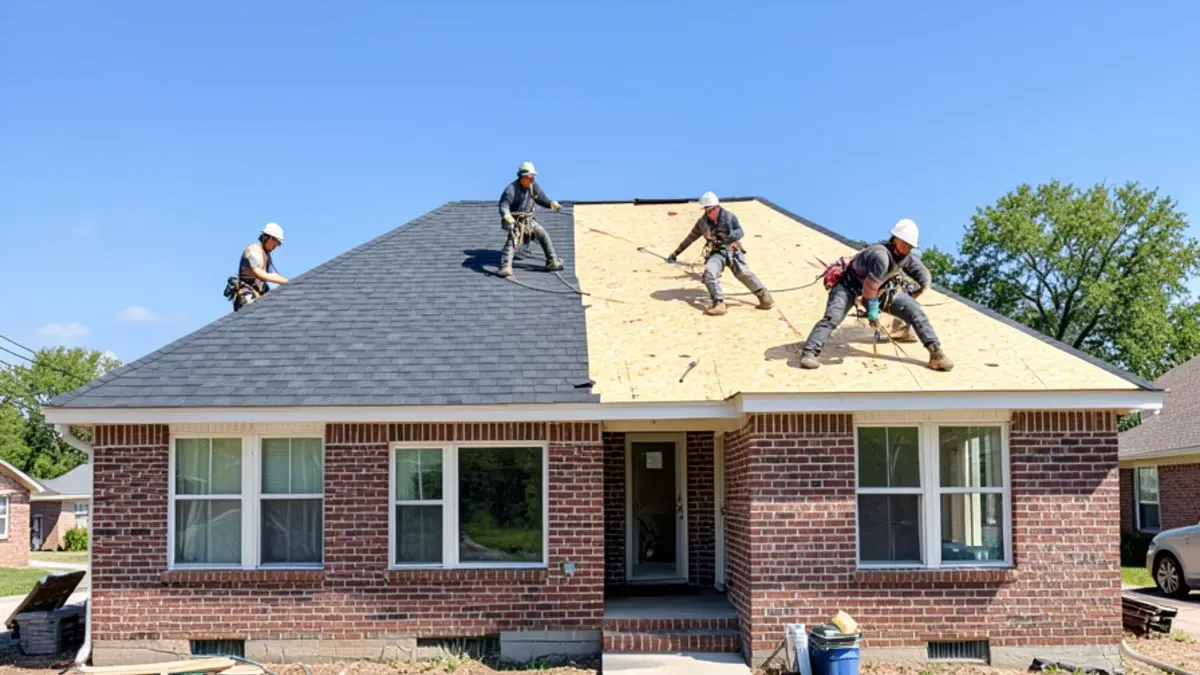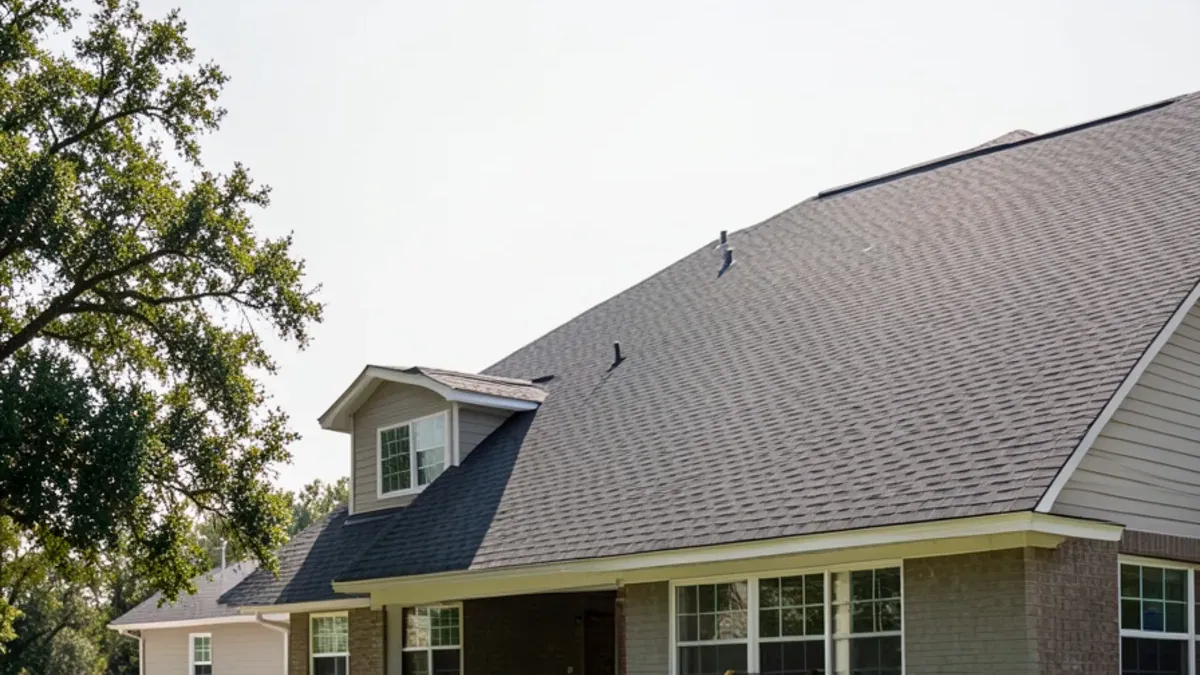
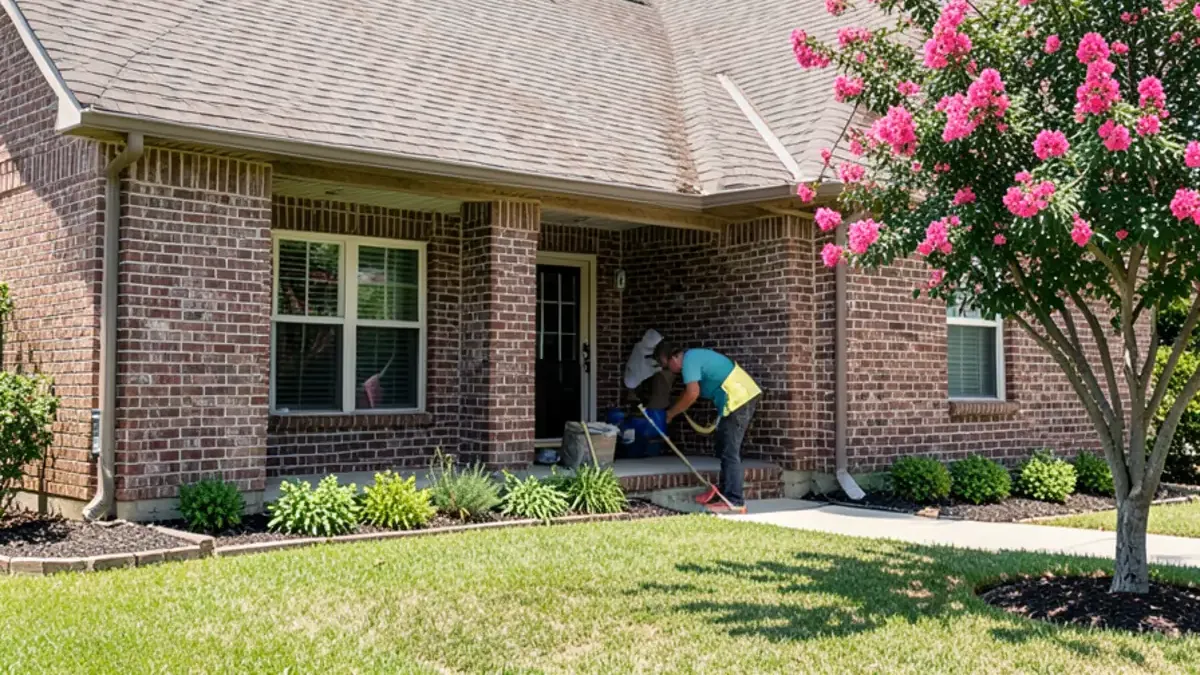
Good attic ventilation in Texas moves super-heated air out before it bakes your shingles and decking from underneath. A working system draws cooler air in at the soffits and lets hot air escape near the ridge; when one side is missing, or two exhaust types fight each other, the attic overheats in summer and collects moisture in winter.
A roof has two surfaces that wear out: the one the sun hits and the one facing the attic. In North Texas the second one gets less attention than it deserves, and a poorly vented attic can shave years off shingles that look fine from the street.
Why attic ventilation in Texas matters more than most places
In Irving, July days average highs near 95°F, and the record of 112°F dates to 1980. On a still summer afternoon, an attic with nowhere for hot air to go runs far hotter than the air outside. That heat bakes the underside of the decking while the sun cooks the top, so the asphalt in the shingles dries and stiffens faster than it would on a cooler roof.
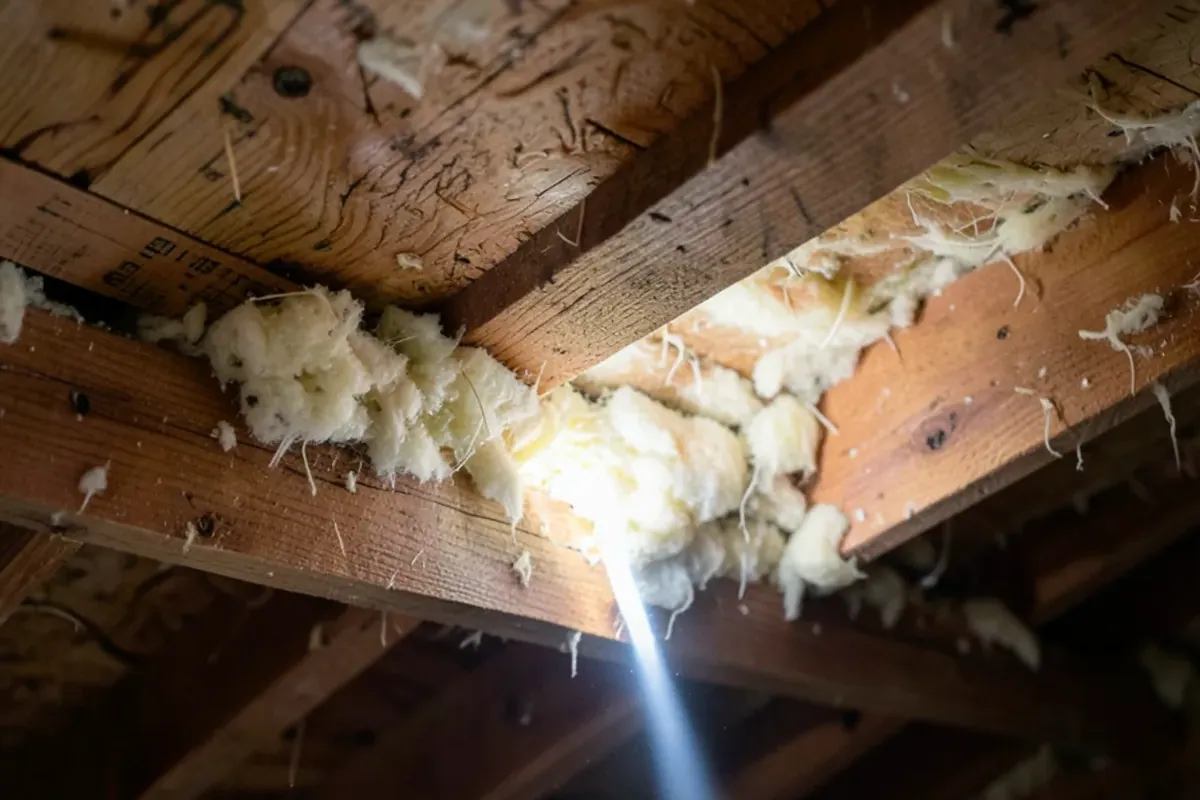
Winter brings the opposite problem. Warm, damp air from showers, cooking and people rises into the attic. If it cannot escape, it condenses on the cold underside of the deck overnight. Do that for a few winters and you get rusty nails, dark sheathing and the soft spots we find at tear-off.
Signs of hot attic roof damage
Run through this list on a summer afternoon and again on a cold morning:
| What you notice | Where | Likely cause |
|---|---|---|
| Upstairs rooms stay hot, AC barely keeps up | Second floor, bonus rooms | Heat building above the ceiling |
| Blistered or curling shingles on a fairly young roof | Sunny south and west slopes | Shingles cooked from below |
| Rusty nail tips, damp insulation | Attic, cold mornings | Condensation with no way out |
| Musty smell, gray or black sheathing | Attic near the ridge | Trapped moisture over time |
| Soffit vents painted shut or missing | Eaves outside | No intake air |
Soffit vent intake: the half of the system people forget
Exhaust vents get the credit, but they can only push out air that came in somewhere. In a balanced system that intake happens low, at the soffits or along the roof edge, so cool air sweeps up the underside of the deck and leaves at the top.
The residential code's general rule is one square foot of net free vent area for every 150 square feet of attic floor, which can drop to one per 300 when intake and exhaust are balanced under conditions the code spells out. In practice we aim for at least as much intake as exhaust. The common failures we find are soffit vents covered by paint, boxed eaves with only a handful of small vents, and attic insulation pushed into the eaves with no baffles to keep the airway open.
Want a roofer to look at it?
Free inspection with photos. Se habla español.
- 5.0 on Google (33 reviews)
- Free inspections & estimates
- Se habla español
- Workmanship guaranteed in writing with every contract
Ridge vent vs. turbine vs. attic fan in Texas
Every exhaust type can work. The trouble starts when several are installed on the same attic.
- Continuous ridge vent runs along the peak and exhausts evenly. It needs enough ridge length and a properly cut slot.
- Turbines spin with wind and help most on breezy days. They can wobble, squeal and dent in hail.
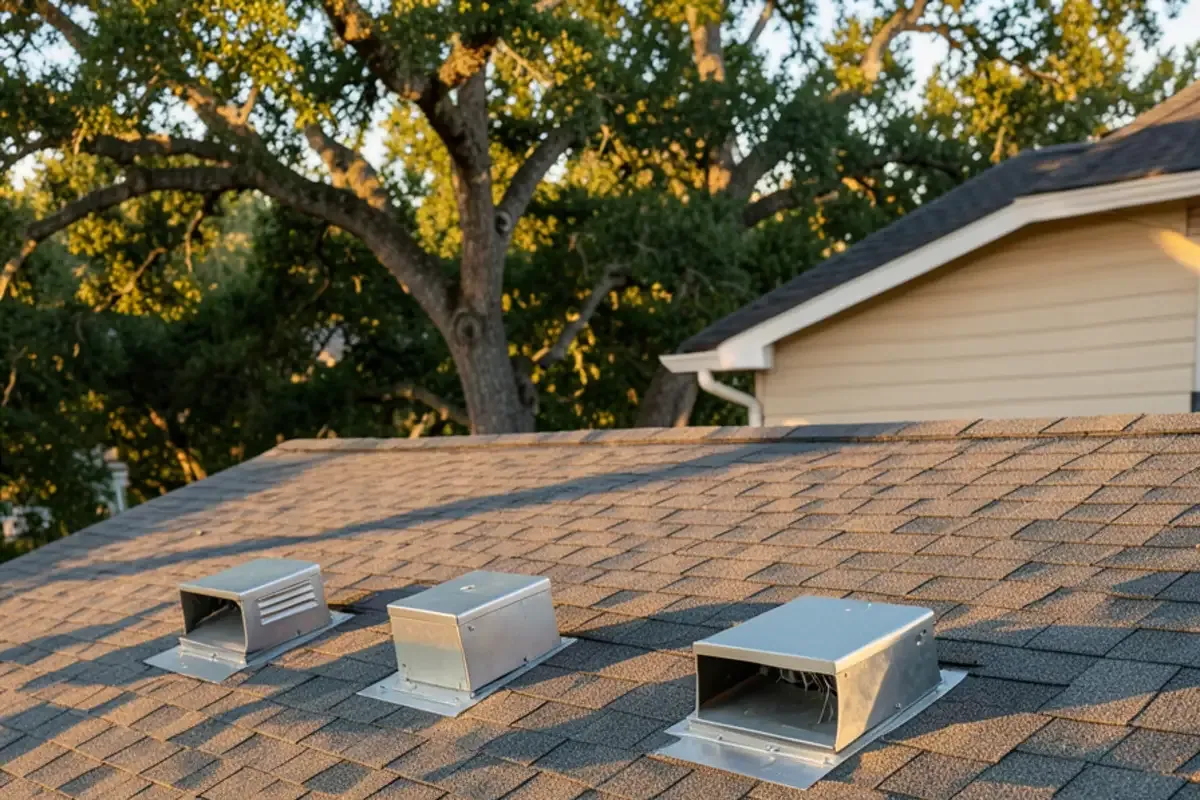
- Static box vents are simple and reliable but need several per slope to match a ridge vent.
- Powered attic fans move a lot of air but can draw conditioned air out of the house if intake is short.
- Gable vents at the end walls can short-circuit a ridge vent, pulling air across the top of the attic instead of up from the eaves.
The rule we follow: pick one exhaust type per attic space, close off the rest, and size the intake to match.
How we correct roof ventilation during a re-roof
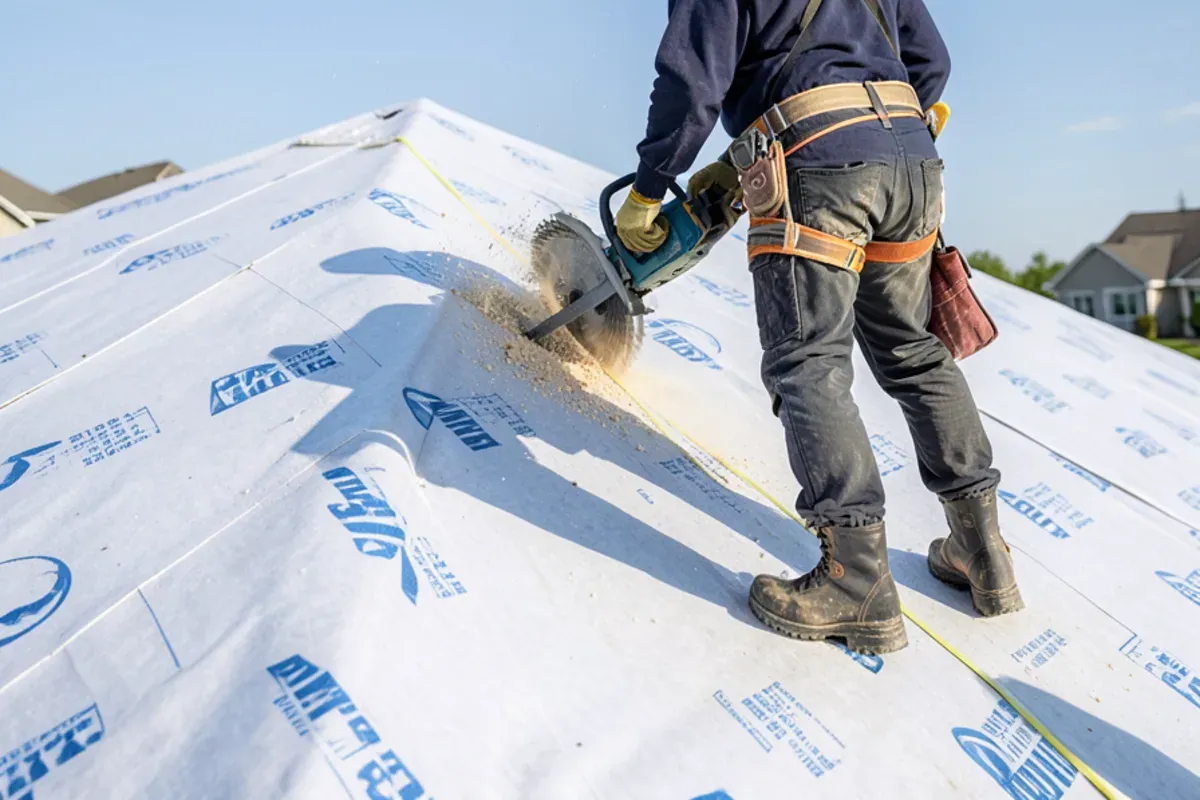
A replacement is the cheapest time to fix airflow, because the deck is open. On a roof replacement our roof ventilation work follows these steps:
- Measure the attic floor and count the net free area of every existing vent.
- Check the soffits from inside and outside for blocked or painted-over openings.
- Choose a single exhaust type for each attic space, usually a ridge vent where the ridge is long enough.
- Remove or close off redundant turbines, box vents or fan openings and deck over them.
- Add intake where it is short, with baffles where insulation crowds the eaves.
- Replace or reseal any vents that stay, and paint pipes and fans to match the new shingles if you want them blended in.
Does better attic ventilation lower cooling bills?
Honest answer: a little, sometimes, but that is not the main reason to fix it. Ventilation exists to protect the roof deck and shingles from heat and trapped moisture. Comfort and energy use depend more on how much insulation sits on the attic floor and how well the ceiling is sealed against air leaks.
The exception in Texas is ductwork. Many DFW homes have their air handler and supply ducts in the attic, so every degree of attic heat makes the system work harder. In those houses, three things together make the biggest difference: balanced ventilation, a radiant barrier on the underside of the deck, and sealed, insulated ducts. We handle the roof side; for duct sealing and insulation depth, an HVAC or insulation contractor is the right call. Irving's local amendments also set a minimum solar reflectance for steep-slope roofs (SRI 29), so the shingle color you choose affects attic heat too.
When an attic should not be vented at all
Some homes, often newer builds or remodels, have spray foam sprayed directly onto the underside of the roof deck. That makes the attic part of the conditioned house, and the residential code treats it as an unvented assembly. Adding ridge vents or soffit openings to a foam-sealed attic works against the design. If you see foam on the rafters, tell us before any vent work is quoted, and check what your shingle manufacturer requires for roofs over unvented attics.
Attic patterns we see on North Texas roofs
Some of the hottest attics we open have the most vents on top. A roof with a ridge vent, three turbines and an old power fan looks well ventilated, but the vents pull air from one another while the soffits do almost nothing. Another pattern: bathroom exhaust fans that dump straight into the attic instead of out through a roof or wall cap, adding moisture every time someone showers.
Older Tarrant County homes, like many in Haltom City, and the 1980s houses that make up so much of Irving were often built with minimal soffit venting, then had turbines added over the years as a quick fix. For homeowners who prefer Spanish, we can explain la ventilación del ático and what we would change in plain terms.
If your upstairs never cools down or your shingles are wearing out early, ring (725) 745-8803 and ask for a free attic-and-roof check. We will look at the attic as well as the roof and tell you whether ventilation is part of the problem.
Questions readers ask
Should I add a powered attic fan to my Texas home?
Will adding more turbines cool a hot attic?
Can an attic have too much ventilation?
Is a radiant barrier worth adding to a Texas attic?
Sources

Written by the RJ Premium Roofing team, a bilingual roofing contractor based in Irving, TX. We inspect, repair and replace roofs across Dallas–Fort Worth and document storm damage for homeowners’ insurance claims.