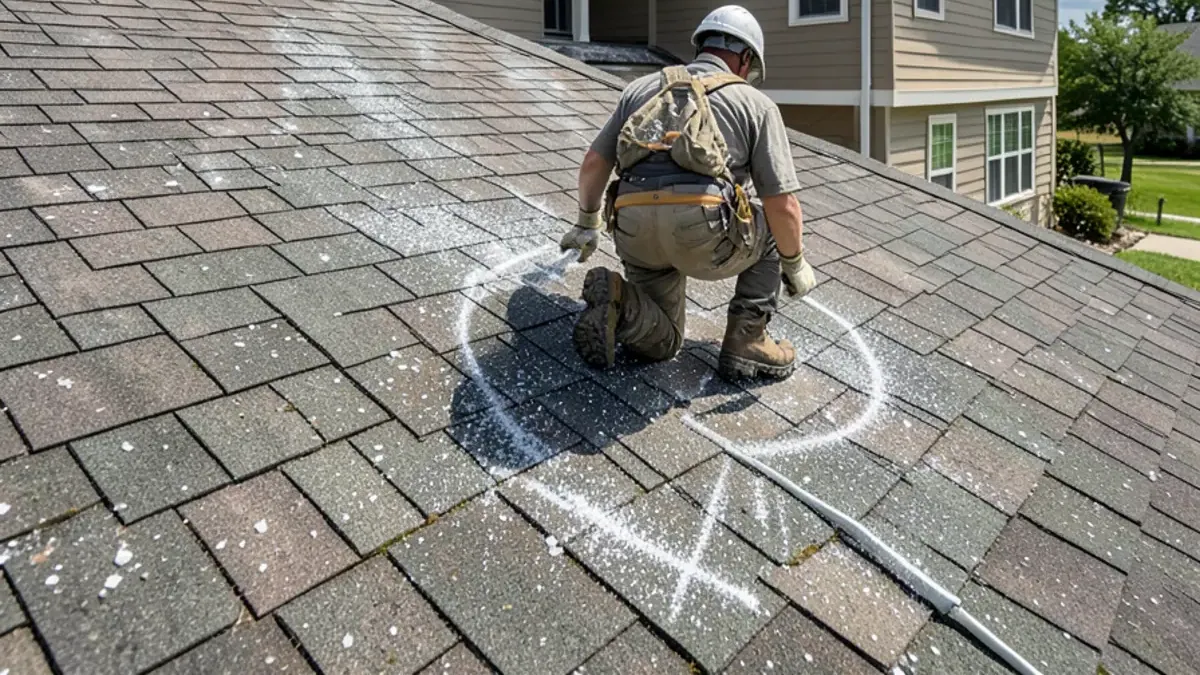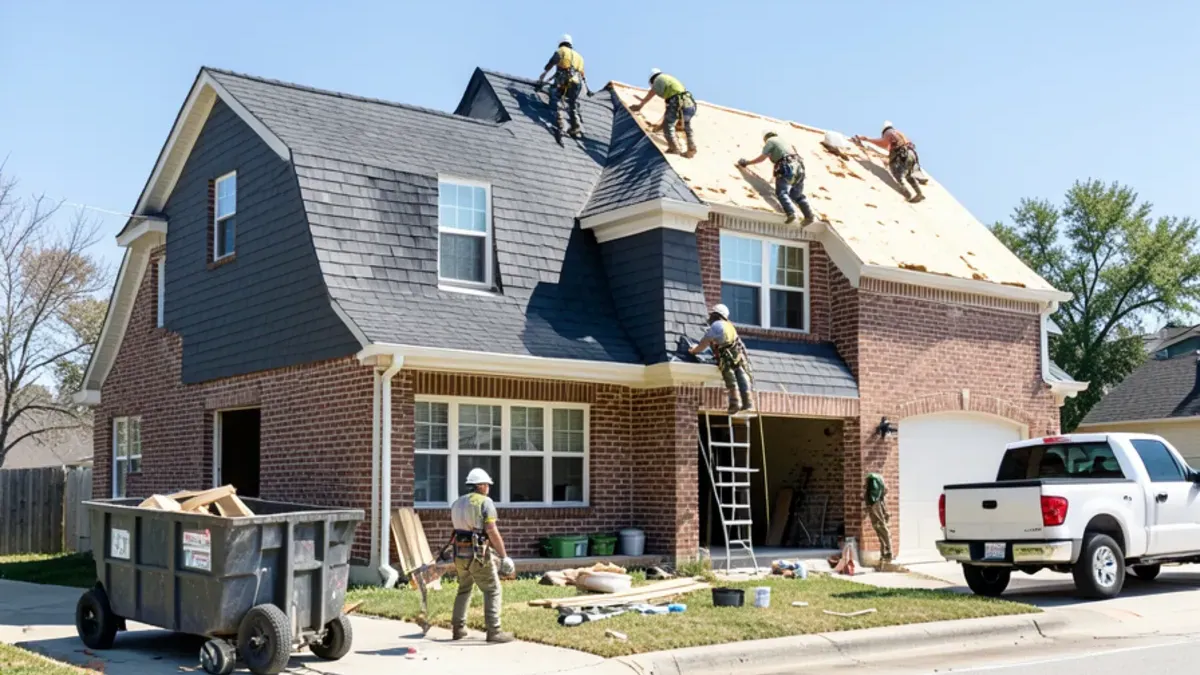

Asking what size hail damages a roof usually leads to one number: about 1 inch, roughly a quarter. That is where damage to typical asphalt shingles becomes likely, but wind, roof age and material can push the real threshold up or down, and smaller hail still marks soft metal and aging shingles.
Hail size gets reported on the evening news, but the number alone does not tell you whether your roof is damaged. A quarter-size storm can leave one roof untouched and crack the shingles on the house next door. Below is how size, wind and roof condition work together, using the same reasoning we apply when we inspect roofs across the metroplex for hail damage roof repair.
Why 1-Inch Hail Roof Damage Is the Usual Line
The National Weather Service classifies a thunderstorm as severe when it produces hail 1 inch or larger, about the size of a quarter. Roof inspectors use a similar mark: below roughly an inch, standard asphalt shingles in decent condition usually shed the impact; at an inch and above, bruises and fractured mats become common. That is why "1-inch hail roof damage" is the threshold you hear about most.
It is a guideline, not a rule. The real question is how much energy the stone carries when it hits, and size is only one part of that. Hailstone density, fall speed, the angle of impact and the temperature of the shingle all play in.
A Hail Size Chart for Roofs
This hail size chart pairs the National Weather Service's common size comparisons with what we generally expect each size to do to a residential roof. Real results vary with wind and roof condition.
| Hail size | Common comparison | What it often does to a roof |
|---|---|---|
| 0.75 in | Penny | Loose granules; little functional damage on newer shingles |
| 1.00 in | Quarter | Dents in gutters and vents; bruising likely on aged shingles |
| 1.50 in | Ping pong ball | Bruised and fractured shingles on many roofs; dented metal trim |
| 1.75 in | Golf ball | Widespread shingle fractures; cracked skylights and vent caps |
| 2.00–2.75 in | Hen egg to baseball | Punctures, split shingles, damage to most roof types |
| About 4 in | Softball | Holes through shingles and decking possible |
Quarter Size Hail Damage: What to Expect
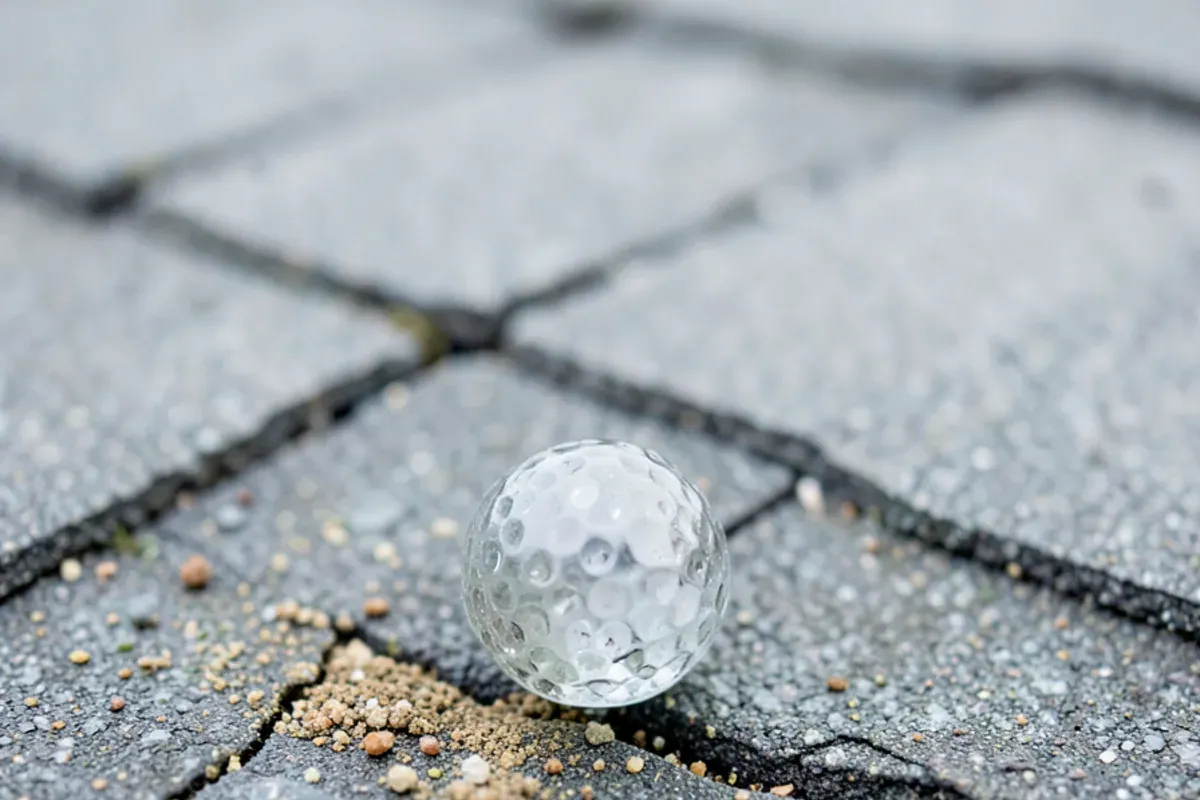
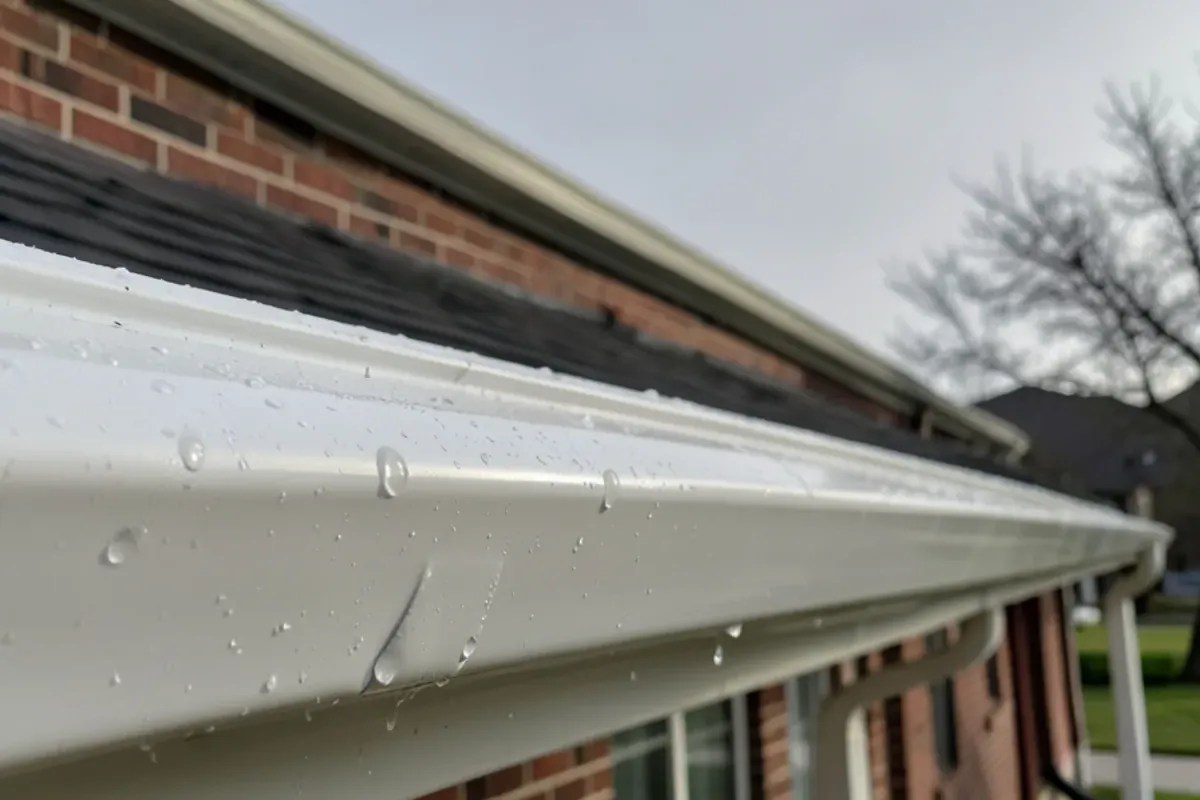
Quarter size hail damage sits right at the edge. On a roof a few years old, we often find dented soft metal and very few true shingle fractures. On a roof that has been through ten or fifteen North Texas summers, the same stones can crack the mat because the asphalt has dried out and lost flexibility. Quarter-size hail is also where soft metals start to tell the story: gutters, downspouts and roof vents pick up clear round dents that help confirm the storm hit the property.
Want a roofer to look at it?
Free inspection with photos. Se habla español.
- 5.0 on Google (33 reviews)
- Free inspections & estimates
- Se habla español
- Workmanship guaranteed in writing with every contract
Golf Ball Hail on a Roof, and What Changes the Threshold
Golf ball hail on a roof (about 1.75 inches) usually produces damage that is easy to document: fractured shingles across multiple slopes, cracked ridge caps and dented flashing. At that size the question shifts from "is there damage" to "repair or replace," which is where a hail damage roof replacement assessment comes in.
Several factors move the damage line in either direction:
- Wind. Hail driven sideways by strong gusts hits harder and concentrates on one side of the house.
- Roof age. Older asphalt is more brittle and fractures under smaller stones.
- Material. Standing seam metal may dent without leaking; tile can crack; shingles rated Class 4 under UL 2218 (tested with a 2-inch steel ball) resist more.
- Temperature. Cold shingles in an early-spring storm are stiffer than shingles warmed by afternoon sun.
- Slope direction. The faces toward the storm take more hits than sheltered slopes.
How Big Was the Hail at Your House?
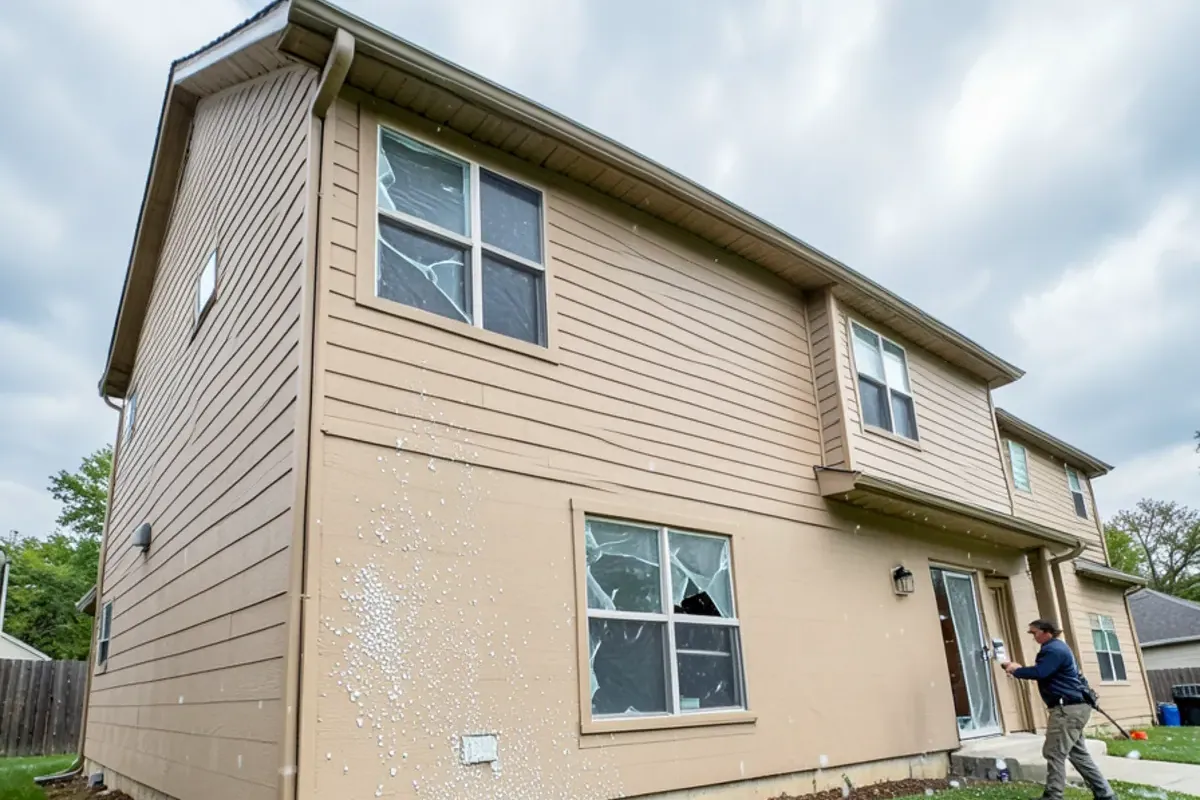
Hail size is rarely uniform across a city. A storm can drop pea-size ice on one side of a neighborhood and golf balls a few streets over, so the size on the news may not be the size on your roof. If it is safe to step outside once the storm passes, you can record your own:
- Pick up the largest stones you can find, not a handful of average ones. Damage follows the biggest hail.
- Measure across the widest point with a ruler or tape. Spotters for the National Weather Service report hail by measured diameter, not by guess.
- Photograph each stone beside the ruler on a plain surface such as a driveway or patio table.
- Bag one or two in the freezer if you can. They will shrink a little, but they still show the size and the date.
- Note the time and the direction the wind was blowing, which tells an inspector which slopes to study first.
Why hail maps are a clue, not proof
Online hail maps built from weather radar estimate the largest hail inside the storm, often before it melts on the way down. They are useful for spotting which areas to check, and some insurers look at them, but they are not a measurement at your address. Dents on your own gutters and the stones you measured carry more weight than a colored map. For Spanish speakers asking what tamaño de granizo daña el techo, the same steps apply, and we can walk through them with you in Spanish.
What DFW Storms Have Taught Us
North Texas has a long record of large hail. The May 5, 1995 Mayfest storm in Fort Worth and the April 11, 2016 storm over Wylie, with hail up to softball size, are two of the region's best-known examples. Most storms we respond to are far smaller, and that is exactly where homeowners get unsure. A one-inch storm passing over Irving does not make headlines, yet it can shorten the life of an older roof.
Smaller storms also stack up. A roof in Irving may catch sub-inch hail two or three springs in a row, each storm knocking loose a few more granules without fracturing anything. No single event looks like much, but the roof ages faster than its rating suggests. Because insurers weigh damage by storm date, we suggest keeping a simple note of each hail event with a photo of the stones and the gutters. When a bigger storm finally hits, that record helps separate new hits from older wear.
In our inspections, the most useful clue is consistency. When the dents in a gutter, the marks on a roof vent and the bruises on the shingles all point to similar hail size and the same direction, the picture is clear. When they do not, something else may be going on, such as old damage or wear, and we say so in the report. We would rather give you an honest "this is wear" than a hopeful guess; that habit runs through everything we do as an Irving, TX roofing contractor.
Size Is a Starting Point, Not an Answer
If hail around an inch or larger fell near your home, or you see fresh dents on soft metal, the roof deserves a close look. A free inspection tells you whether the shingles were actually fractured, how many slopes are involved and whether repair is realistic. Call (725) 745-8803 and we will check your roof and show you every photo.
Questions readers ask
Can pea-size or dime-size hail damage a roof?
Does 1-inch hail always mean my roof needs replacing?
How do I find out how big the hail was at my house?
Why was my neighbor's roof replaced after the same hail storm but not mine?
Sources

Written by the RJ Premium Roofing team, a bilingual roofing contractor based in Irving, TX. We inspect, repair and replace roofs across Dallas–Fort Worth and document storm damage for homeowners’ insurance claims.