In the TPO vs. modified bitumen choice, TPO is a single heat-welded white sheet that reflects North Texas sun, while modified bitumen is a tougher multi-ply asphalt system that handles foot traffic but runs hot without a reflective surface. Coatings restore an existing roof instead. Building use, drainage and Irving's cool-roof rule decide.
Owners comparing flat roof options usually get three different recommendations from three different roofers, often matching whatever each one installs most. The truth is that each system fits certain buildings better than others. This guide compares them the way we do when we look at a roof in Dallas–Fort Worth: by how they handle heat, hail, foot traffic, repairs and the local code. Everything else we do for building owners is laid out on our commercial roofing page.
Three Flat Roof Options, Three Different Jobs
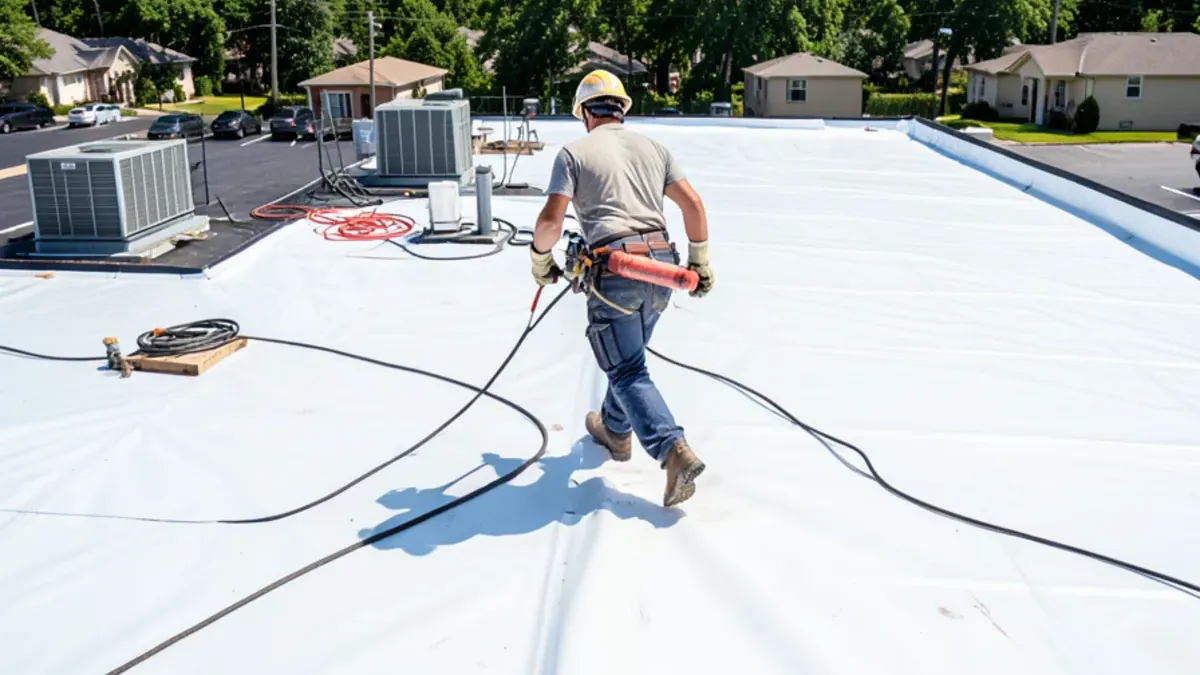
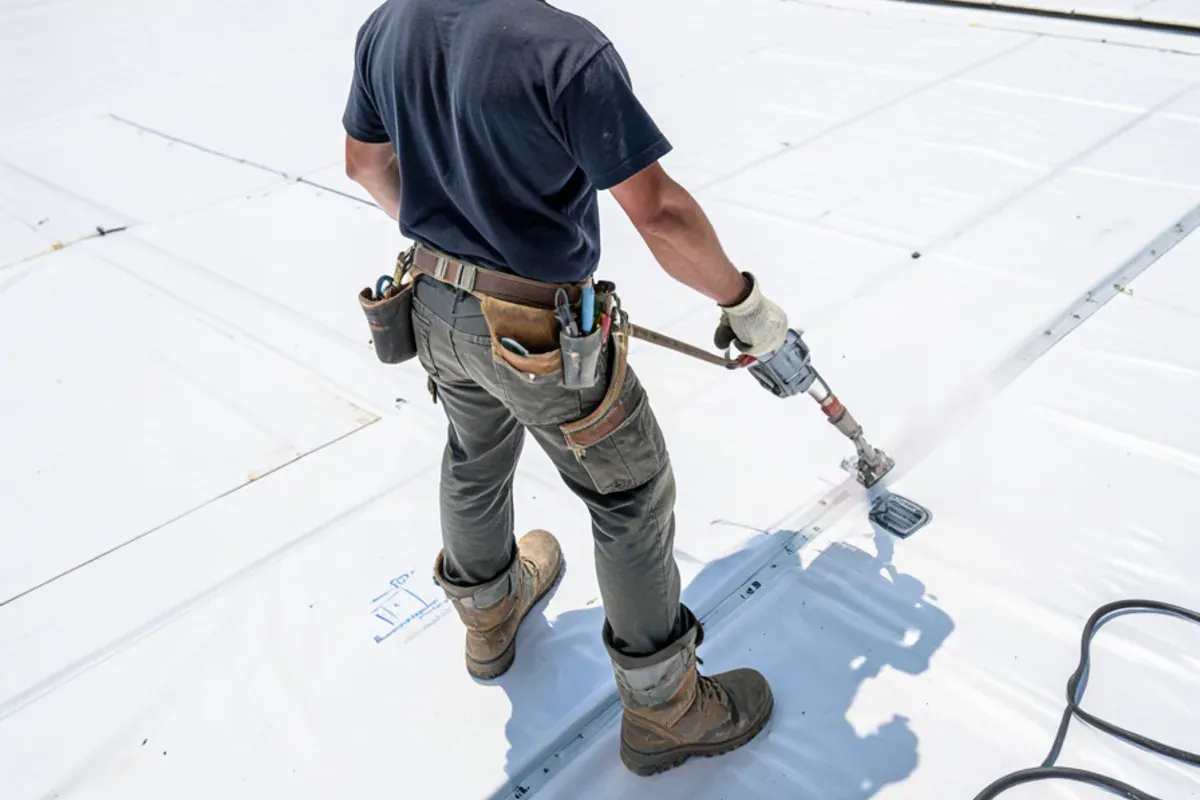
- TPO (thermoplastic polyolefin) is a single-ply sheet, usually white, rolled out in wide widths and fused at the seams with hot air. It is fastened through insulation into the deck or fully adhered.
- Modified bitumen is asphalt modified with rubber (SBS) or plastic (APP), installed as a base sheet plus a cap sheet, often with granules on top. It can be torch-applied, cold-applied with adhesive or self-adhered.
- Coatings (silicone, acrylic or urethane) are fluid-applied over an existing roof to renew its surface. They are a restoration, not a new roof system.
So the real comparison is TPO vs. modified bitumen for a new roof, and either of those vs. a coating when the existing roof is still sound underneath.
How TPO Performs Under Texas Sun
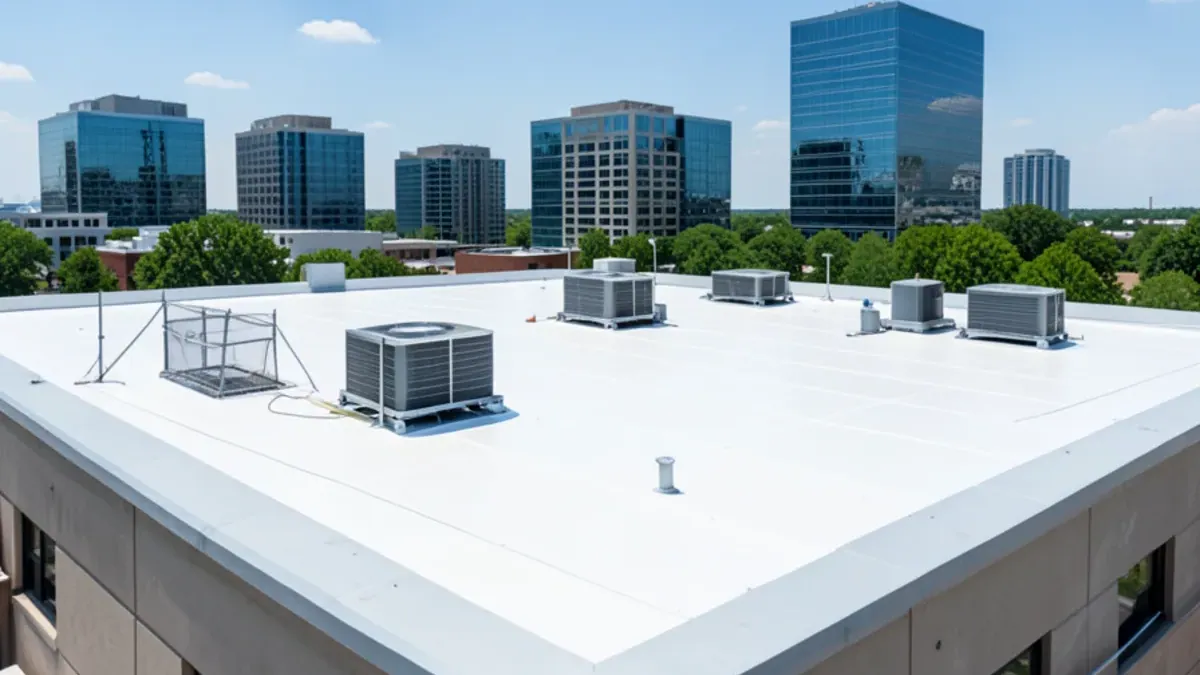
TPO's main advantage here is reflectance. A white sheet stays far cooler than a dark roof on a 95°F July afternoon, which helps cooling loads and makes cool-roof rules easier to meet. Heat-welded seams, when done right, are as strong as the sheet itself.
Its weak points are worth knowing too. TPO depends on good seam welding during installation, and a cold weld can open years later. Thin sheets over soft insulation are more vulnerable to hail and foot traffic, which is why thickness and a cover board matter. Older sheets lose flexibility, which makes repairs harder. Our TPO roofing page covers how we specify it.
Mod Bit Roof Lifespan and Toughness
A modified bitumen roof's strength is redundancy. Two or more plies mean a puncture in the cap sheet does not automatically become a leak. It handles foot traffic well, so it suits roofs with lots of equipment and frequent service visits. Repairs are familiar and straightforward with compatible materials.
How long it lasts depends on the number of plies, the quality of the laps, drainage, and how well the granule surface protects the asphalt from UV. The downside in North Texas is heat: a standard dark granulated cap absorbs sun. In Irving, the Chapter 8B amendments require low-slope cool roofs to meet an SRI of at least 78, which a typical dark cap sheet will not reach; reflective cap sheets or a coating are the usual way to comply. Check the specific product's rated SRI and confirm with Irving's Inspections Department.
Torch application also deserves care near wood, older walls and occupied buildings. Cold-applied and self-adhered versions avoid open flame.
Want a roofer to look at it?
Free inspection with photos. Se habla español.
- 5.0 on Google (33 reviews)
- Free inspections & estimates
- Se habla español
- Workmanship guaranteed in writing with every contract
Silicone Coating vs. TPO and Other New Roofs
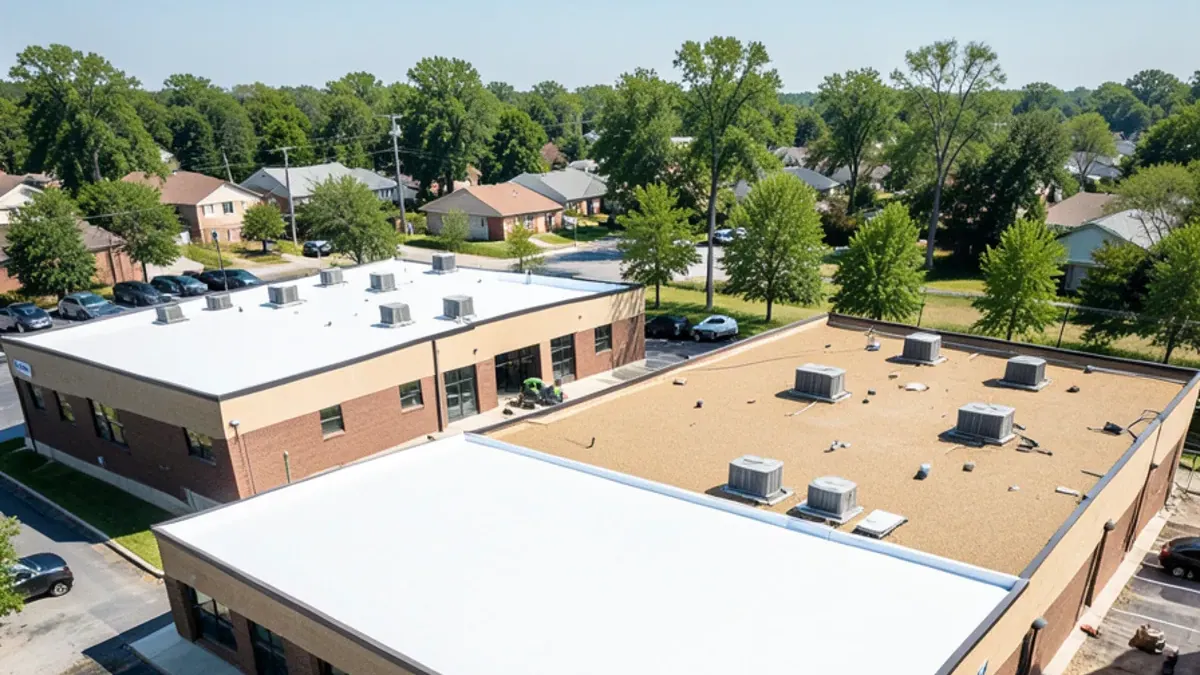
A silicone coating is not a substitute for a new TPO roof on a failed building. It is a way to extend a roof whose membrane is attached, seams are repairable and insulation is dry. Where those conditions hold, a coating can add years and improve reflectance with far less disruption. Where they do not, a new roof is the only real fix. If your roof has active leaks and you are weighing these options, our flat roof repair work can stabilize it while you decide.
Where Does EPDM Fit in a DFW Comparison?
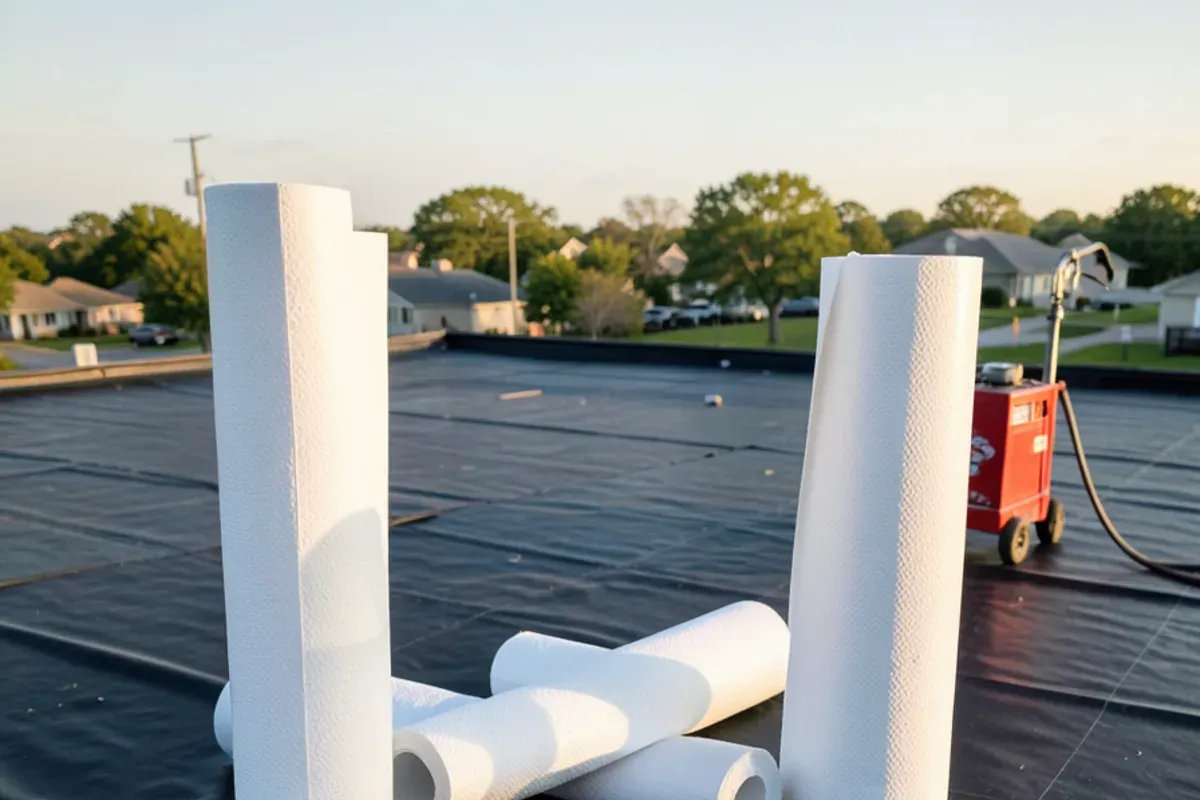
EPDM, the synthetic rubber sheet many people simply call a rubber roof, is the system we see most often on older buildings rather than new specs in this area. It is durable and flexible, with seams joined by tape or adhesive instead of heat. The common black version absorbs a lot of sun, and black EPDM does not reach the SRI 78 that Irving's cool-roof amendments set for low-slope roofs. White EPDM exists, but on new work in DFW the choice usually narrows to TPO, PVC or a reflective modified bitumen. When an EPDM roof is still sound, the realistic options are repair with compatible EPDM materials, a coating rated for rubber, or replacement.
What Thickness and Attachment Should the Bid Specify?
Two bids for "a TPO roof" can describe very different roofs. Before comparing prices, line up these details:
- Membrane thickness. TPO is commonly made in 45, 60 and 80 mil sheets; modified bitumen bids should state the number of plies and the cap sheet type.
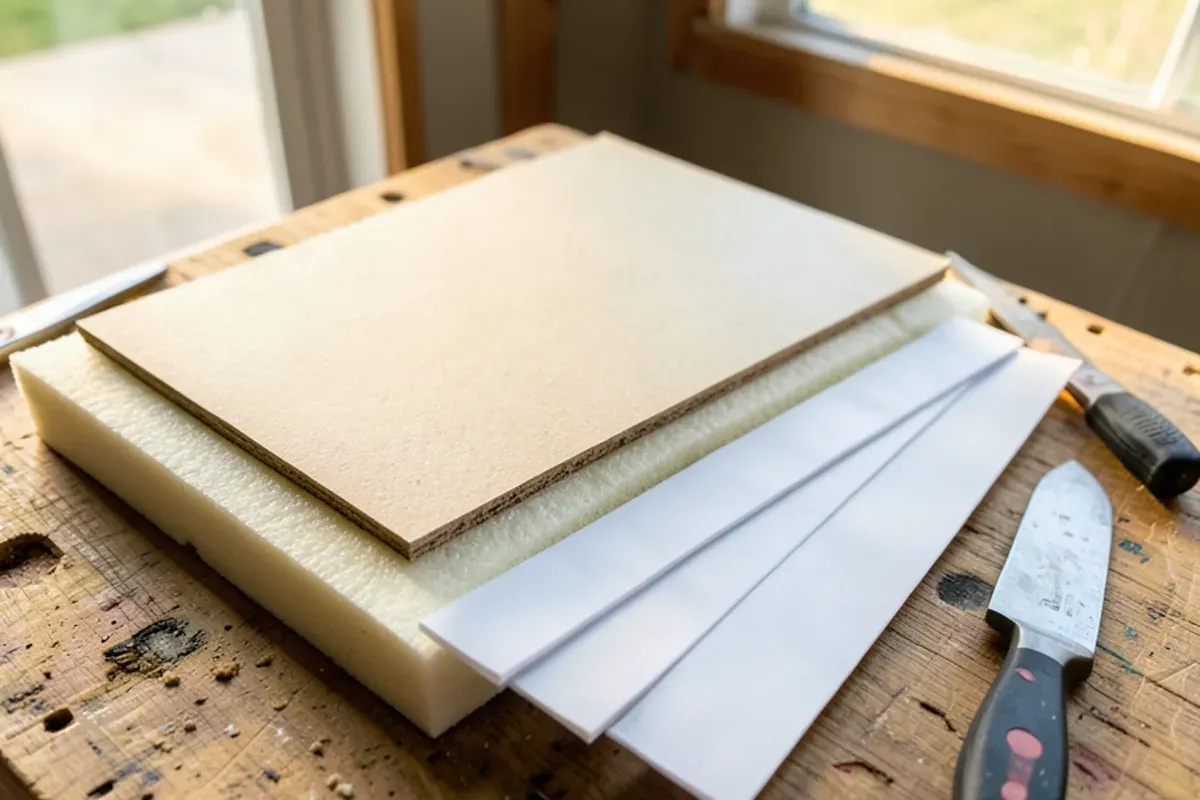
- Cover board. Whether a hard board goes between the insulation and the membrane, which matters for hail and foot traffic.
- Attachment. Mechanically fastened, fully adhered or another method, and whether the bid shows extra fastening at corners and perimeters, where wind uplift is strongest.
- Insulation. Whether wet insulation is removed and what the new insulation is, since a full replacement may need to meet current energy code.
- Flashing details. Curbs, walls, edge metal and drains, each named, not lumped into "flashing as needed."
- Reflectance. The product's rated SRI, which in Irving must reach 78 on a low-slope roof.
TPO vs. Modified Bitumen vs. Coatings, Side by Side
| Factor | TPO | Modified bitumen | Coating (restoration) |
|---|---|---|---|
| What it is | New single-ply roof | New multi-ply roof | Surface renewal over an existing roof |
| Seams | Hot-air welded | Torched, cold-adhered or self-adhered laps | Seamless once cured |
| Heat reflectance | High when white | Low unless reflective cap or coated | High with white products |
| Hail behavior | Depends on thickness and cover board | Multiple plies add redundancy | Depends on the roof underneath |
| Foot traffic | Fair; needs walkway pads | Good | Varies; needs walkway pads |
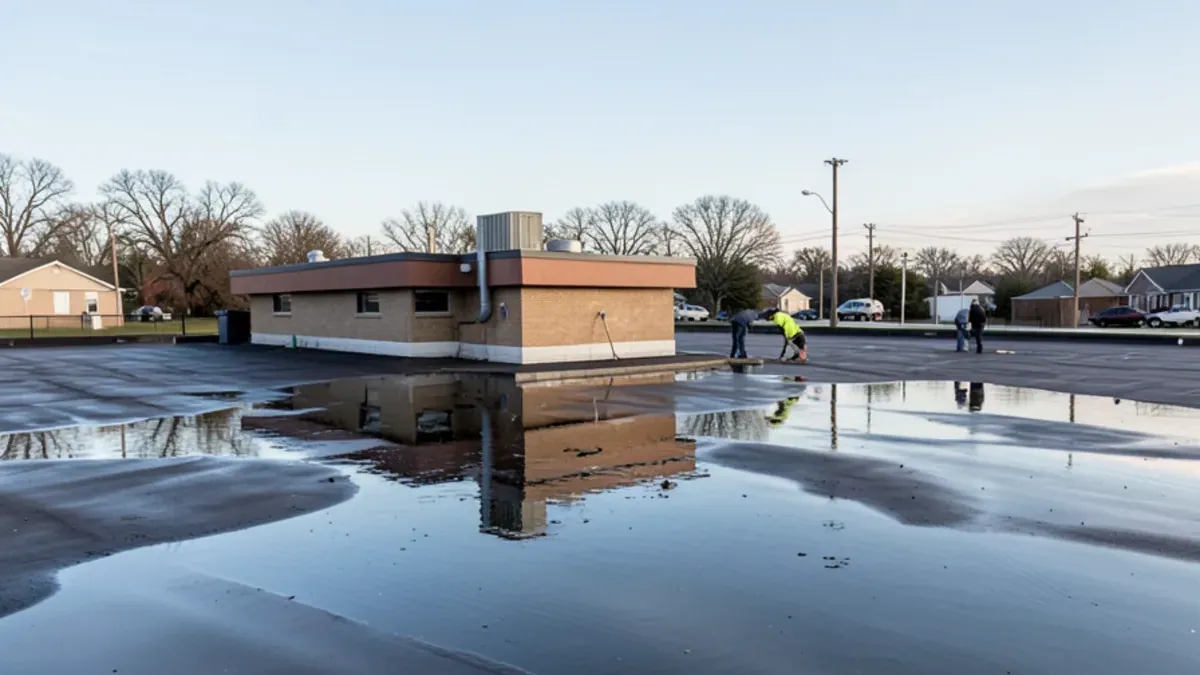
| Ponding tolerance | Fair if seams are sound | Fair | Silicone better than acrylic |
| Repairs | Weldable while the sheet is still flexible | Simple with compatible materials | Recoat with a compatible product |
| What drives its cost | Thickness, attachment, insulation, cover board | Number of plies, application method, cap surface | Prep work, wet-area replacement, coating thickness |
What We Would Choose for Common DFW Buildings
These are starting points, not rules. Every roof still gets a walk and moisture check first.
- Large distribution building, few penetrations: TPO, often mechanically fastened, with a cover board where hail exposure is high.
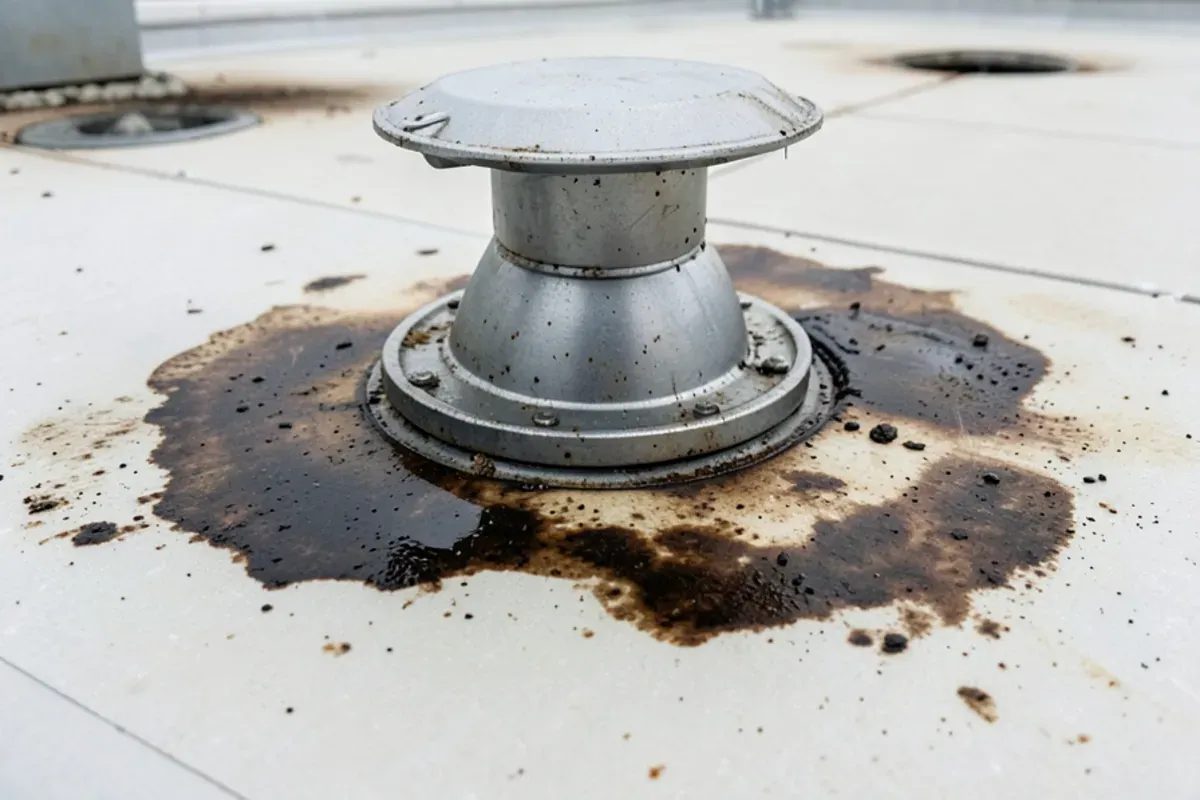
- Restaurant or strip center with kitchen exhaust: PVC or a grease-resistant detail around fans, mod bit or TPO elsewhere.
- Older office with heavy rooftop equipment traffic: multi-ply modified bitumen with a reflective cap, or TPO with generous walkway pads.
- Sound metal or single-ply roof with dry insulation: a coating restoration may be the most practical move.
- Roof with widespread wet insulation: tear-off and a new system, regardless of the one chosen.
One honest caveat runs through all five: installation quality usually matters more than the membrane name. A well-welded TPO roof and a carefully lapped mod bit roof will both outperform a rushed version of either. On TPO jobs we probe every welded seam at the end of each day, because a cold weld is easy to miss in the afternoon heat and hard to find once it starts leaking.
Para dueños que comparan opciones de techo plano, explicamos cada sistema en español.
Choosing the Right System for Your Building
The best flat roof option is the one that matches your building, not the one a contractor prefers to install. We start with a free inspection, show you what is under the existing roof, and explain how each system fits your use, budget and code requirements. For buildings in Irving, Dallas and the rest of the Metroplex, reach our roofing contractor in Irving, TX crew at (725) 745-8803.
Questions readers ask
Which flat roof option handles North Texas hail best?
Is TPO vs. PVC worth comparing for a regular office building?
Can an old modified bitumen roof be replaced with TPO?
How thick should a TPO membrane be for a North Texas building?
Sources

Written by the RJ Premium Roofing team, a bilingual roofing contractor based in Irving, TX. We inspect, repair and replace roofs across Dallas–Fort Worth and document storm damage for homeowners’ insurance claims.