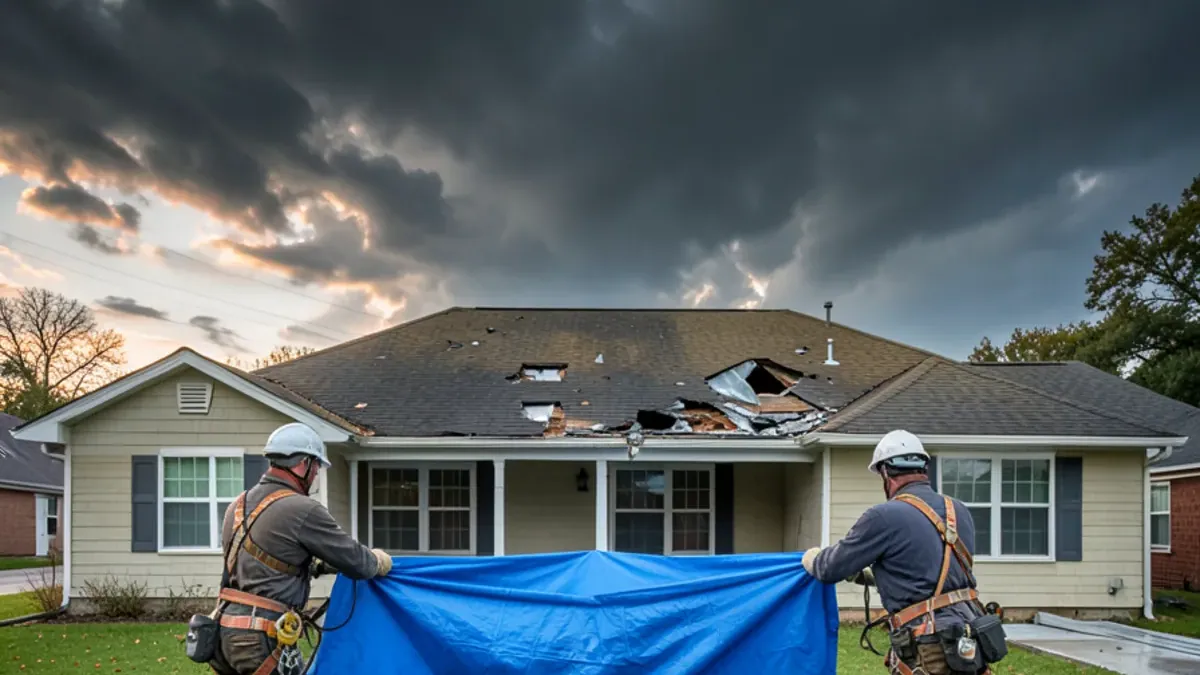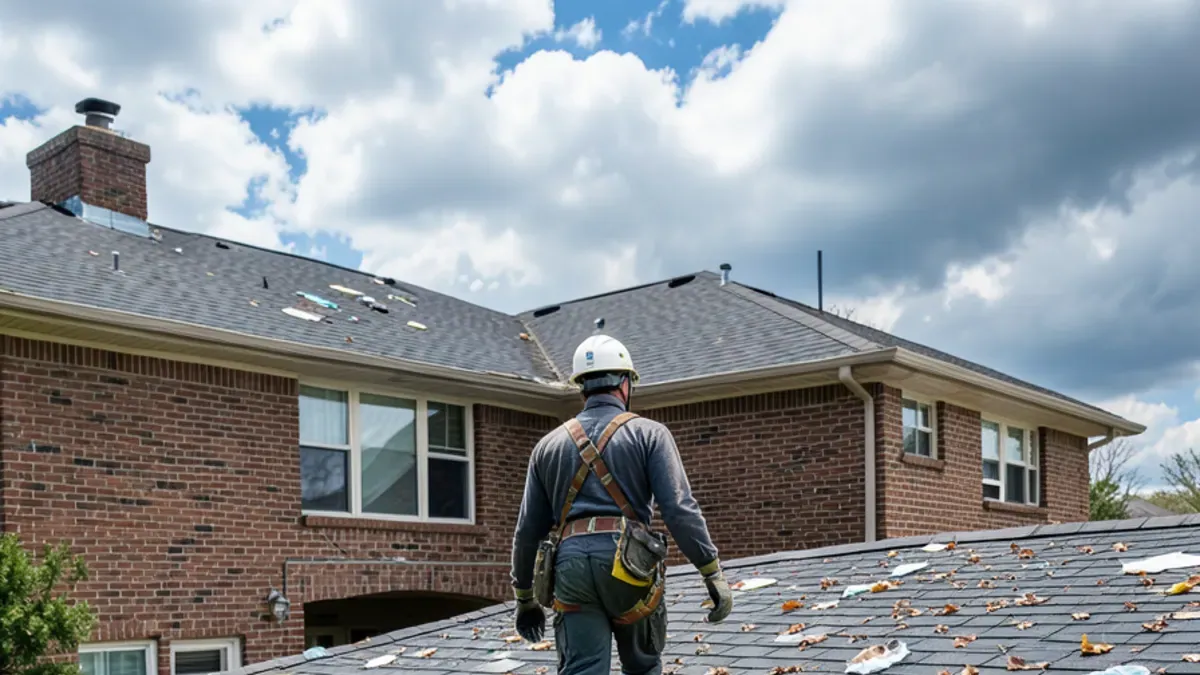

A good spring storm roof checklist for DFW has five jobs: trim limbs back from the roof, clear gutters and downspouts, photograph the roof's current condition, fix small weak spots, and read your policy's wind and hail deductible. Do them in late winter, before the first hail warning, and do every one of them from the ground.
Hail is a numbers game in Texas. Over 2017–2019 alone, NICB data show 637,977 Texas hail claims, with Dallas alone producing 25,262, enough to place it in the top five U.S. cities. North Texans remember the big ones, like the 1995 Mayfest storm in Fort Worth or the April 11, 2016 Wylie storm with hail up to softball size. You can't stop hail, but you can make sure your roof, your records and your policy are ready before it arrives.
Do Every Prep Task From the Ground
Preparing a roof for storms does not mean walking on it. Use binoculars, a phone camera with zoom, a gutter scoop on a stable ladder at the eave, and the attic. Leave anything on the slope to a crew with fall protection. Roof work is dangerous even in good weather. Of the 134 roofing deaths the BLS tallied for 2023, falls, slips or trips claimed 110 workers employed by roofing contractors. Never climb a roof that is damp with dew or rain, and never go up during a storm warning to check something.
The Spring Storm Roof Checklist, Task by Task
| Task | When | Why it matters |
|---|---|---|
| Trim limbs back from the roofline | Late winter, before leaf-out | Wind-whipped branches scrape shingles; dead limbs fall in storms |
| Clear gutters and downspouts | Late winter, again after spring pollen drop | Overflowing gutters push water behind fascia and under the drip edge |
| Photograph the roof and attic | Before the first storm warning | Gives a dated before picture for any future claim |
| Check pipe boots, vents and flashing | Late winter, with binoculars | Small cracks now become ceiling stains in May |
| Read your deductible and policy dates | Any time before spring | Avoids surprises when you file |
| Save a local roofer's number | Now | So you aren't choosing from door hangers after a storm |

Trim trees off the roof
Branches that touch or hang over the roof cause slow damage every windy day and fast damage in a storm. Have an arborist cut them well back, and remove dead limbs above the house entirely. Don't forget trees on the property line, which affect your roof whether they're yours or not.
Clear gutters and downspouts
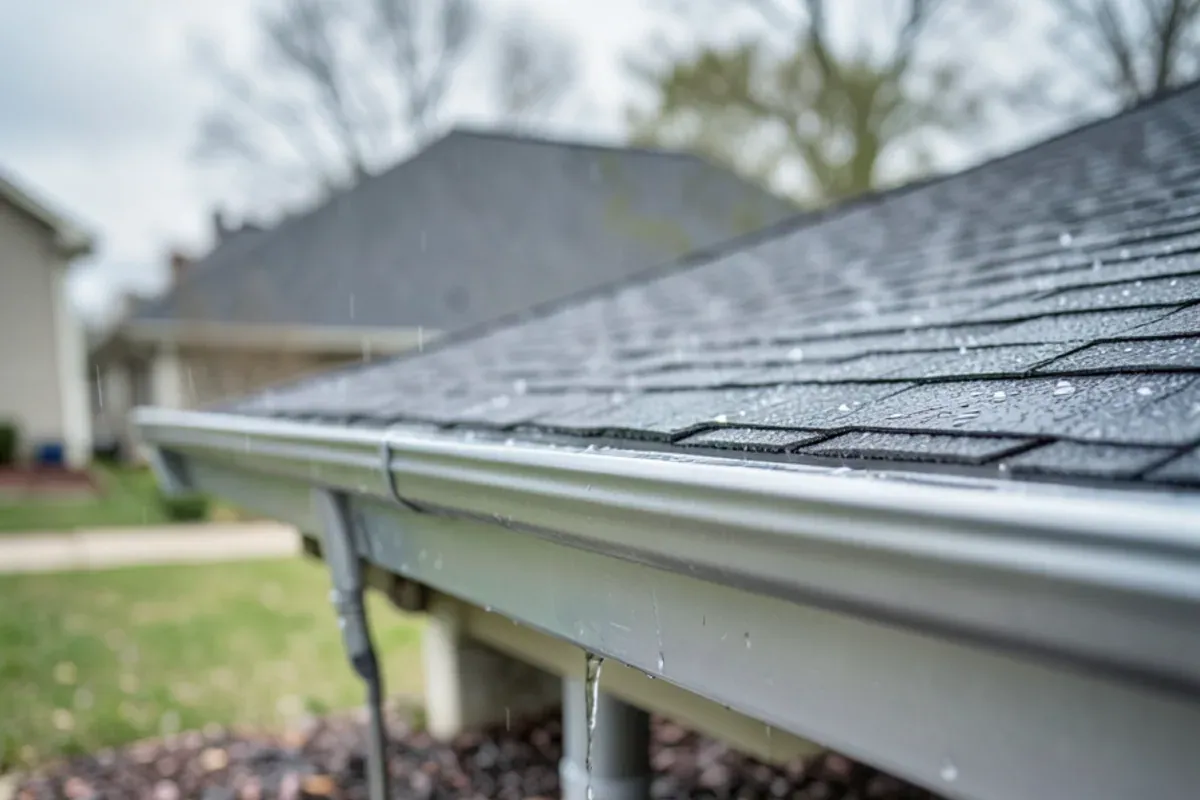
Heavy spring rain arrives fast. When gutters are clogged with leaves and seed pods, water spills over the back edge, behind the fascia and sometimes into the soffit. Clear the gutters, then run a hose through each downspout to confirm it flows. While you're there, look for shingle granules collecting in the gutters, which can mean aging shingles.
Want a roofer to look at it?
Free inspection with photos. Se habla español.
- 5.0 on Google (33 reviews)
- Free inspections & estimates
- Se habla español
- Workmanship guaranteed in writing with every contract
Prepare Your Roof for Hail Season With Before Photos
Roof photos before a storm are one of the cheapest forms of protection you have. Take wide shots of every slope from the yard and the street, zoomed shots of vents, ridge caps and gutters, and a few photos in the attic showing dry decking. Back them up somewhere other than your phone. If hail hits in May, those images help show what changed.

Build a Small Storm-Night Leak Kit
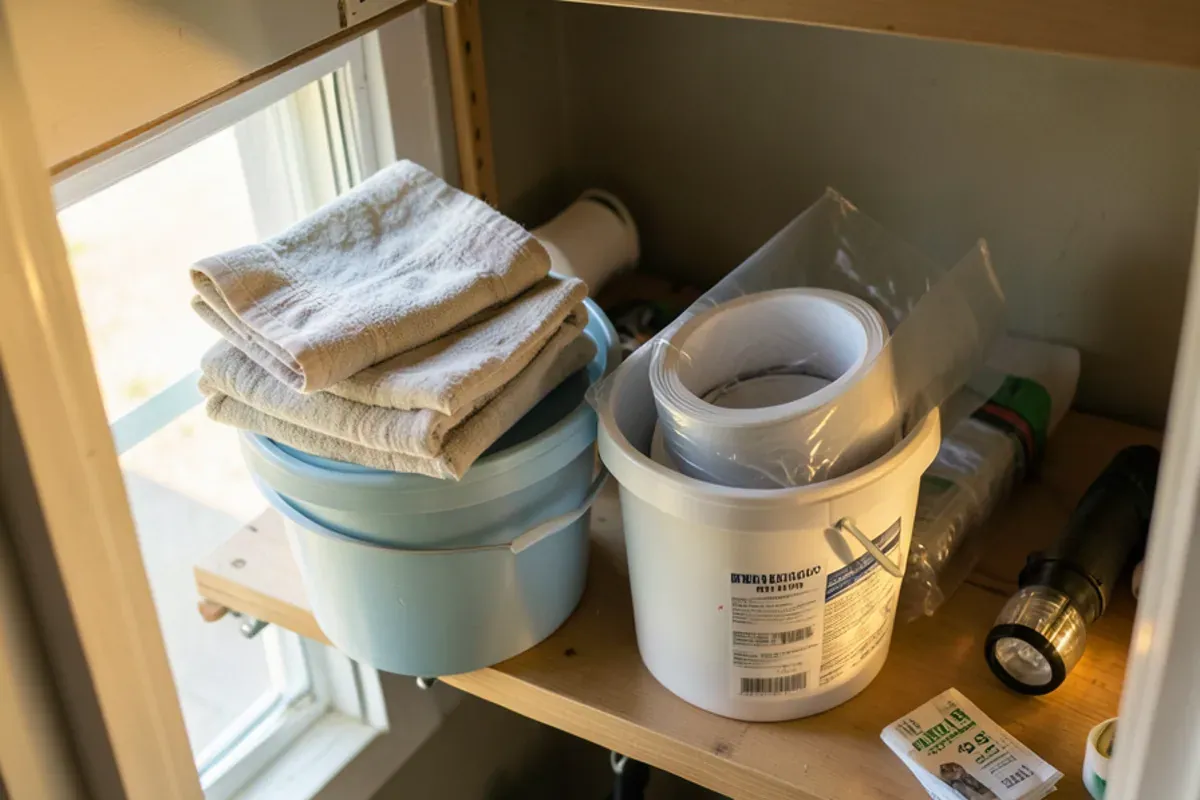
Most spring leaks start after dark, in the middle of a thunderstorm, when nobody should be on a roof. A few items staged in March make that night calmer:
- Two or three buckets and a stack of old towels
- Plastic sheeting to cover furniture and electronics under a ceiling stain
- A flashlight with fresh batteries for the attic hatch
- Your insurer's claims number and policy number saved in your phone
- A local roofer's number saved next to it
- The location of the breaker panel, in case water reaches a light fixture
- A shared photo folder where the whole household can drop pictures
If a ceiling bulges with water, a small hole poked at the lowest point into a bucket can drain it in a controlled way rather than letting the drywall give way, but only when you can reach it safely from the floor and the area is clear of wiring. Keep receipts for anything you buy while containing the water, since your policy likely asks you to protect the house from more damage.
Know Your Deductible Before Storm Prep Becomes Storm Cleanup
Many Texas homeowner policies use a separate wind and hail deductible set as a percentage of the home's insured value rather than a flat dollar figure. Look at your declarations page now and do the math, so you know roughly what you would owe on a roof claim. Under Texas Insurance Code Chapter 707, that deductible is yours to pay; any roofer offering to cover or waive it is breaking state law. Also note how your policy pays for roofs (replacement cost or actual cash value) and how long you have to report a loss.
What We See on DFW Roofs Each Spring
The roofs that leak in the first big spring storm are rarely the ones with hail damage. They're the ones with problems that were already there: a pipe boot cracked by last summer's sun, a valley full of leaves, an unsealed shingle along a rake edge, a gutter that has pulled away from the fascia. Those cost little to fix in February and a lot more after water has soaked the decking and drywall in May.
That pattern holds from Irving, where we work as a local roofing contractor, north to Lewisville, where homes around Lewisville Lake catch open wind across the water. A pre-season look, from the ground and the attic, catches most of it. On older roofs, we also check whether shingles are still sealed down along the edges, because an unsealed course is the first thing a spring gust peels back, and whether the ridge caps are cracked from heat. A roof that's near the end of its life is worth discussing before hail season, not after, since a claim only covers new storm damage and never ordinary wear.
Owners often ask whether to upgrade to impact-resistant shingles before spring. The honest answer depends on the roof you have. If it is sound and mid-life, replacing it only to get a tougher shingle rarely pays off, because a good roof is not more likely to leak simply because its shingle is not Class 4. If it is due for replacement anyway, a late-winter install with an impact-rated product is worth pricing, and some Texas insurers offer a premium discount for it, so ask your agent for the figure before deciding. Either way, impact-rated shingles reduce damage but do not make a roof storm-proof.
If a storm does get through, our emergency roof repair crew covers active leaks once it's safe to work, and our storm damage roof repair service handles the permanent fix, with photos and a written report for your claim. Si quiere preparar su techo para tormentas, le explicamos todo en español.
Get Ready While the Sky Is Clear
Trim, clean, photograph, read your policy, and fix the small things before the first warning. To get a free pre-season roof inspection and an honest list of what needs attention, dial (725) 745-8803.
Questions readers ask
When should DFW homeowners do spring roof prep?
Why do I need photos of my roof before a storm?
Should I put a tarp on my roof before a storm is forecast?
Sources

Written by the RJ Premium Roofing team, a bilingual roofing contractor based in Irving, TX. We inspect, repair and replace roofs across Dallas–Fort Worth and document storm damage for homeowners’ insurance claims.