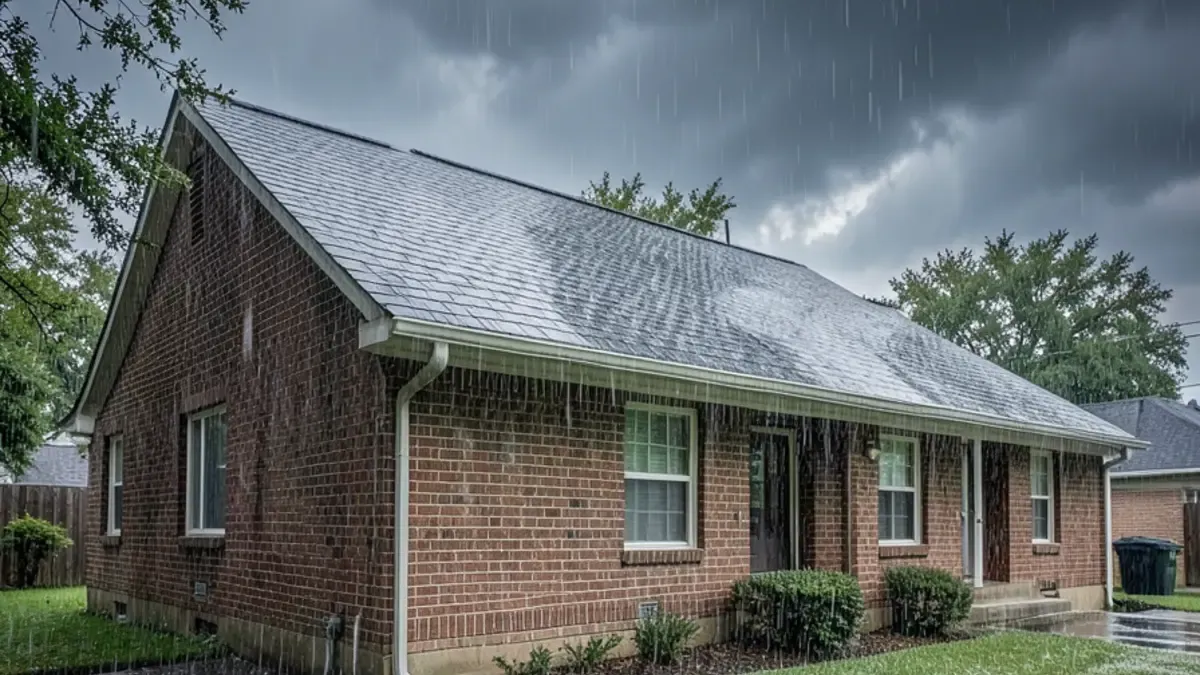
When a roof leaks only in heavy rain, the cause is usually a weak spot light rain never reaches: flashing that lets wind-driven water slip sideways, a valley that overflows at peak volume, a gutter backing up under the drip edge, or a vent boot that floods in a downpour. Match each leak to the storm's wind and intensity.
A leak that appears only in the worst storms is one of the most frustrating problems a homeowner deals with. By the time a roofer can look, the roof is dry and everything appears fine. But storm-only leaks follow rules, and once you know them, finding the source gets much faster.
Why Heavy Rain Gets In Where Light Rain Doesn't
A shingle roof is built to shed water downhill. Each course laps over the one below, and flashing directs water around walls, chimneys and vents. In a gentle rain, that system works even when parts are worn. Heavy rain changes three things:
- Volume. More water than valleys, gutters and downspouts can move at once, so it backs up and spreads sideways.
- Wind. Gusts push water across and even up the roof, under shingle laps and behind flashing edges that face the wind.
- Duration. A long storm keeps surfaces saturated, so slow wicking through a cracked seal finally reaches the decking.
Irving averages roughly 33 to 37 inches of rain a year, and much of it falls in spring thunderstorms, with May usually the wettest month. Those storms deliver all three at once.
The Usual Suspects Behind a Roof Leak in Hard Rain
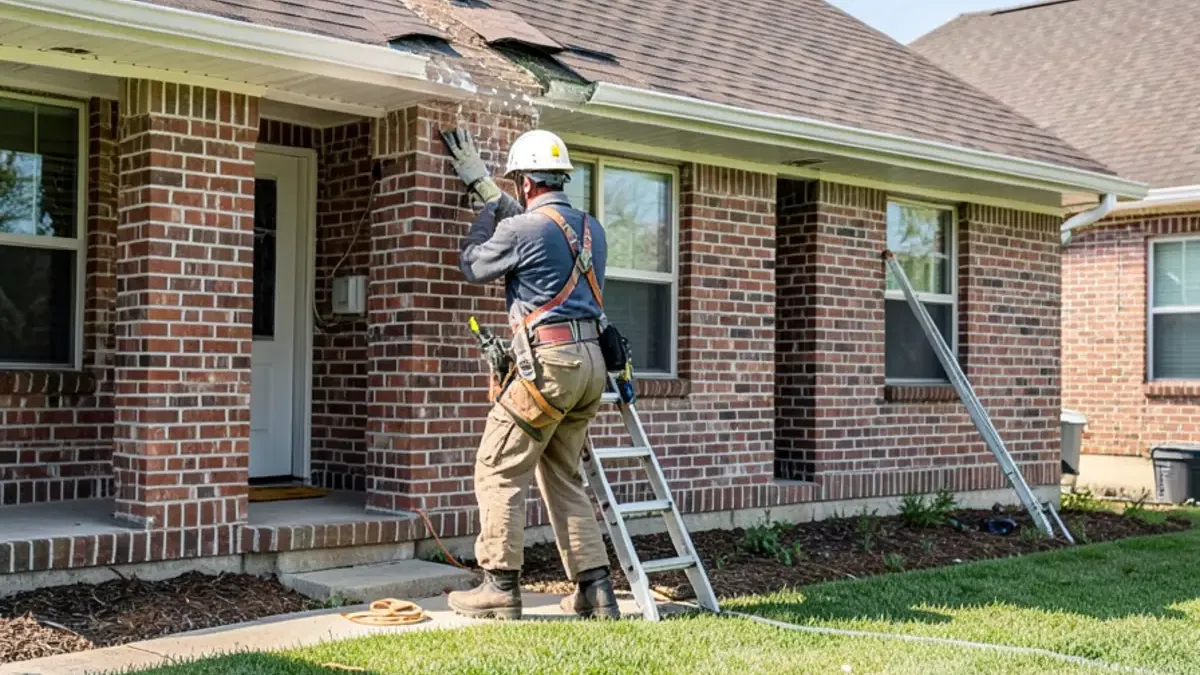
- Step and counter flashing where a roof meets a second-story wall. Wind-driven rain against the wall finds any gap behind the siding or a missing kickout flashing at the bottom.
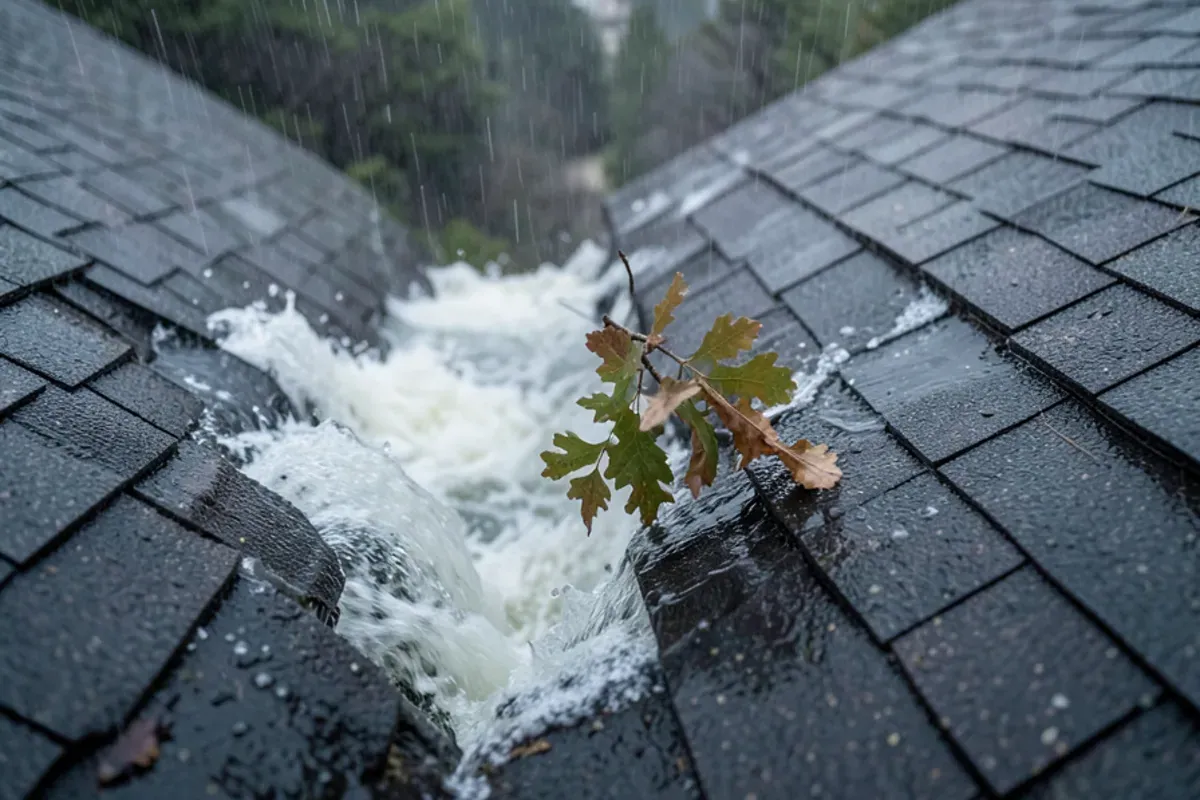
- Roof valleys. Two slopes pour into one channel. Leaves, debris or a cut that is too close to the center let overflow run under the shingle edges.
- Gutter backup. A clogged gutter fills and pushes water back over the fascia and under the drip edge, causing stains at the top of exterior walls.
- Pipe boots and vents. A cracked collar may stay dry until water rushes past it fast enough to splash into the gap.
- Low-slope sections. Porch roofs and additions with too little pitch for shingles hold water long enough to leak in heavy rain.
- Old fastener holes from satellite dishes or antennas, sealed only with caulk.
Want a roofer to look at it?
Free inspection with photos. Se habla español.
- 5.0 on Google (33 reviews)
- Free inspections & estimates
- Se habla español
- Workmanship guaranteed in writing with every contract
Wind-Driven Rain Leaks: Reading the Pattern
Your leak has a fingerprint. Writing it down after each storm is the most useful thing you can do before the inspection.
| What you notice | Points toward |
|---|---|
| Leaks only when wind comes from one direction | Flashing or wall junction on that side |
| Leaks start late in a long storm | Saturated valley, gutter backup or slow wicking |
| Stain at the top of an exterior wall | Gutter overflow or drip edge problem |
| Drip near a bathroom or kitchen ceiling | Plumbing vent boot |
| Leak below a roof intersection | Valley overflow or debris dam |
| Leak only in hail-and-wind storms | Damaged or lifted shingles on the windward slope |
A simple log helps: date, time it started, rough rainfall, wind direction (local weather apps and the National Weather Service report it), and where the water appeared. Three entries usually narrow it to one slope.
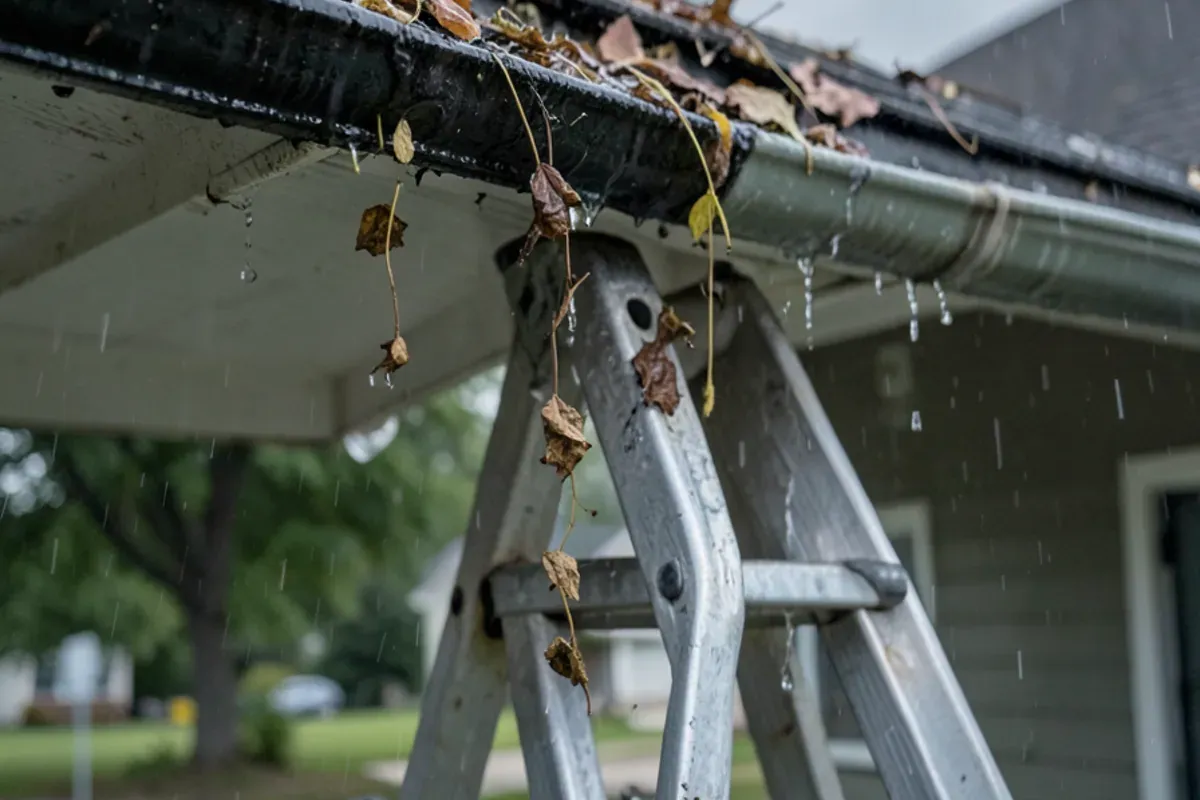
What to Do While the Roof Is Leaking in a Storm
The best evidence about a storm-only leak exists only while it is happening. Without going on the roof, you can protect the house and capture what an inspector needs:
- Catch the water with buckets or bins and move furniture, rugs and electronics away from the drip.
- Watch for a sagging ceiling. A bulge means water is pooling above the drywall; keep people and pets out from under it and call for help.
- Look in the attic with a flashlight if the hatch is safe to reach. Set a container under the drip and note which rafter bay it falls in.
- Photograph and time-stamp the stain, the drip and the view out the window showing wind and rain.
- Mark the spot with painter's tape on the ceiling or attic framing so it can be found when everything is dry.
Keep receipts for buckets, tarps or any urgent temporary repair, since insurers generally expect reasonable steps to limit further damage.
Is it the roof at all?
Some "roof leaks" come from somewhere else. Water at the top of a window frame often enters through the window flashing or the wall above it. Drips in dry weather, especially on hot afternoons, usually point to an air-conditioning condensate line or drain pan in the attic, not the roof. And brick chimneys can soak up water through a cracked crown or porous masonry in long storms. If the leak shows up when it has not rained, tell us; it changes where we look first.
How We Trace an Intermittent Roof Leak
We start inside. In the attic, we look for water trails on the underside of the decking and rafters, which usually run uphill from the ceiling stain to the real entry point. Old dark stains next to fresh ones tell us the leak has repeated.
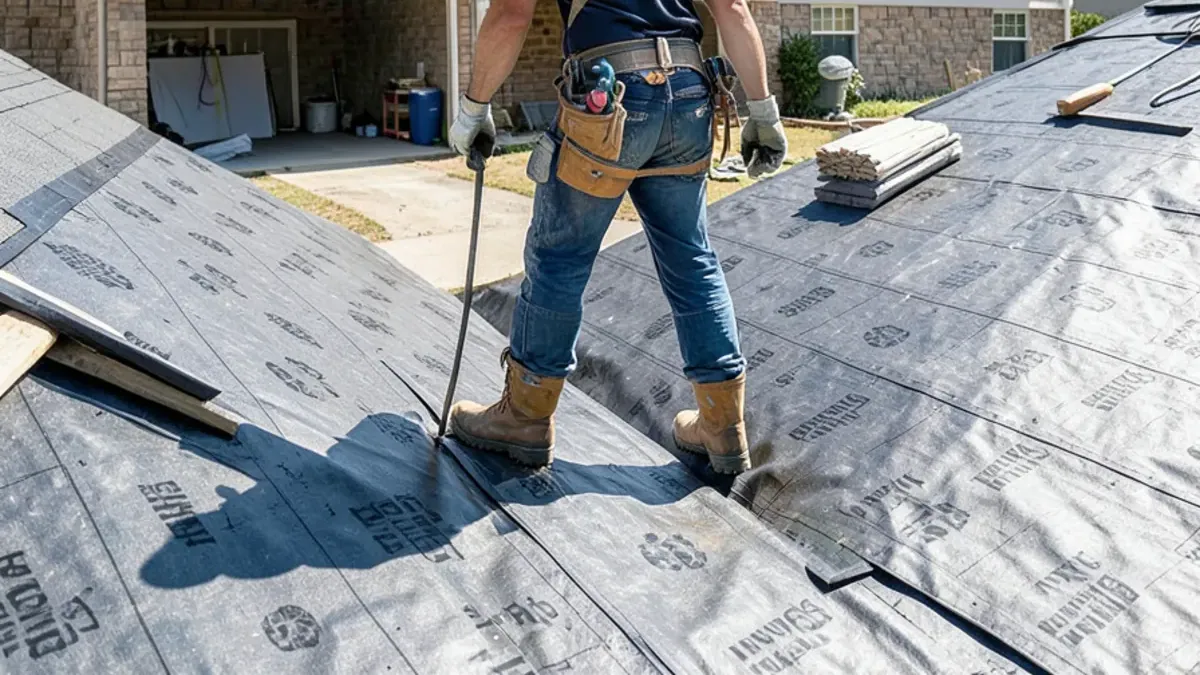
On the roof, we inspect the suspects in the area those trails point to: flashing, valleys, boots and any penetrations. If nothing is obvious, we run a controlled water test, wetting small sections from the bottom up while someone watches inside, so we know exactly which section lets water in. It takes patience, but it beats replacing parts that were never leaking.

What Storm-Only Leaks Teach Us on DFW Roofs
The pattern we see most is the roof-to-wall junction on two-story homes. The step flashing may be fine, but the kickout flashing at the bottom of the wall is missing, so water from the wall pours behind the siding or stucco instead of into the gutter. It only shows up in storms with enough wind to drive rain against that wall.
The second is the leak at the roof valley, especially where an addition was tied into the original roof. Valleys that dump into a short gutter run, or that collect pine needles and leaves, overflow in downpours. Our roof valley repair work rebuilds the valley with the right underlayment and metal or a properly cut shingle valley, depending on the roof.
Stop Guessing at the Leak
If your ceiling only stains in the big storms, start the log now and schedule an inspection while the roof is dry. Our roof leak repair service is part of our full roof repair work across Irving, where we're the local roofing contractor in Irving, TX, and in Richardson, whose neighborhoods straddle the Dallas–Collin county line. ¿Gotera solo cuando llueve fuerte? Le ayudamos en español.
Bring your storm notes and give us a call at (725) 745-8803. We'll trace the water to where it actually gets in and show you photos before we fix anything.
Questions readers ask
Why does my roof leak in hard rain but not in light rain?
Can a roofer find an intermittent roof leak when it isn't raining?
Is a leak that only shows up in big storms worth fixing right away?
Will a new roof fix a leak that only happens in heavy rain?
Sources

Written by the RJ Premium Roofing team, a bilingual roofing contractor based in Irving, TX. We inspect, repair and replace roofs across Dallas–Fort Worth and document storm damage for homeowners’ insurance claims.