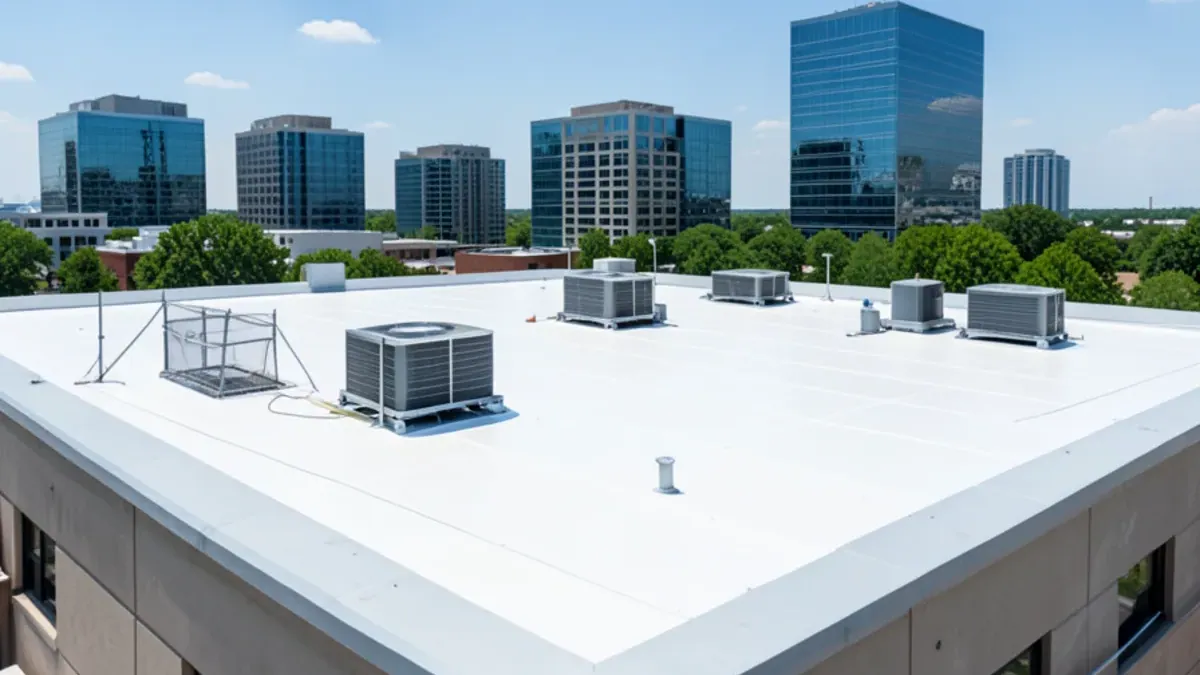
The roof coating vs. replacement decision comes down to what is under the surface. A silicone or elastomeric coating can extend a flat or metal roof whose membrane is attached and whose insulation is dry. If insulation is wet, the deck is rusting or most seams have failed, replace it. A moisture check and adhesion test decide.
Owners usually ask about coatings for a good reason: a restoration costs less up front than a new roof and causes less disruption inside the building. The catch is that a coating is a surface treatment. It renews the waterproofing layer and reflects heat, but it cannot repair the insulation, the deck or the structure. If those are sound, a coating is often a smart move. If they are not, it postpones the replacement and makes it messier. Our commercial roofing team looks at both options on every low-slope roof we inspect.
Roof Coating vs. Replacement: What a Coating Can and Can't Do
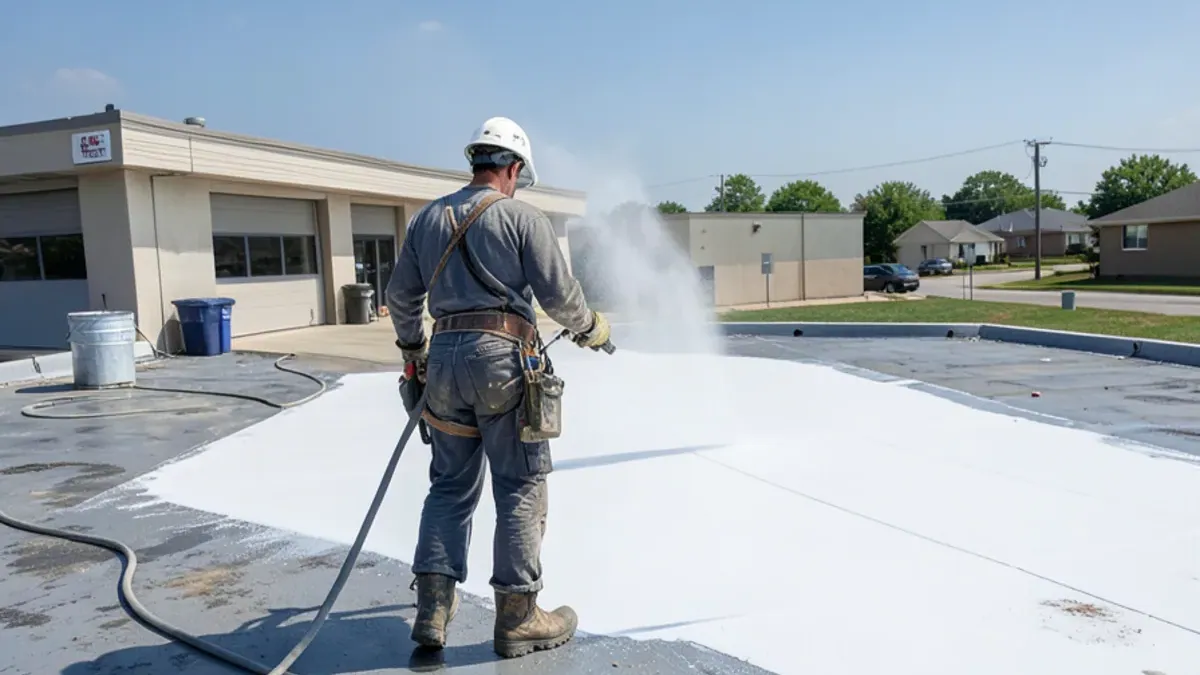
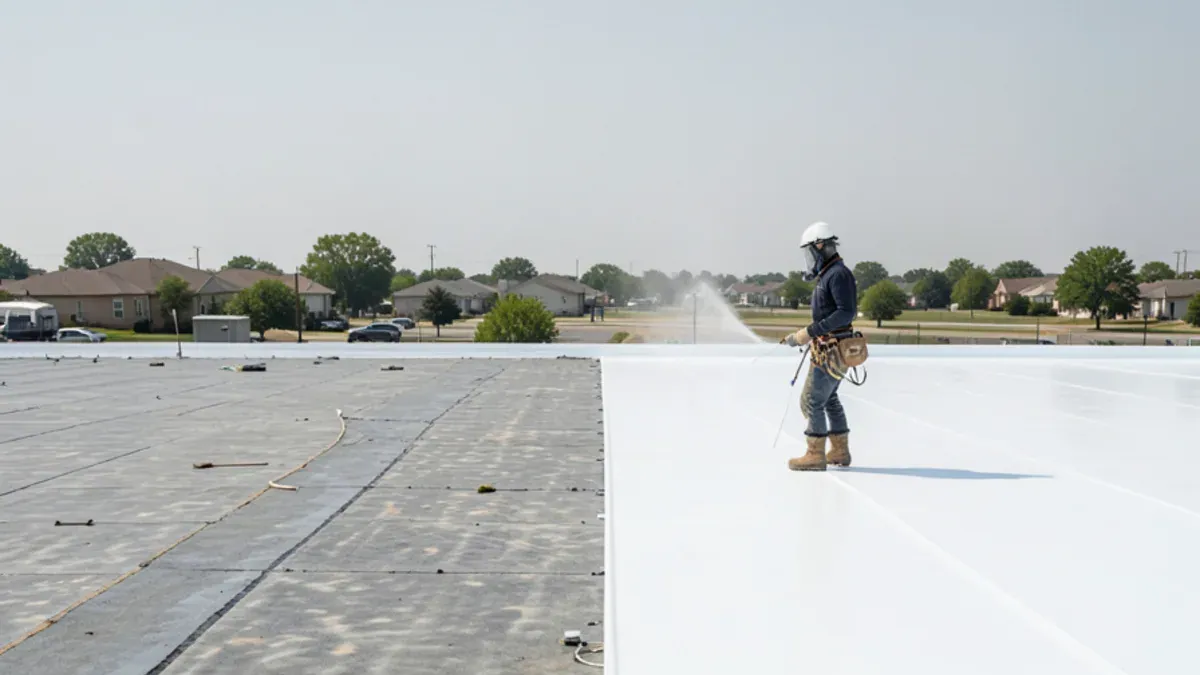
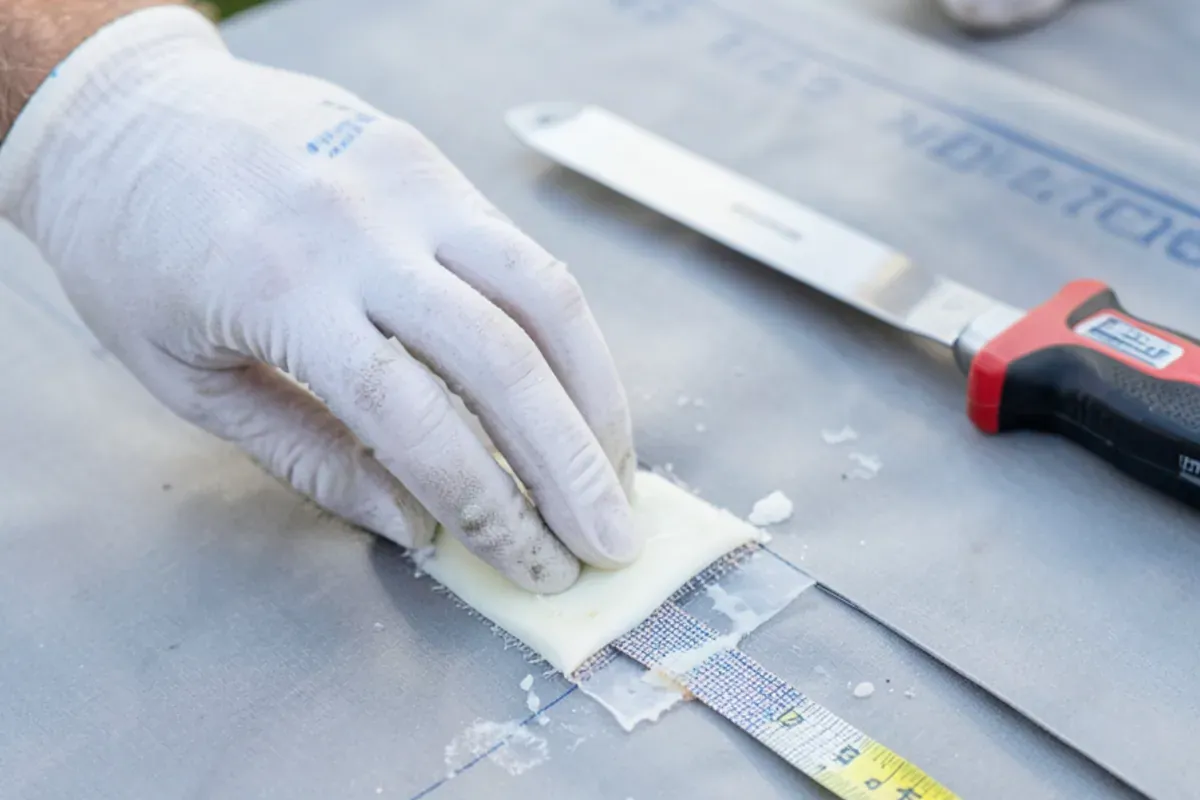
A fluid-applied coating, usually silicone, acrylic or urethane, is rolled or sprayed over a cleaned and repaired roof in one or more coats, often with fabric reinforcement at seams and penetrations. It cures into a seamless skin.
It can:
- Seal small cracks, worn surfaces and aging seams once they are repaired
- Raise reflectance on dark roofs, lowering the roof surface temperature
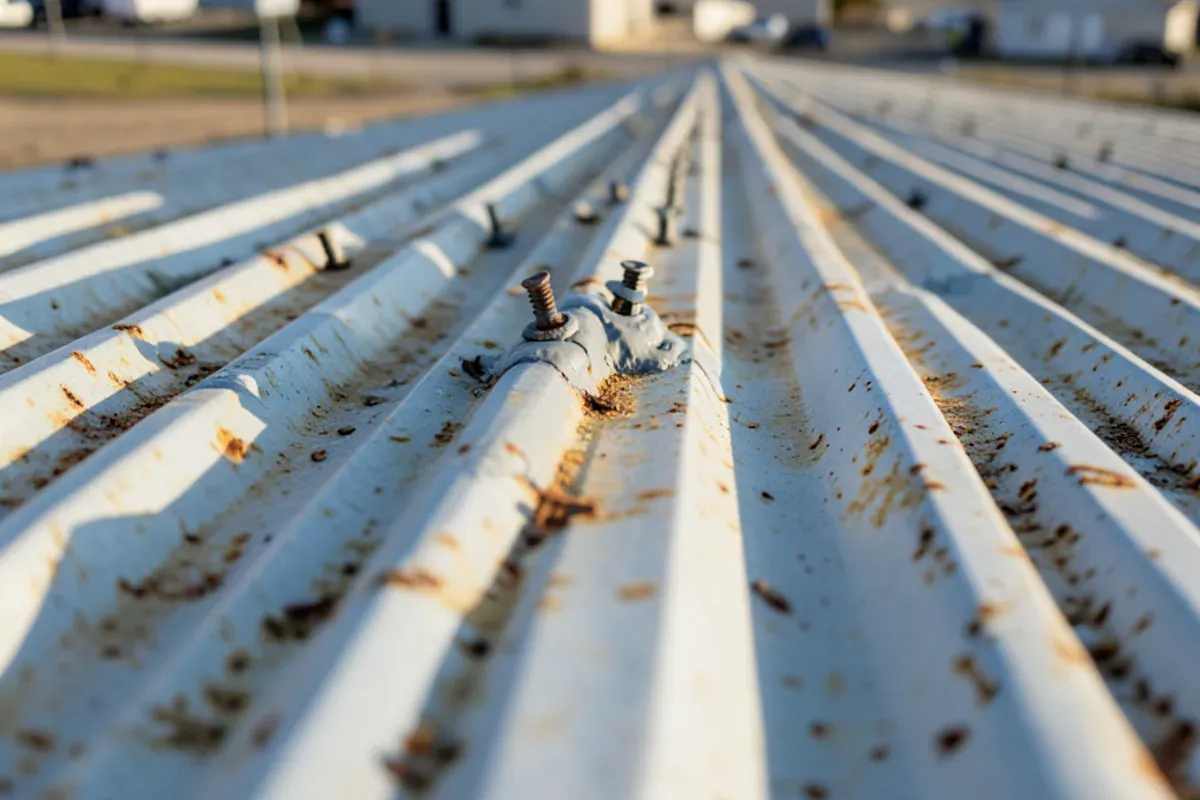
- Cover rusty fasteners and laps on metal roofs
- Restore a roof with less tear-off waste and less disruption inside
It cannot dry wet insulation, fix a sagging deck, add slope to stop ponding, or reattach a membrane that has blown loose.
When Silicone Roof Coating Makes Sense
These are the conditions we want to see before we recommend a restoration:
- Insulation is dry across nearly all of the roof, confirmed by cores or a moisture survey
- The membrane or metal is still well attached
- Seams and flashings can be repaired before coating
- Drainage is acceptable, or the ponding areas are small and the chosen coating is rated for them
- An adhesion test on the actual roof surface passes
- The building is not already at the code limit on roof layers for any future recover
Silicone handles ponding water and UV better than most acrylics, which is why it is common on North Texas flat roofs. It also tends to collect dirt, which lowers reflectance over time, and future recoats generally have to be silicone as well.
Application weather in North Texas
Coatings are less forgiving of weather than a new membrane. The roof has to be fully dry before the first coat, which after a spring rain can mean waiting a day or more for low spots and wet seams to dry out. Water-based acrylics need a dry window after application to cure before rain or heavy dew, so May's storm pattern can push a project back several times. In July and August we start early, because a sun-baked surface can make some products skin over too fast to level properly. Build that flexibility into the schedule rather than pressing for a fixed finish date.
Wet Insulation Means Replacement
Moisture is the dividing line. Water under a membrane, from hail punctures, old seam failures or leaks around equipment, soaks into insulation and stays there. A coating seals it in, and the trapped water keeps corroding fasteners and deck from below. In the summer heat it can push blisters up through the new coating.
Small wet areas can be cut out and replaced before coating. When wet areas are widespread, or the deck underneath shows rust or rot, the honest answer is replacement. The building code backs this up for recovers: a new roof covering cannot be installed over one that is water-soaked or deteriorated.
Want a roofer to look at it?
Free inspection with photos. Se habla español.
- 5.0 on Google (33 reviews)
- Free inspections & estimates
- Se habla español
- Workmanship guaranteed in writing with every contract
Coating Over TPO, Mod Bit and Metal
| Existing roof | Coating notes | Watch-outs |
|---|---|---|
| TPO or PVC single-ply | Needs thorough cleaning, compatible primer and adhesion testing | Slick surface; may affect the membrane warranty |
| Modified bitumen | Granulated cap sheets often accept coatings well after cleaning | Loose granules and asphalt bleed-through need the right primer |
| Built-up roof | Gravel must be removed or a smooth surface prepared | Old, alligatored asphalt may need extra base coats |
| Metal panels | Fasteners and laps sealed first, rust treated | Heavily rusted or perforated panels need replacement first |
| Spray foam | Coatings are the normal protective layer | Foam must be dry and undamaged under the old coating |
Metal buildings are a common candidate. Industrial districts like the Great Southwest area of Grand Prairie have many metal and tilt-wall buildings where a coating over sound panels can be a practical option.
How Long Does a Coating Buy You, and What Comes After?
A coating is a stage in a roof's life, not the end of it. Service life depends mostly on the product and the dry film thickness applied, which is why manufacturers tie warranty terms to mils. Once that term is near its end, a sound coated roof can usually be cleaned, repaired and recoated, following the manufacturer's recoat instructions rather than a calendar guess.
That cycle has limits. Most coating systems are designed for a first application and one recoat, and every extra layer adds weight and buries the original roof deeper. Plan the sequence from the start:
- Restore with the right coating at a specified thickness.
- Maintain with spring and fall checks, drain cleaning and quick repairs at rooftop units.
- Recoat once, when the manufacturer's terms call for it and the insulation is still dry.
- Replace after that, with a budget built up over the years the coating bought.
Roof Restoration vs. Replacement: Budget and Code Questions
We do not publish prices for coatings or replacements, because the deciding costs, such as how much wet insulation has to come out and how many repairs are needed first, vary from roof to roof. What we can say is where the costs come from:
- Prep work: cleaning, seam repairs, wet-area replacement and flashing work before any coating.
- Coating type and thickness: thicker applications cost more and usually carry longer manufacturer warranties.
- Replacement scope: removal down to the deck, code-required insulation, tapered panels for drainage and new edge metal.
- Code: because a coating leaves the existing roof assembly in place, it is usually handled differently from a replacement under energy-code insulation rules. In Irving, confirm with the Inspections Department, (972) 721-2371, whether your project triggers insulation or the SRI 78 cool-roof requirement.
What We Check Before Recommending Either
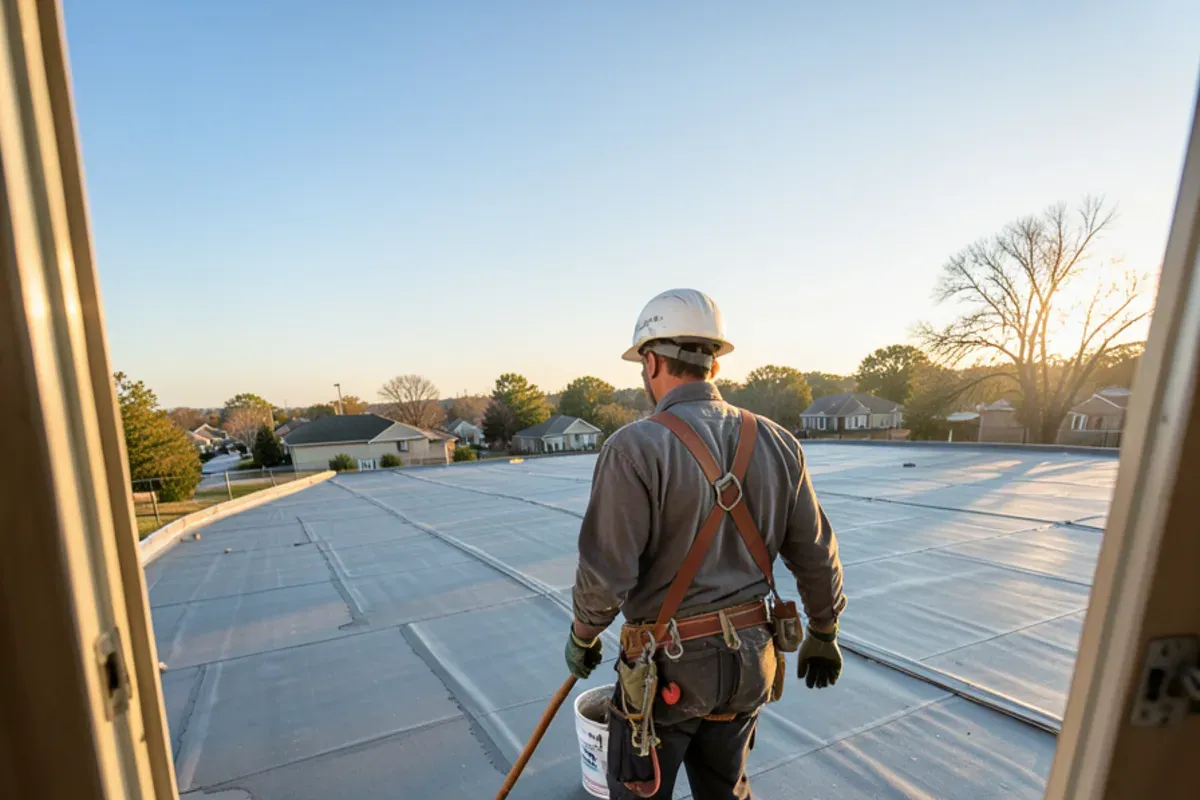
On every restoration candidate, we walk the full roof, probe seams, mark soft spots, take cores where the surface hides what is beneath, and test adhesion on the actual surface. We also look at the building's plans: will it be sold soon, will tenants change, is a large equipment upgrade coming? A coating buys time, and that time is worth most when the owner plans to keep the building.
One trade-off owners do not always hear: a coating does not make a roof hail-proof. Large hail can still bruise or puncture a coated surface, and a fresh coating can hide older damage from a later inspection. Before we coat any roof, we photograph its condition section by section and keep that dated record, so a future storm report starts from a clear baseline.
When the numbers point to replacement, we say so, and our photos show why. If a coating is the right fit, our roof coatings page explains how we prepare and apply it.
Recubrimiento vs. techo nuevo: también lo explicamos en español.
Find Out What Is Under Your Roof
The right choice starts with knowing whether your insulation is dry. A free inspection from our crew answers that question with photos and cores. Restoration or replacement, flat roofs are a regular part of the commercial work we take on as a roofing contractor in Irving, TX. To book a roof walk, call (725) 745-8803.
Questions readers ask
How long does a silicone roof coating last in North Texas?
Can you put a coating over a TPO roof?
Will a white coating help an Irving building meet the cool-roof rule?
Can a coated flat roof be coated a second time?
Sources
Written by the RJ Premium Roofing team, a bilingual roofing contractor based in Irving, TX. We inspect, repair and replace roofs across Dallas–Fort Worth and document storm damage for homeowners’ insurance claims.