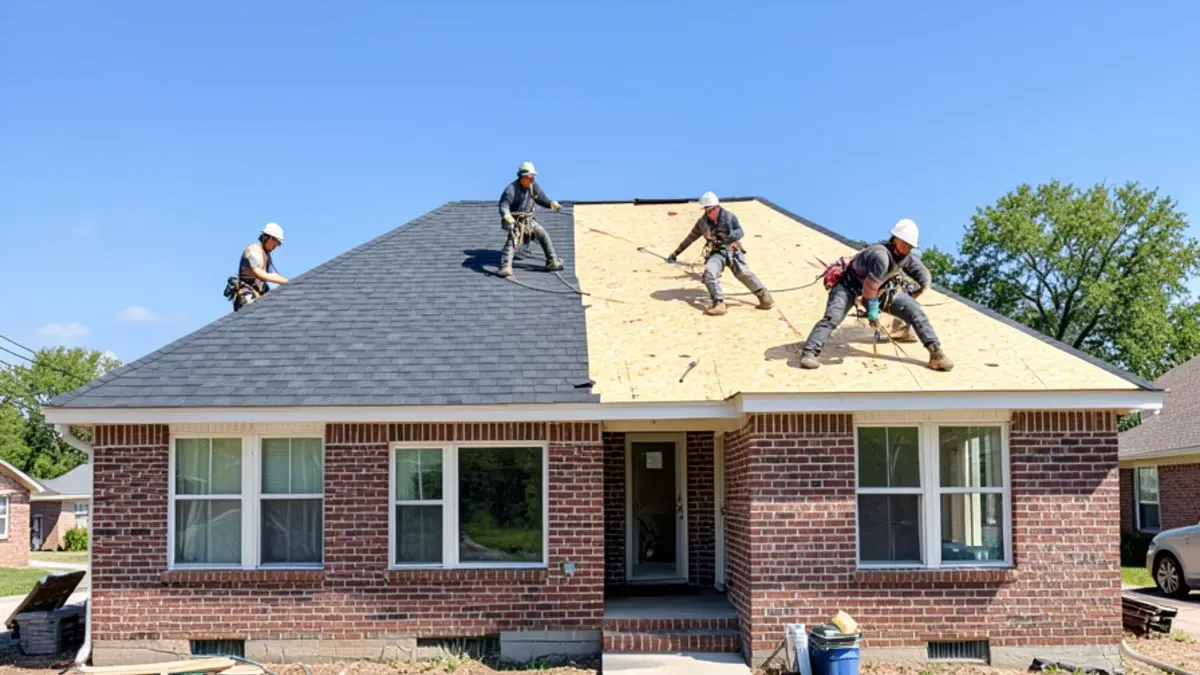
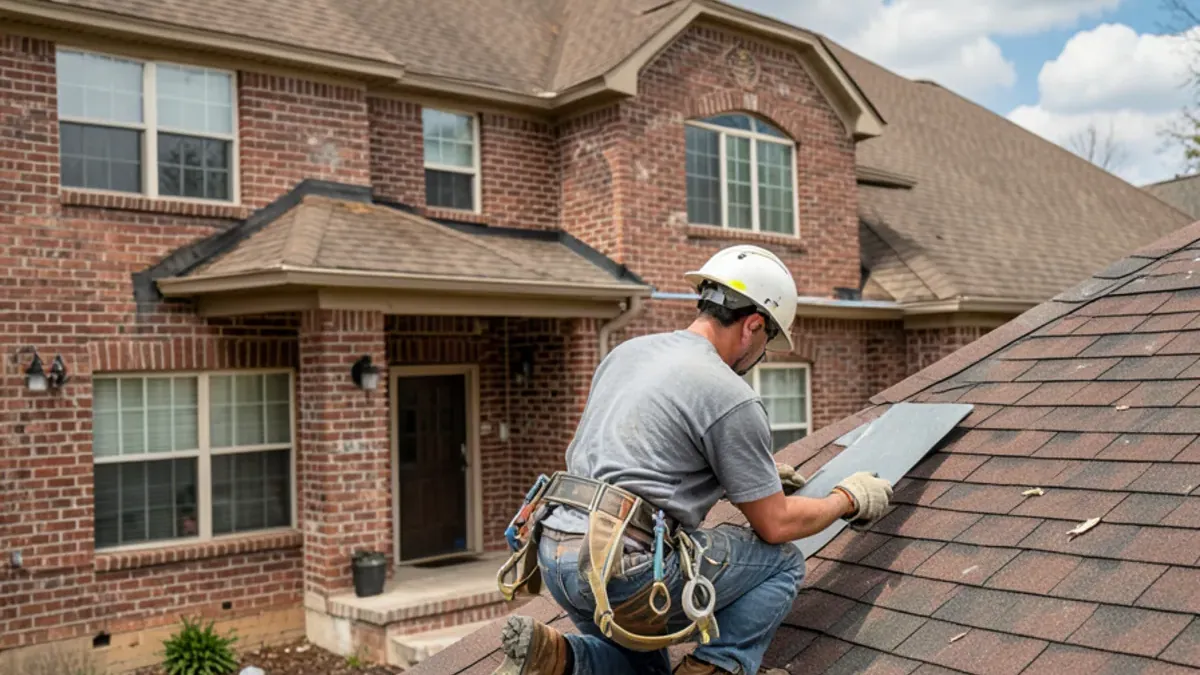
Whether to repair or replace a roof comes down to five things: its age, how far damage has spread, how many layers are on the house, whether leaks keep returning, and what your insurer covers after a storm. A young roof with one damaged area usually gets a repair; an old roof failing on several slopes gets replaced.
Few homeowners want a new roof. Most want to know if the one they have can be fixed for a reasonable price and last a few more years. Sometimes it can. Here is the framework we use, so you can follow the reasoning before anyone writes a number.
Repair or replace roof: the five questions that decide it
- How old is the roof? Age sets how much life a repair can buy.
- How far has the damage spread? One slope or one spot is very different from every slope.
- How many layers are on the house? A second layer limits what can be repaired well and must come off at replacement.
- Do leaks keep returning? Repeated leaks in different places mean the roof is failing as a system.
- Is there a storm claim? If hail or wind caused the damage, the approved scope may make the decision for you.
None of these alone settles it. Together they usually point clearly one way.
Roof repair vs. replacement by age and damage
| Roof condition | Damage | Usual call |
|---|---|---|
| Under about 10 years, shingles flexible | A few missing or lifted shingles, one leak | Repair |
| Under about 10 years | Hail bruising across slopes | Insurance inspection; often replacement |
| Mid-life, around 10 to 20 years | Isolated flashing or boot leak | Repair |
| Mid-life | Granule loss and curling on sunny slopes | Plan replacement within a few seasons |
| Over about 20 years | Any widespread damage | Replacement |
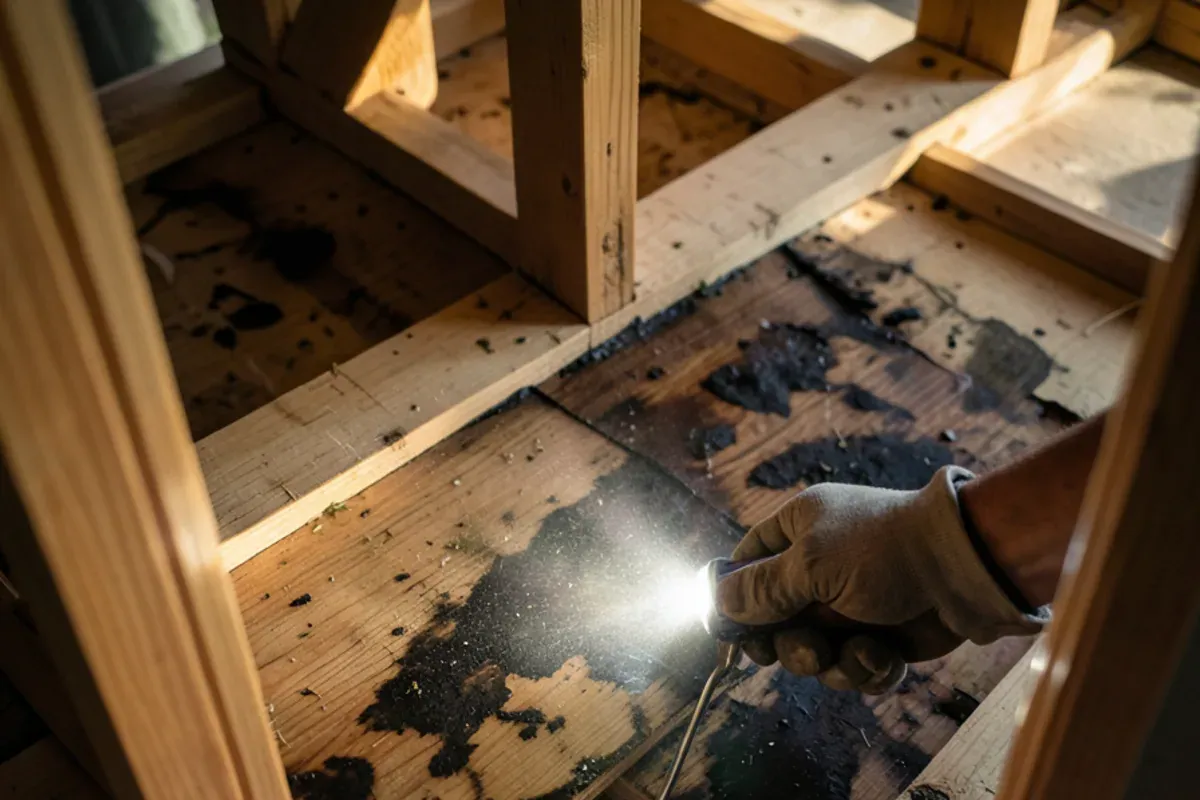
| Any age | Rotted decking in several areas | Replacement with roof tear-off |
When to patch or replace a roof that leaks
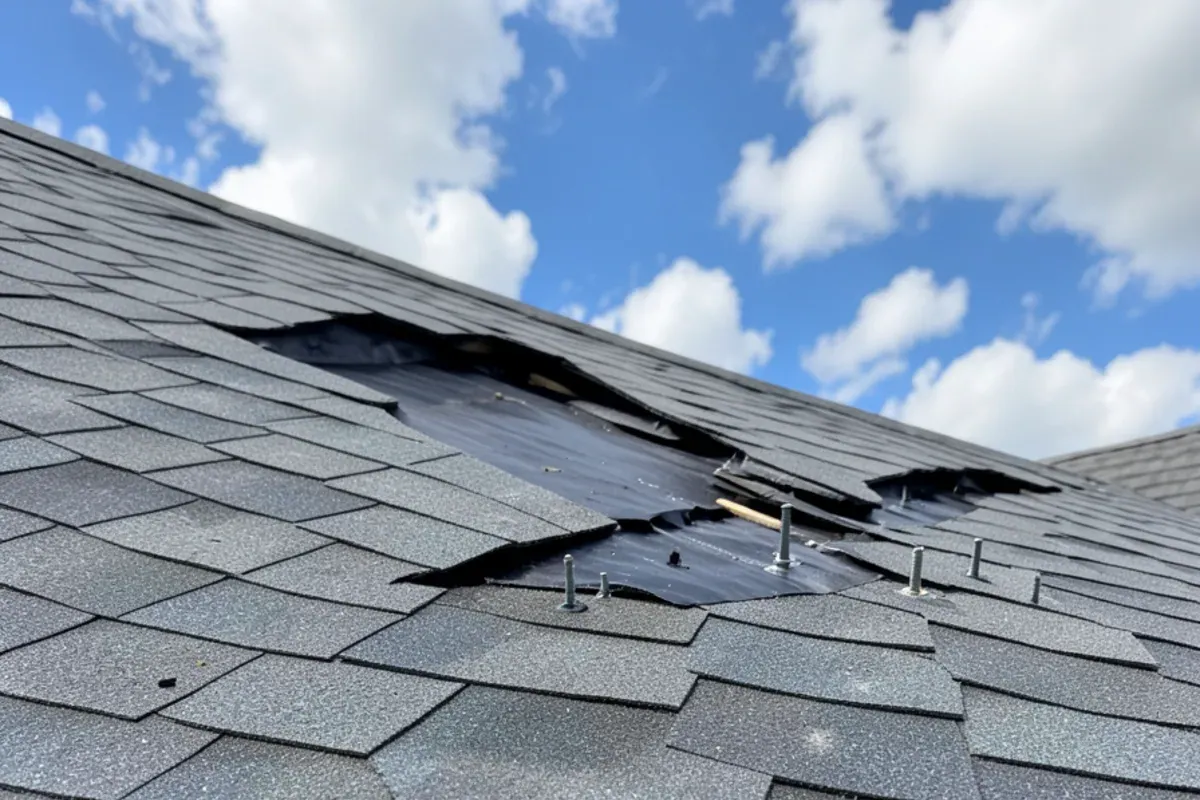
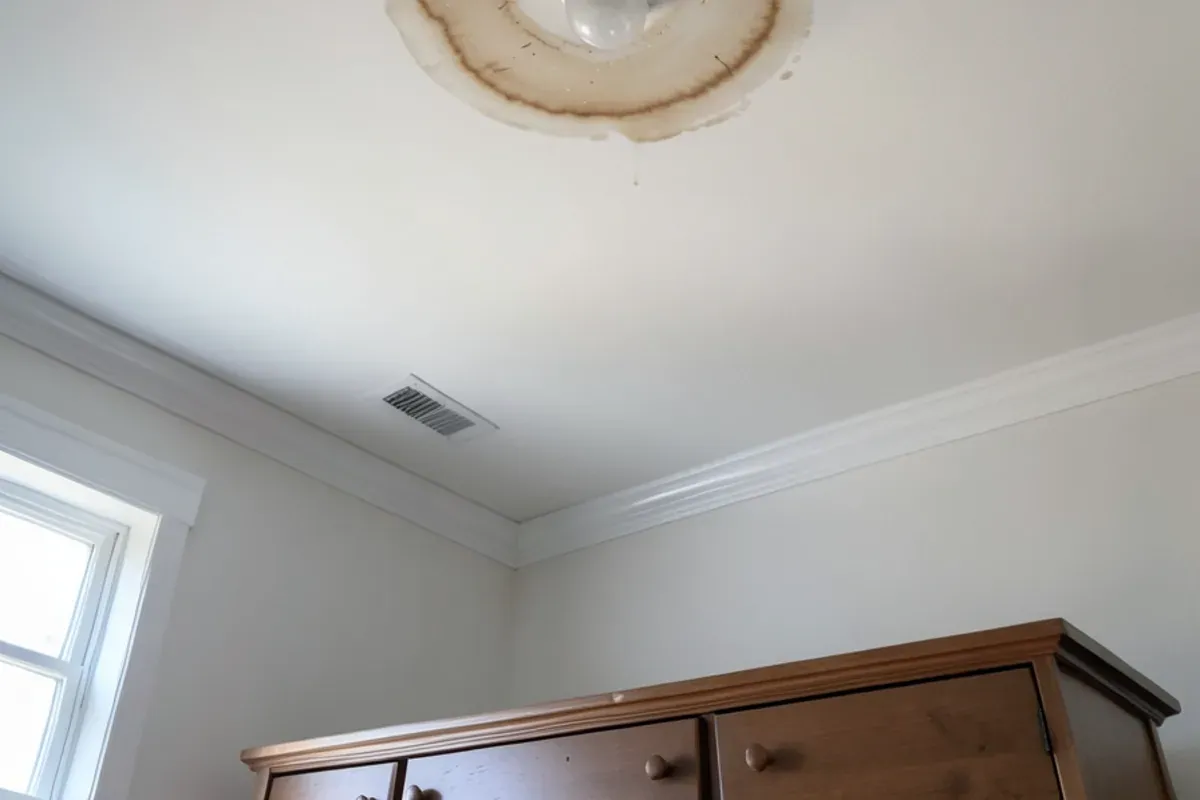
A leak on its own is not a verdict. Most leaks start at a detail: a cracked pipe boot, a chimney or wall flashing, a valley or a nail that backed out. If the shingles around it are sound, fixing that detail is the right answer. A good repair replaces the failed part rather than smearing sealant over it, because caulk alone tends to crack again after a summer or two of North Texas heat.
The math changes when leaks move around. A stain that comes back after a repair, or new stains in other rooms, means water is getting in at more than one place. Patching each one as it appears costs more over time than a new roof and keeps the decking wet in the meantime.
Want a roofer to look at it?
Free inspection with photos. Se habla español.
- 5.0 on Google (33 reviews)
- Free inspections & estimates
- Se habla español
- Workmanship guaranteed in writing with every contract
Roof replacement signs that rule out a repair
These conditions make a repair a poor use of money:
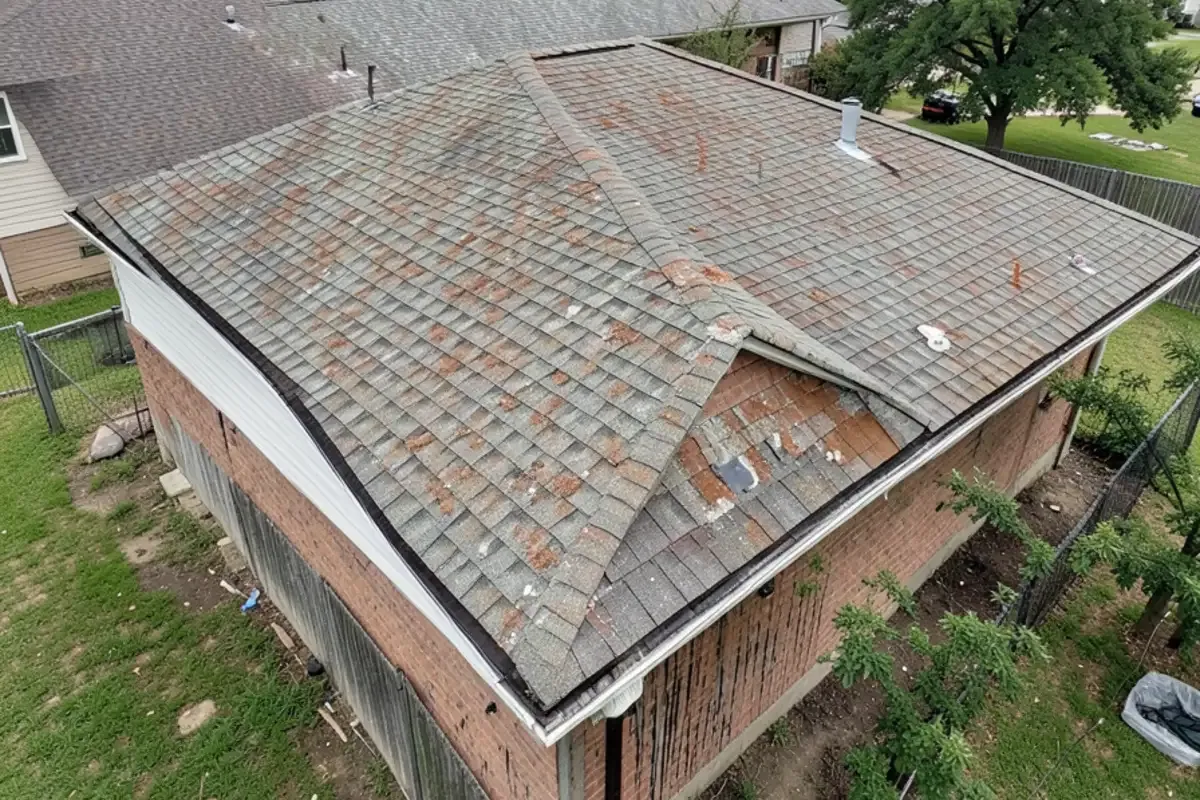
- shingles that crack or snap when lifted, instead of bending
- bald patches and heavy granules in the gutters on several slopes
- sagging between rafters or soft decking in more than one area
- two or more layers already on the house
- repairs in mismatched shingles across several slopes
- hail bruising spread evenly across the roof
Does the "half the cost" rule work for DFW roofs?
A rule of thumb in many consumer guides says that once a repair estimate approaches half the cost of a new roof, replacement is usually the better buy. It is a useful warning light, but it leaves out the most important number: how many years each option buys. A better comparison is cost per remaining year.
- Get both numbers in writing: the repair price and a full replacement price for the same house.
- Estimate the years each buys. A repair on a sound mid-life roof may buy many seasons; the same repair on brittle shingles may buy one summer.
- Divide price by years. The option with the lower yearly cost usually wins, unless cash on hand decides it for you.
- Add the risk of hidden damage. Soft decking found during a repair can change the price mid-job, while a replacement already includes decking review.
For context, published third-party figures put a typical Irving replacement at $6,544 to $7,376 (homeyou, based on 9,490 Irving-area projects, valid through March 6, 2026), while a 2026 Smart Roofing Calculator estimate shows $10,660 to $15,340 when the house needs 25 squares of architectural shingles. Those are not our prices. Your written estimate after an inspection is the figure to use in the math.
How long will you stay in the house?
Your plans for the house can matter as much as the roof's condition. If you expect to sell within a year or two, a sound repair with good photos and receipts may be enough, though buyers' inspectors and their insurers look hard at older roofs, and an aging roof can become a negotiating point at closing. If you plan to stay ten years or more, a roof near the end of its life is going to be replaced on your watch anyway, and doing it on your schedule beats doing it after a leak in the middle of May storms.
Owners staying long term also get to choose the next roof deliberately: shingle class, color within any HOA rules, ventilation upgrades and decking repairs, instead of whatever is fastest to install after an emergency.
How insurance and local rules shift the decision
After a storm, the question is partly answered by your insurer. When a covered storm is behind the damage, the adjuster's approved scope decides whether the insurer pays for a repair, a slope or a full roof. Your deductible applies either way, and under Texas Insurance Code Chapter 707 a roofer cannot pay or waive it.
City rules matter too. In Irving, repairs of 100 square feet or less do not need a permit, while a re-roof does. Local contractors also describe a 25% rule for larger repairs, which you should confirm with the city. On a claim, we photograph and record what the storm did, talk through any policy wording you want explained, join the adjuster on the roof, and install exactly what the approved scope covers.
What we look for before recommending either one
We would rather fix a roof that has years left than sell one that does not need replacing. So we start with the shingles themselves: do they bend or crack, are the sealant strips holding, how much granule is left. Then the attic, for stains and soft wood. Then the history: past repairs, past storms, how many layers. Timing matters as well. A small storm repair handled within days keeps water out of the decking; the same damage left through a wet spring can turn a repair into a replacement. And if the roof is close to the line, we say so and show you the photos, so you can decide whether to stretch it one more season or plan ahead.
Stretching a roof is a legitimate choice, with a real trade-off. You keep your money now, and you accept that the next hailstorm or wet spring may force the decision on a worse schedule. If you go that way, we suggest a fall check so small problems are caught before they reach the decking.
For homeowners in Tarrant County's mid-cities, including Bedford, and across Irving, the decision is usually clear once those facts are on the table. If you are weighing reparar o cambiar el techo, we can explain the options in Spanish as well.
When the answer is a new roof, our roof replacement page explains how we approach it. To get an honest read on your own roof, phone (725) 745-8803. The inspection and estimate are free, and if a repair will do, that is what we will recommend.
Questions readers ask
Is it worth repairing a roof that is 20 years old?
Can I repair only the damaged slope after a hailstorm?
Can I replace only one side of my roof to save money?
Does homeowners insurance pay to replace a roof that simply wore out?
Sources

Written by the RJ Premium Roofing team, a bilingual roofing contractor based in Irving, TX. We inspect, repair and replace roofs across Dallas–Fort Worth and document storm damage for homeowners’ insurance claims.