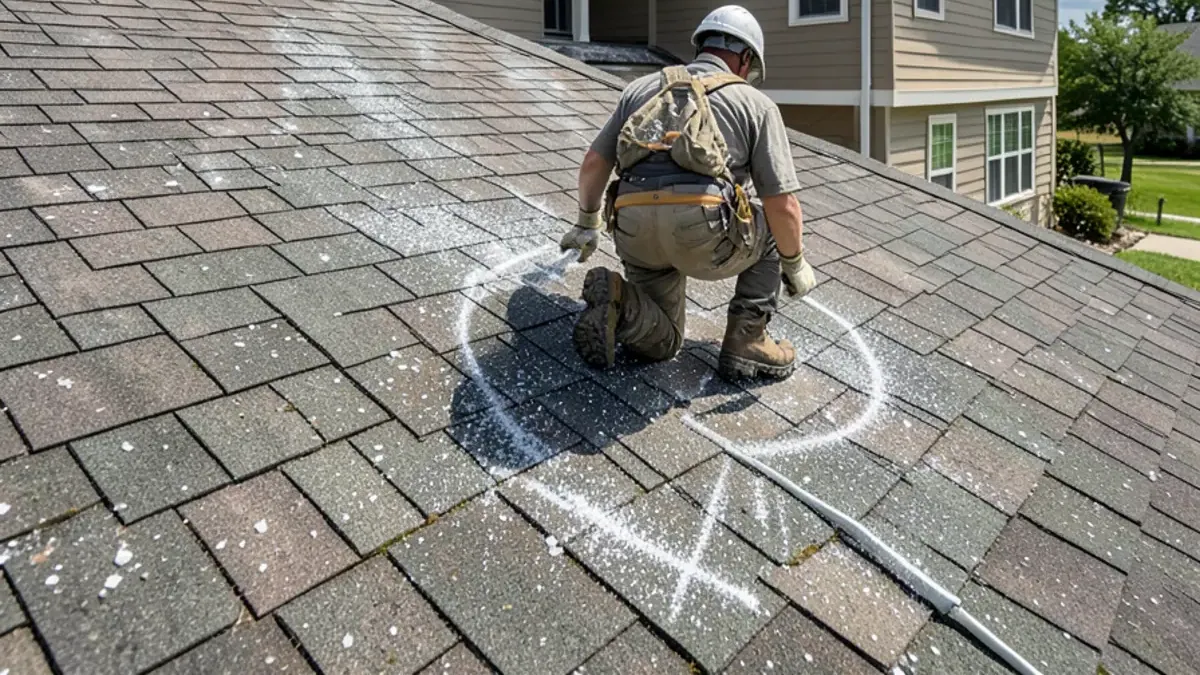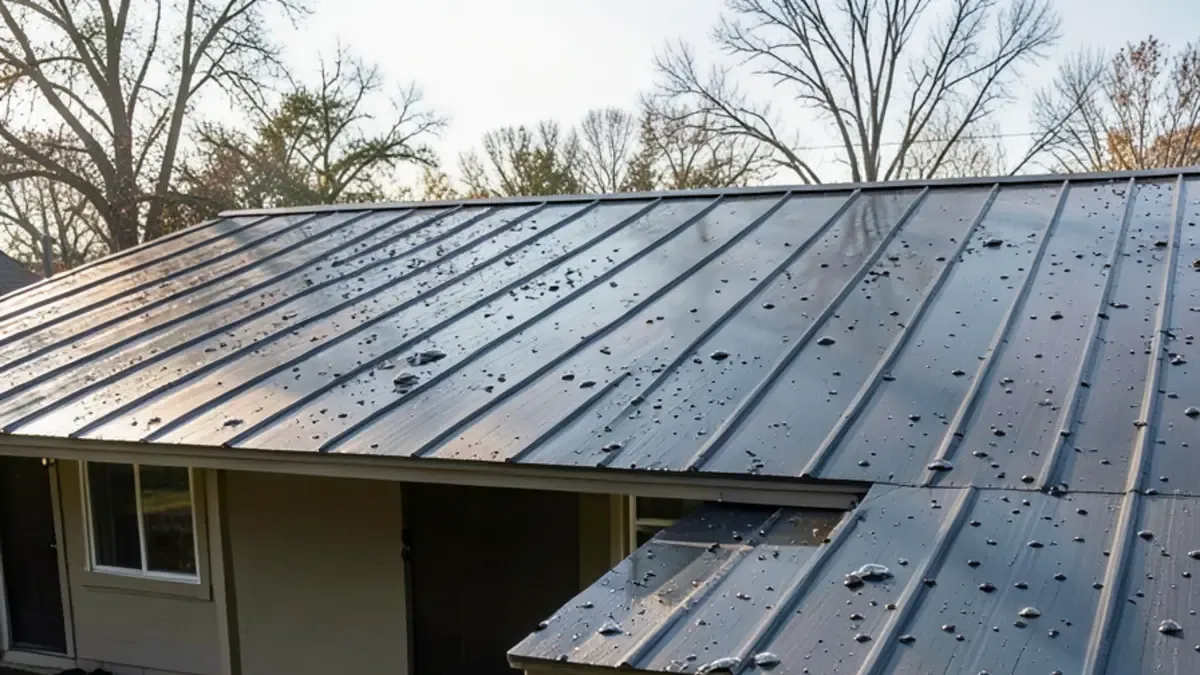
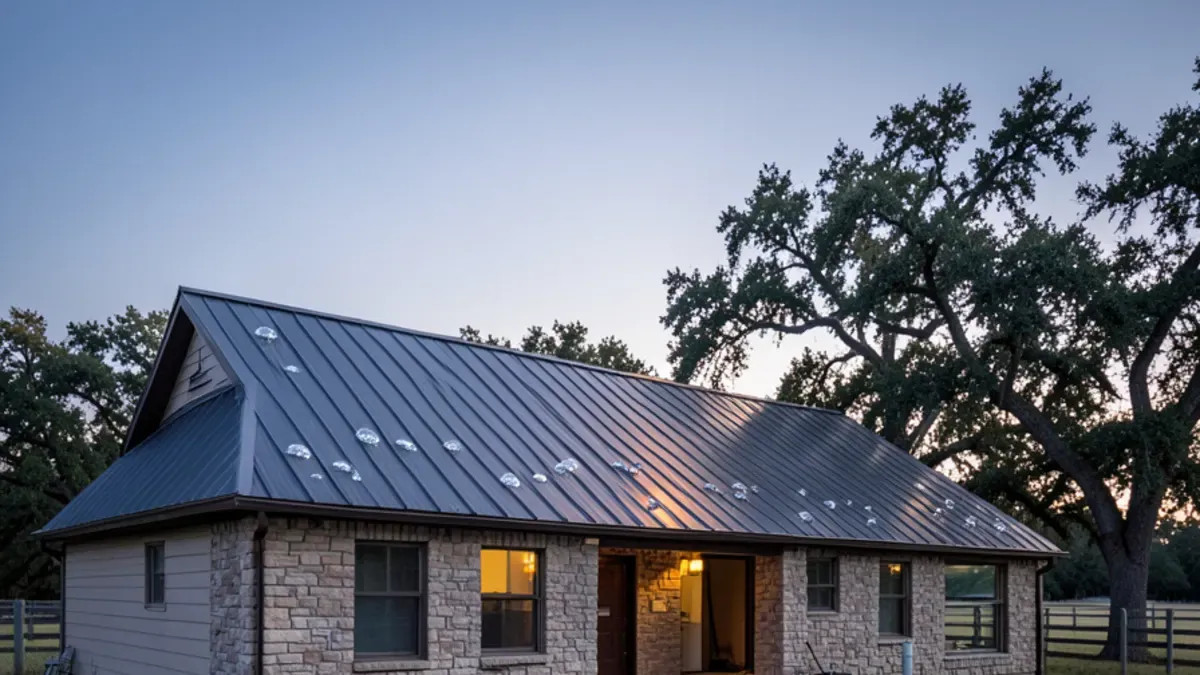
Whether metal roof hail dents are covered by insurance depends on one distinction: functional or cosmetic damage. Dents that open seams, crack coatings, loosen fasteners or let water in are usually treated as covered hail damage, while dents that only change the look are often excluded when the policy carries a cosmetic damage endorsement.
Metal roofs earn their reputation in hail country: they rarely leak after a storm and they last a long time. They also show every dent. After a strong storm, a metal roof can look like a golf ball while staying completely watertight, and that is exactly where insurance questions start. Here is how coverage usually works and how we evaluate the panels on our metal roof hail damage inspections.
Functional vs. Cosmetic Hail Damage
Insurers and inspectors split metal roof damage into two groups.
Functional damage affects how the roof performs. Examples include:
- Punctures or splits in the panel
- Paint or coating cracked down to bare metal, which invites corrosion
- Opened or deformed seams that can let water in
- Damaged fasteners, crushed washers or panels pulled loose around screws
- Dents deep enough to hold water or change drainage
- Damaged trim, ridge cap or flashing that breaks the water seal
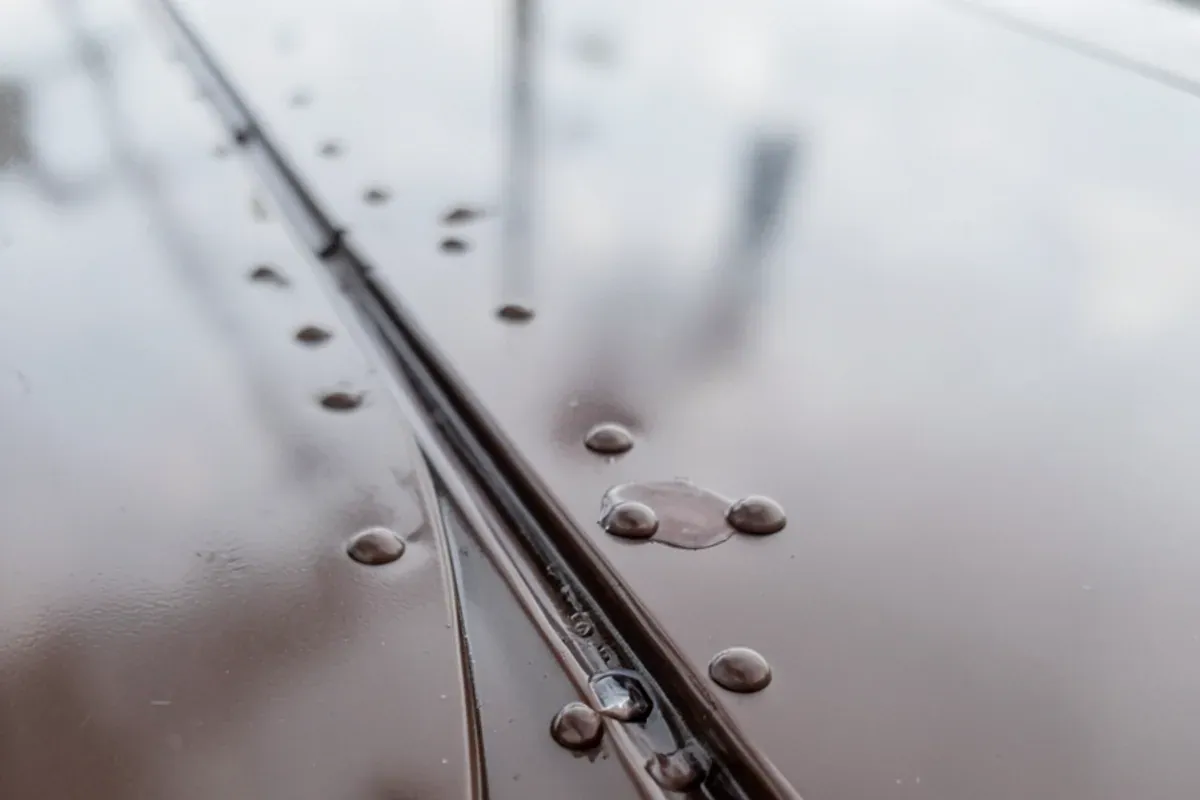
Cosmetic damage changes appearance without affecting performance: shallow dents with the coating intact and seams undisturbed. Under many policies, especially those with a cosmetic damage exclusion, that kind of damage is not paid.
The Cosmetic Damage Exclusion on a Metal Roof
A cosmetic damage exclusion for a metal roof is an endorsement added to your homeowners policy. Many Texas insurers offer it, sometimes in exchange for a lower premium or as a condition of covering a metal roof at all. With it in place, dents that do not let water in or shorten the roof's life are excluded.
You can find out whether you have it before the next storm. Look at your declarations page and the list of endorsements, or ask your agent directly. Without the exclusion, some policies pay for cosmetic denting on metal roofs; with it, the claim depends on showing functional damage. The Texas Department of Insurance publishes consumer guides on reading a homeowners policy if the wording is unclear.
Want a roofer to look at it?
Free inspection with photos. Se habla español.
- 5.0 on Google (33 reviews)
- Free inspections & estimates
- Se habla español
- Workmanship guaranteed in writing with every contract
How We Check a Dented Metal Roof Claim
When we inspect a dented metal roof for a claim, we look past the dents to the parts that keep water out. This checklist reflects what we photograph and note:
| Area checked | What we look for | Functional or cosmetic? |
|---|---|---|
| Panel surface | Dent count, size and depth; any punctures | Punctures are functional |
| Coating and paint | Cracks or chips down to bare metal | Exposed metal is generally functional |
| Seams and laps | Opened, bent or flattened seams | Functional when the seal is affected |
| Fasteners and washers | Crushed washers, loose or backed-out screws | Functional |
| Trim, ridge and flashing | Bent or separated pieces | Functional when water can enter |
| Drainage | Dents that pond water or redirect flow | Functional |
| Interior and attic | Stains, drips, wet insulation | Confirms water entry |
Standing Seam Hail Damage and Exposed-Fastener Panels
Standing seam hail damage is usually limited to dents in the flat of the panel. The fasteners sit under the seams, out of reach, so the water seal often survives even heavy denting. That makes standing seam roofs the clearest example of the functional-versus-cosmetic split.
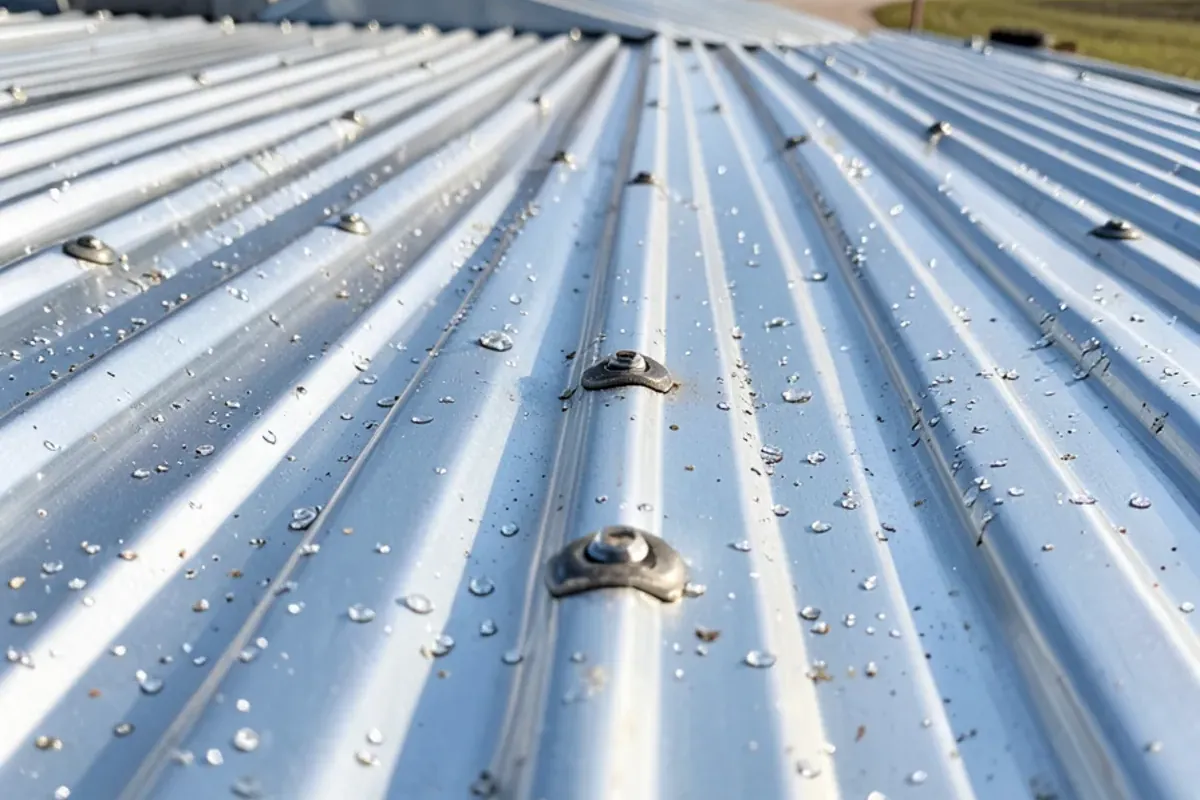
Exposed-fastener panels, common on barns, shops and some homes, behave differently. The screws and rubber washers sit on the surface, and a direct hit can crush a washer or distort the panel around a fastener. Those are small details with real consequences, since a failed washer is a future leak.
When Metal Roof Panel Replacement Is the Answer
Metal roof panel replacement makes sense when damage is functional and spread across a slope, or when coverage includes cosmetic loss and the denting is widespread. Dents in steel panels generally cannot be pressed back out. Matching is another concern: replacement panels need the same profile, gauge and color, and finishes fade over time, so a single new panel can stand out. Before anyone orders material, we confirm that the original panel profile and rib spacing are still made. Older barn and shop panels sometimes are not, and a different profile will not lap correctly with the panels left in place. In that case the realistic repair is a full slope or a full building side, and we note the matching problem in the report so the person reviewing the claim can see why a single-panel swap will not work.
What to Do After Hail Hits Your Metal Roof
Metal is slick when wet and some panel profiles dent under a boot, so leave the roof itself to someone with fall protection and soft-soled shoes. From the ground and inside the building, you can still gather the evidence that matters:
- Photograph the roof in low sun. Early-morning or late-afternoon light skims across the panels and makes shallow dents show up clearly, where noon light hides them.
- Check the soft metal below the roof. Gutters, downspouts, AC fins and the top of a mailbox give a second record of hail size and direction.
- Look up from inside a shop or barn. On exposed-fastener buildings without a ceiling, daylight or drips at screw lines after the next rain are a sign of functional damage.
- Find the endorsements page of your policy and look for the words "cosmetic" or "metal roof" before you file.
- Write down the storm date and keep the original, unedited photo files.
Why a cosmetic dent today can matter later
Not every dent stays cosmetic. When a hit cracks the paint or the metallic coating at the bottom of a dent, moisture can reach the steel and start corrosion that takes a few seasons to show. That is why we photograph the coating at close range in each dented area, not just the dent count. Si tiene abolladuras en su techo de metal y prefiere la explicación en español, se la damos en español.
What We See on Metal Roofs Around DFW
Metal shows up across the metroplex on modern farmhouse homes, on barns and shops, and on rural properties. In places such as Bartonville, a town of larger lots in southern Denton County, it is common to find a house with shingles next to a barn or shop with exposed-fastener panels, and the two roofs fare very differently in a single storm.
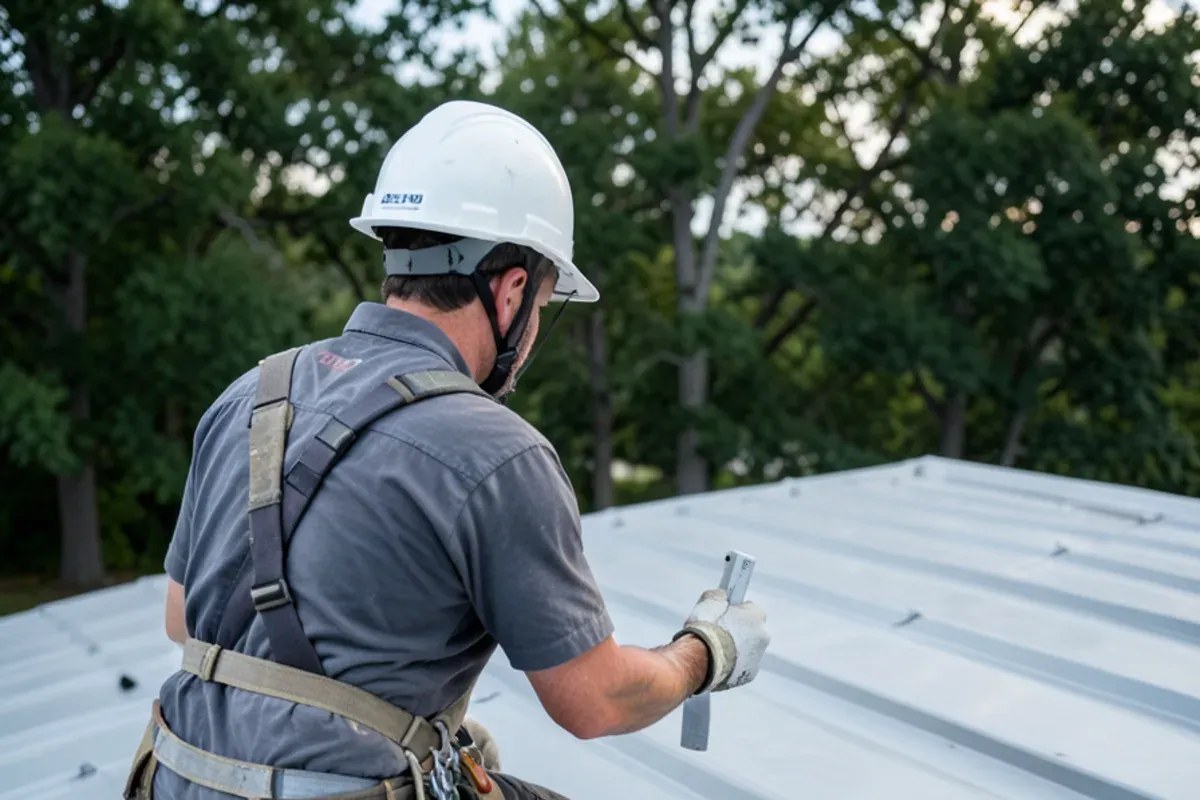
Our approach is the same on every one: document dents with scale, then spend most of the time on seams, fasteners, coating and trim, because that is where functional damage hides. If all we find is cosmetic denting and your policy excludes it, we tell you before you spend time on a claim. If we find a punctured panel or a failed seam, we photograph it so the adjuster sees the same thing we did.
Know Your Policy, Then Know Your Roof
Read the endorsements on your policy so you know where you stand, and have the roof checked after any storm that dents soft metal around the property. Our hail damage roof repair team inspects metal and shingle roofs alike, and from our base as an Irving roofing contractor we cover properties across the area. Call (725) 745-8803 for a free inspection of your metal roof.
Questions readers ask
What is a cosmetic damage exclusion on a metal roof?
Can hail-dented metal roof panels be repaired instead of replaced?
Are standing seam roofs more hail resistant than exposed-fastener panels?
Does a cosmetic damage exclusion also cover the shingles on my house?
Sources
Written by the RJ Premium Roofing team, a bilingual roofing contractor based in Irving, TX. We inspect, repair and replace roofs across Dallas–Fort Worth and document storm damage for homeowners’ insurance claims.