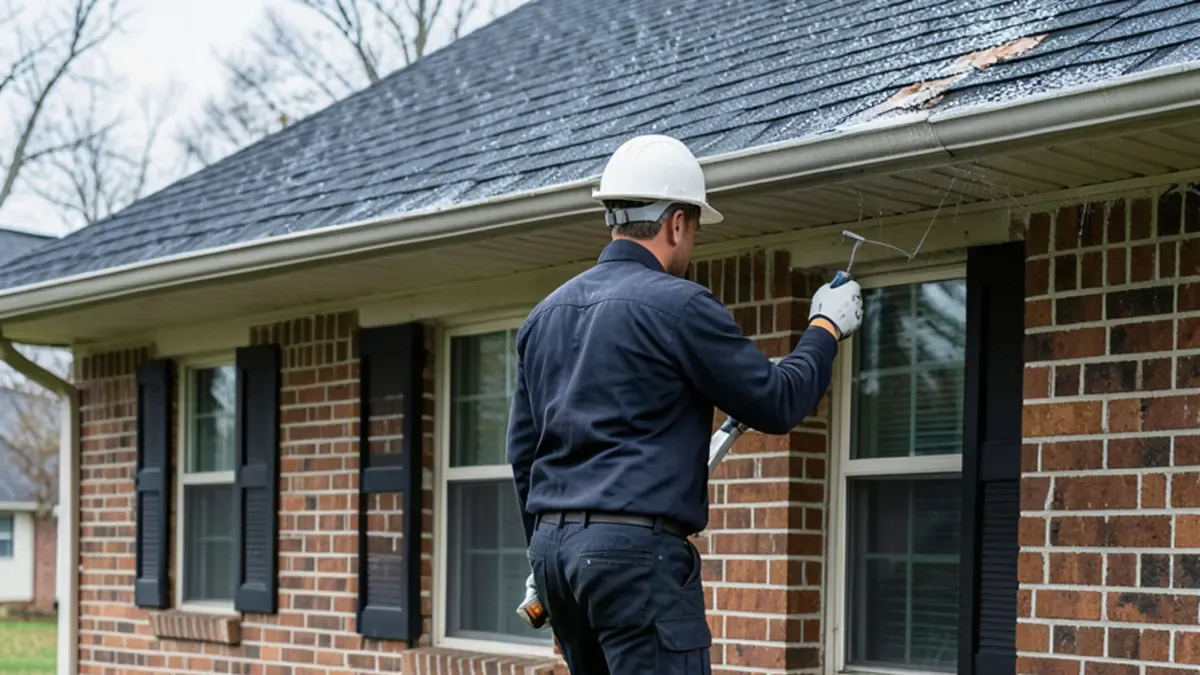

A free roof inspection after hail should cover far more than a glance from the ladder. Ours checks every slope of shingles, the ridge, flashing, vents, pipe boots, gutters and soft metals, then looks for interior signs of leaks, and ends with a dated photo report you keep whether or not you file a claim.
"Free inspection" gets used loosely after a hailstorm. For some companies it means a quick walk around the yard and a pitch. For us it means a full look at the roof and the house, with photos you can show anyone. Here is exactly what our free roof inspection after hail covers, so you know what to expect and what to ask any roofer who knocks on your door.
What Does a Roof Inspection Include?
People ask what a roof inspection includes because the answer varies so much between companies. Ours works through the property in a fixed order, so nothing gets skipped:
- Ground walk. We start at the yard: gutters, downspouts, AC unit, window screens, fences and siding, looking for hail dents and spatter marks that show storm size and direction.
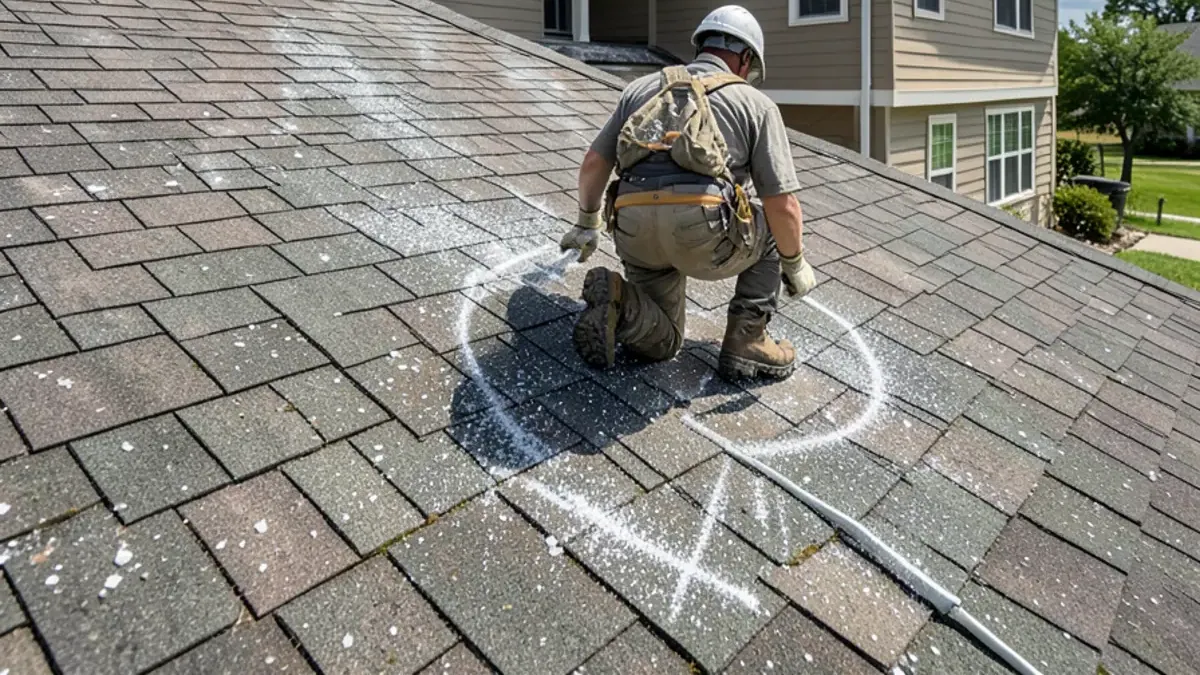
- Roof surface, slope by slope. On every slope we look for bruised, cracked or punctured shingles and granule loss, marking hail hits with chalk.
- Ridge and hips. Ridge caps take direct hits and often crack first.
- Flashing. Chimney, wall and valley flashing, checked for dents, separation and lifted edges.
- Penetrations. Pipe boots, exhaust vents, turtle vents and skylights, where small hail damage often turns into the first leak.
- Soft metals on the roof. Vent caps, drip edge and trim, which record hail size clearly.
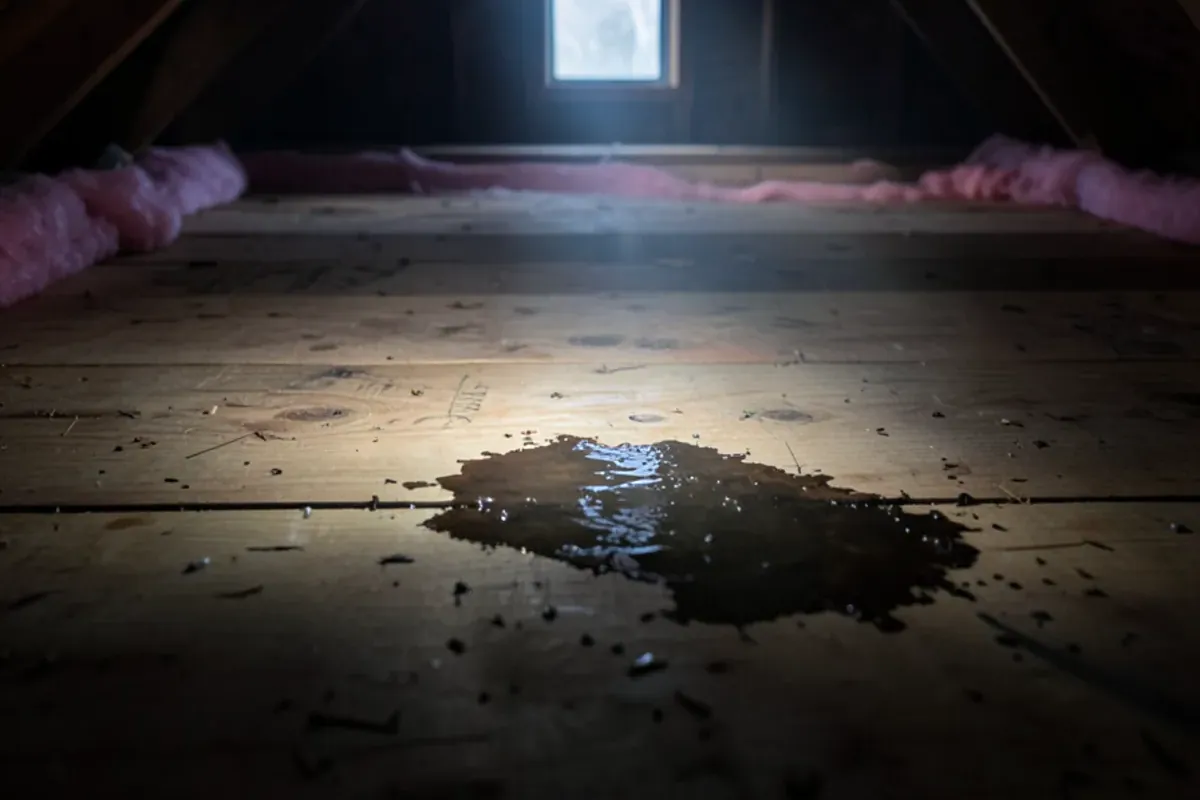
- Interior. Ceilings on the top floor and, when reachable, the attic decking and insulation.
- Photo review. We sit down with you, show the findings and answer questions.

Free Storm Inspection Checklist
Here is the same visit as a checklist, with what each item tells us:
| Area | What we check | What it tells us |
|---|---|---|
| Shingle field | Bruises, cracks, granule loss | Whether the roof covering was damaged |
| Ridge caps | Cracks, missing pieces | Common early failure point |
| Flashing | Dents, separation, sealant | Leak risk at walls and chimneys |
| Pipe boots and vents | Cracked rubber, dented caps | Most frequent source of new leaks |
| Gutters and downspouts | Dents, granule buildup | Hail size and roof wear |
| Skylights | Cracked domes or lenses | Direct leak path |
| Attic and ceilings | Stains, damp insulation, daylight | Whether water is already getting in |
| Overall condition | Age, prior repairs, wear | Repair or replacement realism |
Want a roofer to look at it?
Free inspection with photos. Se habla español.
- 5.0 on Google (33 reviews)
- Free inspections & estimates
- Se habla español
- Workmanship guaranteed in writing with every contract
Roof Inspection Photos and the Hail Inspection Report
Roof inspection photos are the part you keep. We shoot each slope wide, then close-ups of individual hits with chalk circles and a scale reference, plus the soft metals and any interior stains. The hail inspection report puts those photos in order with short notes: what we found, where, and how serious it is.
The report also records the date of the inspection and, when you know it, the date of the storm. That pairing matters for insurance, since damage documented soon after a known storm is easier to connect to it. You can share the report with your insurer, a public adjuster or another contractor; it is yours.
How We Tell Hail Hits From Look-Alikes
Not every dark spot is hail, and an honest report has to sort them out. These are the patterns we compare on every slope:
| What you see | Likely cause | How it differs from hail |
|---|---|---|
| Round dark spot, soft when pressed, granules pushed aside | Hail bruise | Random spacing across the slope; the mat underneath may be fractured |
| Small raised bumps or popped craters | Heat blistering | Clustered, often on sunny slopes, with no soft spot below |
| Scuffed granules in a line or arc | Foot traffic or dragged equipment | Follows a walking path, often near vents or the ridge |
| Raised shingle with a nail head under it | Nail pop | Sits directly over a fastener and may tear the shingle above |
| Even, thin granule loss across the slope | Age and sun | No individual hits; wear matches the slope's exposure |

We mark only the hits we would defend to an adjuster, and we photograph look-alikes separately so nobody confuses them later.
What a Free Inspection Does Not Do
Being clear about limits keeps expectations honest:
- It is not an insurance decision. Only your insurer decides coverage. We document damage and explain what we found and what your policy terms say if you show us the policy.
- It does not include a destructive test. We do not cut into the roof or remove shingles without your permission.
- It does not obligate you. No contract is signed at the inspection, and you do not have to file a claim.
How We Approach Every Inspection
The reviews our customers leave mention two things often: that we explained each step, and that we helped them understand their coverage before they filed. That comes from how we run the visit. We would rather spend extra time showing an owner the difference between a hail bruise and normal wear than hand over a vague verdict.
We also tell people when there is no claim to make. An aging roof with even granule wear and no fresh hits is a maintenance or replacement conversation, not a storm claim, and saying so up front saves everyone time.
There are trade-offs in timing, too. Inspecting within days of a storm gives the clearest picture, but a wet roof is slick and hides bruises, so we wait for it to dry rather than rush a slope. On a very steep or fragile roof we may photograph some areas from a ladder or the eave instead of walking them, and the report says which. And if a leak shows only during wind-driven rain, one dry-day visit may not find it; we will say when a second look after the next storm is the honest answer. Owners in Euless, just west of DFW Airport, get the same full process as homes in Irving.

How to Get Ready for Your Free Inspection
A little preparation makes the visit faster and the report more useful:
- Note the storm date and time you remember, plus anything you saw: hail size, wind direction, broken branches.
- Pull up older roof photos if you have them, so we can compare before and after.
- List every stain, drip or musty smell you have noticed inside, with the room.
- Clear the path to the attic hatch and move a car if the driveway is the best place for a ladder.
- Keep pets inside while we work around the yard and roof.
- Have your policy's declarations page handy if you want its terms explained.
Families who prefer Spanish can ask for the whole visit en español; una inspección de techo gratis should end with the same clear photos and explanations in either language.
Book Your Inspection
If hail has fallen near your home, or you have noticed granules in the gutters or a new ceiling stain, a full hail damage roof inspection gives you facts before decisions. When repairs are needed, our hail damage roof repair work starts from the same photos. Reach your local roofer in Irving, TX at (725) 745-8803 to schedule a free inspection.
Questions readers ask
How long does a free hail inspection take?
Do I have to be home for the inspection?
Is the inspection really free, with no obligation?
What if the inspection finds hail damage from an older storm?
Sources

Written by the RJ Premium Roofing team, a bilingual roofing contractor based in Irving, TX. We inspect, repair and replace roofs across Dallas–Fort Worth and document storm damage for homeowners’ insurance claims.